Showing posts with label Rashi. Show all posts

Tuesday, July 29, 2025

Rabbi Akiva Tatz Talks About When End of Days and How Ishmael and Esau Are Involved

 Nadene Goldfoot                                           


Rabbi Dr. Akiva Tatz is a prominent South African Orthodox rabbi, inspirational speaker and writer who is heavily involved in Orthodox Jewish outreach. He is also a doctor and world-renowned expert in Jewish medical ethics.  Rabbi Dr. Akiva Tatz   studied medicine at the University of Witwatersrand.  He spent a year in St. Louis, Missouri.  This is the year on a Jewish calendar of 5,785 out of a presumed 6,000.  Tne end of times could come any time in these ending  215 years.  It looks like the prophets were spot on when it comes to our present history.  

He's got me curious.   He was on J TV.                                   

 Isaac and Rebekah did pray for 20 years for children, and this is described in Genesis 25:20-26Specifically, Genesis 25:21 states that Isaac prayed to the Lord for his wife because she was unable to conceive. The passage also notes that Isaac was 40 years old when he married Rebekah, and they had their sons, Jacob and Esau, when Isaac was 60 years old, indicating a 20-year period of waiting. 

Ishmael was the 1st son of Abraham.    Ishmael's mother, however, was Hagar, the Egyptian handmaid of Sarah.    Ishmael was named by Divine command and was circumcised when 13 years old.   After he and his mother had been excluded from Abraham's home, he lived at Paran but joined Isaac, his half-brother in burying Abraham.   

Ishmael had a daughter who married Esau. Ishmael's daughter who married Esau was Mahalath, also known as Basemath. Esau was her uncle by marriage, as she was the daughter of Ishmael, Abraham's son, and Esau was the son of Isaac, who was Ishmael's half-brother. Esau married Mahalath/Basemath after realizing his Canaanite wives displeased his parents, Isaac and Rebekah. 

 Ishmael is traditionally the ancestor of the Arab peoples to whom the name, Ishmael, was applied in the Middle Ages.  He died at the age of 137. Traditionally, he is seen as the ancestor of the ArabsWithin Islam, Ishmael is regarded as a prophet and the ancestor of the Ishmaelites (Hagarenes or Adnanites) and patriarch of Qaydār.

Esau was the son of Isaac, Abraham's 2nd son whose mother was Sarah, 1st wife of Abraham as well as being her uncle.  Esau is also the elder twin-brother of Jacob, grandson of Abraham. Esau and Jacob's mother was Rebekah.   After Jacob obtained his birthright and the firstborn's blessing, Esau became Jacob's enemy, seeking to kill him.   How sad can one get seeing one twin wanting to kill his own twin brother?  Esau had three wives: Adah, Aholibamah, and BasemathHe also had five sons. 

  • Adah: Daughter of Elon the Hittite. 
  • Aholibamah: Daughter of Anah, granddaughter of Zibeon the Hivite. 
  • Basemath: Daughter of Ishmael, sister of Nebaioth. 
  • Sons: Eliphaz, Reuel, Jeush, Jaalam, and Korah. 
  • Genesis 36:2-3lists the wives as Adah, Aholibamah, and Basemath. 
  • Genesis 26:34mentions that Esau married Judith and Basemath, both Hittites. However, some Bible scholars suggest that Judith was not one of Esau's primary wives and may have been omitted from the genealogy in Genesis 36 because she did not bear children.  Some Bible commentaries also suggest that Basemath, daughter of Elon the Hittite, and Adah might be the same person

Jacob  was Esau's twin brother. He did the dastardly thing of buying Esau's birthright from him for a mess of pottage, then with his mother's help, received the blessing for himself.   He fled to Haran knowing this, but on returning, 20 years later, was received affectionately by Esau. How had he changed?   (Genesis 36:1) Jacob becoming Israel-a name change showing his inner change.  (Gen.32:25-29). At Haran, Jacob married his uncle Laban's 2 daughters, Rachel and Leah.


  by them and their handmaids, Bilhah and Zilpah, he had 12 sons--progenitors of the 12 tribes--and a daughter, Dinah.  

 The story of the twin brothers thus symbolized the relationship between the 2 nations, developing to the point of hostility.   In the Talmud, Esau was synonymous with villainy and violence  The word Esau in late Hebrew literature implies a coarse materialist.  This shows how his origins has carried on his reputation since his birth.  Seems like this is shown today in Hamas.  and the Ayatollahs who have taken over Iran.   

Jacob was the favorite of the mother and Isaac's favorite was Esau as Esau hunted and supplied meat for the father to eat.  Rebekah knew, or felt she knew the heart of each of her sons.  She knew that Esau lacked certain feelings for people that Jacob had. It was she who pushed  Jacob into being deceitful and against Esau in receiving the final blessing from Isaac that was so important . (My take)

Rashi (1040-1105) , in his commentary on the Torah, says that the statement "Esau hates Jacob" is not just a narrative detail, but a well-known halakha, or established principleThis highlights a deep-seated animosity between the brothers that goes beyond a simple sibling rivalry. While Esau's initial embrace and kiss of Jacob at their reunion might seem like a reconciliation, Rashi, citing the Midrash, notes that some interpret the dots above the word "kissed" in the text as indicating Esau's kiss wasn't entirely genuine.   

  • Rabbi Akiva Tatz's Comments:  Esau's character and the source of his hatred:
    • Esau is often portrayed as representing a worldly, physical orientation, in contrast to Jacob's more spiritual nature.
    • His hatred for Jacob stems from the blessing Jacob received from Isaac, a blessing intended for the firstborn, Esau. Esau feels deeply wronged and this resentment festers.
    • Some interpretations suggest Esau's initial desire for the birthright and blessing was not genuine, driven more by envy than a true understanding of their spiritual significance.
  • The "Halacha: Esau Hates Jacob":
    • This well-known statement, attributed to Rabbi Shimon bar Yochai, reflects a traditional view that Esau, and by extension his descendants (often identified with Rome/Edom), possess an inherent hatred for Jacob (Israel).
    • This is not necessarily interpreted as a universal, unchanging law but rather as a recognition of a historical pattern of animosity and persecution faced by the Jewish people.


Today, we can study and learn from DNA testing. 

  • Kohanim (Jewish Priests):
    .
    In Jewish tradition, Kohanim are descendants of the biblical priest Aaron, and their lineage is traditionally traced patrilineally (through the father's line). Abraham would be the patriarch of this line.  J1 is the common tag for such descendants.  The Cohen Modal Haplotype (CMH) is a specific set of genetic markers on the Y-chromosome that is commonly found in men who identify as Kohanim (Jewish priests). It's not a single gene, but rather a combination of several short tandem repeats (STRs)While the CMH is strongly associated with Kohanim, it's not exclusive to them, and it also appears in other Jewish and non-Jewish populations, such as certain Arabs, proving the seriousness of the Bible.
  • The CMH is often associated with Haplogroup J-M267 (J1), which is also common in the Near East.  

mceclip1.png

The CMH is found within Haplogroup J-M267 (J1) on the Y-chromosome ancestral tree. Haplogroup J-M267 (J1) is commonly referred to as 'Semitic' or 'Mediterranean' because of its elevated frequency in those areas. 

However, Haplogroup J-M267's highest frequency (and greatest diversity) is in Iraq and in the Zagros mountain range found in Western Iran; following our history in the Bible to a tee.  

Y-chromosome haplogroups are incredibly useful for tracing male ancestry and studying human migration patterns because the Y-chromosome is passed down virtually unchanged from father to son. However, small changes, or mutations, do occur over time, which create new branches or "lines" within the Y-DNA family tree (known as the Y-DNA Haplotree), making it easier for scientists to track and distinguish lineages.  

An example is how the Arab line changed from the Jewish line of Cohen.  

The dominant Y-chromosome haplogroup in Arab populations is J1 (J-M267), particularly the J1-P58 clade. This haplogroup is found in high frequencies, reaching up to 80% in some Arabian Peninsula populations like Yemen, Qatar, and Sudan, according to recent studies. 

After 4,000 years, we now have the Abraham Accords, where 4 Arab countries so far have joined Israel in a peace pact, FINALLY!    4,000 years!!!!!  They would be mostlikely the descendants of Ishmael, but Hamas terrorists must be from the line of Esau,  still full of hate of which even they seem to not have a good reason.  

Resource:

The New Standard Jewish Encyclopedia

https://help.familytreedna.com/hc/en-us/articles/6202378100751-The-Cohen-Modal-Haplotype-Badge


Sunday, December 3, 2023

The Era of the Sanhedrin and Its Rabbis In Updated Judaism, Part II

 Nadene Goldfoot

Judea:  47 BCE                     

  • Battle at Mount Tabor in Judea: Roman troops, commanded by Gabinius, defeat the forces of Alexander, son of Aristobulus II of Judea, who is attempting to re-establish Judean independence. Some 10,000 Jews die at the hands of the Romans. 

  • Ever making improvements in keeping up with time, Rabbi Hillel the Elder was born in the 1st century BCE but some time before Jesus.  He was a scholar and founder of the school known as the "House of Hillel" and ancestor of a dynasty of patriarchs which held office until the 5th century.  Hillel was born in Babylonia in a family that was taken as slaves there in 597 and again in 586 BCE from Judah by King Nebuchadnezzer.  He was able to move to Palestine and was a manual labor worker while a student with the famous teachers, Shemaiah and Avialyon or Avtalion.
  • The basic form of the rabbi developed in the Pharisaic (167 BCE – 73 CE) and Talmudic (70–640 CE) eras, when learned teachers assembled to codify Judaism's written and oral laws (Sanhedrin). The title "rabbi" was first used in the first century CE.
  •              King Herod the Great (73 BCE-4 BCE), killer of his own family...killer of many.... 
  • King of Judea, son of Antipater the Idumean by his Nabatean wife, Cypros, appointed governor of Galilee by his father, and immediately executed dissidents.
    As to Herod's family line, Idumea was also on the land that Simeon was given by Joshua. Simeon was surrounded by Judah.   Nabatea was on the land of Moab. Moab was on the eastern side of the Dead Sea.  So Herod was not Jewish by birth but by living in Judah.  No doubt he lacked any preliminary education on Jewish thought.   He was a product of Rome.  

  •  For this Herod was brought up by the Sanhedrin and saved from a death decree himself by Hyrcanus and Sextus Caesar, governor of Syria.  During his escapades he had fled to Rome and was appointed king of Judea by the Roman Senate. 

  •  He captured Jerusalem in 37 CE with the help of a large Roman force.  Earlier that year he had married Mariamne, granddaughter of the high priest, a Cohen, Hyrcanus.  Herod received a free hand in internal affairs, but was stopped from conducting an independent foreign policy.  The people were attached to the Hasmonean rulers, their own people and dynasty, so he did a lot of suppressing his opposition, most likely a lot of killing, his style in solving issues. 
  • Because of Palace intrigues, he put to death his wife, Mariamne, their 2 sons Alexander and Aristobulus, and in the end, his firstborn, Antipater, who was his son by his 1st wife, Doris in 5 BCE.  Herod killed his own sons Alexander and Aristobulus in 7 BCE  and Antipater was to succeed him but on discovering a plot to poison him, Herod ordered Antipater's execution 5 days before his own death.     
     
     
  • They lived in the troubled times of Herod's reign.  Shammai foresaw the dangers of Roman hegemony and therefore enacted many rules intended to keep the Jews from mixing with the heathen.  He took a rigorous point of view in moral and religious matters, while at the same time,  being of a friendly nature, teaching "receive everyone graciously."

His school of Shemaiah/Shammai was famous for its disputes with the School of Hillel.  Shammai himself differed on only 3 points with Hillel.  Very few halakhic teachings have survived in his name.  Shammai is possibly identical with the Pharisee Sameas who rallied the Sanhedrin against Herod's attempt at intimidation in 47 BCE.

                      Hillel, born in Babylonia in 1st century BCE

Hillel became a great scholar, working his way with  his school upward and was appointed president of the Sanhedrin, a body of 71 scholars who were the Supreme Court of their day.  At the same time, he had made a friend who was his ideological opponent named Shammai who was his debate partner.  They were the last of the pairs, called Zugot, of scholars in Debate, which was very popular at the time.  As partners, Hillel was noted for his humility and tendency to leniency.  What did they debate about?  Points in the Torah and the extended additional pages making up the Tanakh or Bible. The Sanhedrin ended before the end of the 4th century CE.  The thought was there to revive it in 1948, but dismissed.  

 The two men differed in their decisions only on a few halakhot;  their schools ("House of Hillel) and "House of Shammai") diverged in many instances, but legal practice ultimately went in almost all cases according to the decision of the House of Hillel who laid down 7 rules of bible interpretation.  Many stories illustrate his virtues and he is credited with the authorship in its negative form of the so-called GOLDEN  RULE which is:  "Do not do unto others that which you would not have them do unto you."    Today on many campuses, we have a Hillel House for Jewish students.  It was said to many people who wanted to know about Judaism while standing on one foot; who wanted a very short synopsis about our religion in how it was different from other religions like Christianity.  Added to this quip was "and all the rest is commentary."  It is the heart of Judaism. Hillel may have been called Rabbi Hillel.  

Aluf (General) Simeon Bar Kokhba, born  in Modiin, home of the Hashmoneans and 1st scene of Mattathias's rebellion against the officials of Antiochus Epiphanes.  Today, a burning torch is carried to Jerusalem from Modiin each Hannukah by relay runners. They are 22 miles apart.   

By the year 132-135, Aluf Bar Kokhba (Simeon ben Kokhba) had stepped up with his army to take back Jerusalem which he did for these 3 years, then was killed in battle.  He was the nephew of Rabbi Eleazar of Modiin and of Davidic descent, meaning he was a Cohen.  He led the revolt against Hadrian, said to be the Messiah for doing this, but not taken seriously.  The revolt came about because Romans were rebuilding Jerusalem differently as a Roman colony;  the prohibition of circumcision, with feelings against the Romans fermenting for a long time.  Romans came after them with army of 35,000 under Hadrian and Julius Severus.  Judaea fell into desolation;  population was annihilated, Jerusalem became a heathen city, barred to Jews.  Bar Kokhba had fought for 3 years against the best and largest army in the world.  

Rabbi Rashi (Rabbi Solomon Yitzhaki ben Isaac (1040-1105) came along over a thousand years later in France with new insights. He had to do his studying in the Rhineland but returned to his native Troyes where his school rapidly achieved a wide reputation.  He earned his livelihood from his vineyard while teaching in his school.  His chief contribution to Judaism was his lucid commentary on the Bible and Babylonian talmud.  The commentary on the bible, particularly the Torah (5 books of Moses)  became universally popular, while his notes on the Babylonian Talmud were responsible for making that writing like  an open book.  

His style was simple and concise, and his object, to present the direct rational meaning of the text, nevertheless the popularity of his commentary on the Torah can be partly attributed to the admixture of Midrash.  His commentary on the entire Talmud  made several outstanding contributions.  His commentaries served as the basis for later scholars such as Nahmanides and Ibn Ezra in their interpretation of the Torah.  

Rabbis of the 1st century CE

  • Shimon ben Gamliel (Gamaliel) (the Elder), was a sage and served as the nasi of the Great Sanhedrin in Jerusalem. (c. 10 BCE–70 CE), was grandson of Hillel.  He corresponded with Jewish communities in Palestine and the Diaspora and framed several regulations at social improvements.  He wanted a better legal position for women.  

Abraham Ibn Ezra (1089-1164) scholar and poet, born in Spain, until 1140, journeyed visiting Italy, France, England, and maybe even Palestine; wrote in Hebrew, biblical commentary, close to biblical criticism.  A Hebrew grammarian of importance, translated works from Arabic.  A scientist and author of several studies on astrology in which he firmly believed. 

Maimonides (Maimon ben Joseph)(1110-1165) scholar, father of of Maimonides, born in Cordova, Spain, author of Arabic commentary on the Bible, left Spain in 1148 because of persecution.

Abraham ben Moses ben Maimon (1186-1237) son of Moses Maimonides,  Court physician to Sultan Alkamil, wrote encyclopedic work on Judaism--and commentaries on the Torah, the Talmud and his father's books.  Acted as Nagid of Egyptian Jewry, in succession to his father, he issued ordinances to strengthen the community.  

Nahmanides (Moses ben Nahman) (Rambam)  very well known Rabbi, (1194-1270) a Rabbi in Gerona -Aragon, Spain; his range of knowldge was unrivaled in his day. Known as the foremost Spanish talmudist.  He was opposed to the study of philosophy, athough not to Maimonides.

  • Yohanan ben Zakkai (1st century CE) 1st-century sage in Judea, key to the development of the Mishnah, the first Jewish sage attributed the title of rabbi in the Mishnah.The Mishnah was the legal codification containing the core of the Oral 
  • Law.  It was compiled by Rabbi Judah ha-Nasi on the basis of previous 
  • collections and arranged logically, divided into 6 Orders dealing primarily
  • with 1. the religious laws pertaining to agricultures and  2.  dealing 
  • with the laws of Sabbath, festivals, etc and 3. dealing with the laws of 
  • marriage and divorce and vows; 4.  treating of civil and criminal 
  • legislation, 5. describing the laws regulating ritual slaughter, sacrifices 
  • and consecrated objects, and the 6th laws of ceremonial purity.  Orders 
  • are divided into tractates, and tractates are divided into chapters, that are 
  • divided into mishnayyot.  It's amazingly well-organized.  


Monday, June 12, 2023

Jewish Intelligence And Our DNA Y Haplogroups

 Nadene Goldfoot                                             

Albert Einstein didn't learn to tie his shoes right away, but had a high IQ.                                              

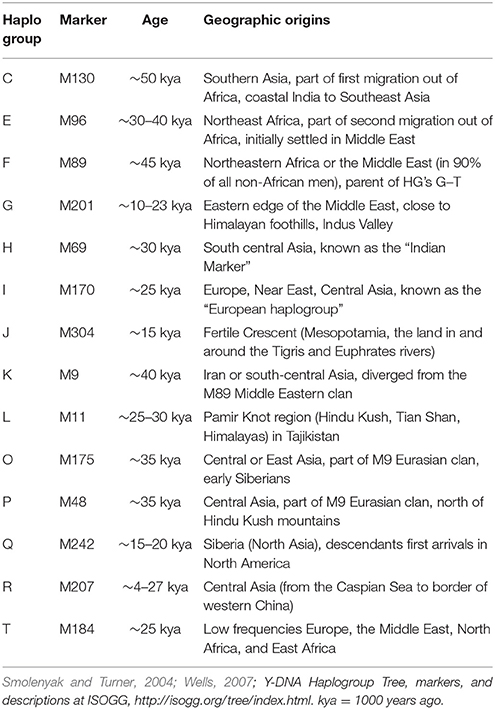
"The geographic origins of the 14 different haplogroups were ascertained from the phylogenetic tree of mankind maintained by the International Society of Genetic Genealogy (ISOGG, 2016), and published sources. They are summarized in Table 4. Table 4. Ancient geographic origins of 14 Y-chromosome haplogroups."  The top-level haplogroups are expressed as letters (A, B, C, etc.). Their sub-haplogroups or subclades are expressed as letters and numbers (G2, R1b1, E3b1b, etc.)."

"The data revealed that 14 different haplogroups representing 14 different geographic origins were present in the 50 ethnic groups used in this study (Table 3), confirming multiple lines of ancestry and geographic origins. Every ethnic group had members that belonged to more than one haplogroup, indicating that they had different lines of ancestors. There was no ethnic group in these analyses that could trace the genetic ancestry of all its members to a single MRCA. For example, members of the large Brahmin ethnic group belonged to 11 different haplogroups, indicating 11 different lines of


ancestors. Similarly, the Malayali and Nair groups had members in 10 different haplogroups, indicating at least 10 different ancestral lines."  

The 14 were:  C,E, F, G, H, I J, K, L, O, P, Q, R and T.  Letters I've highlighted are known Jewish ones of the male line.  My father is a QBZ67 (Q-M378).  Others in my family are E-L117(E1b), J1e,  and  (R-M269)(R-L21) .   E and J have been the most prevalent that I've noticed.  

www.frontiersin.org

TABLE 4. Ancient geographic origins of 14 Y-chromosome haplogroups    

Jews' history shows that we came from one source, the history before and after Moses, following his line of male ancestors.  The results of his brother, Aaron's line shows the haplogroup of J1 being the Cohen line. Other Jewish haplogroups fall under variations of J, such as J1, J2, and G, Q, R, E, I, and T.  That's 7 out of the basic 14 mentioned.  These are found in the era after the Holocaust where 6 million Jews were slaughtered, and some of them could have been carrying a different haplogroup, but we'll never know unless they left a descendant who has been tested today such as my 1st cousin.  However, in our case, the father died and left only daughters, and daughters do not carry the male haplogroups.  Sons carry both the male and female haplogroups.  He was a Jew from Germany, a long line probably going back to RASHI in 1000-1040 CE.  There are many of us who claim to have genealogy to Rashi, and we may come from a variety of haplogroups.  

R-M269 is a most interesting Haplogroup.  It is the sub-clade of human Y-chromosome haplogroup R1b that is defined by the SNP marker M269. According to ISOGG 2020 it is phylogenetically classified as R1b1a1b. It underwent intensive research and was previously classified as R1b1a2 (2003 to 2005), R1b1c (2005 to 2008), R1b1b2 (2008 to 2011) and R1b1a1a2 (2011 to 2020).R-M269 is of particular interest for the genetic history of Western Europe, being the most common European haplogroup. It increases in frequency on an east to west gradient (its prevalence in Poland estimated at 22.7%, compared to Wales at 92.3%). It is carried by approximately 110 million European men (2010 estimate). The age of the mutation M269 is estimated at 4,000 to 10,000 years ago. I believe even King Tut was found with this haplogroup.  It's carried by Gentiles of Europe and some Jews as well. They discovered that King Tut had a DNA profile that belongs to a group called haplogroup R1b1a2.


We are a religious group originating from a family, and were kept from proselytizing to others, so it's mostly genetically-based with a few exceptions.  Jews have been suffering from anti-Semitism for almost their total length of existence, and have become an endogamous people.  One person I've heard of has wanted to be a part of this group and that was Sammy Davis, Jr.  A few women have entered Judaism  through conversion, marrying a Jewish man.  

What happens is that we may have proof of a family being a branch from, let's say, King David, but not all the descendants carry segments from any of his 22 chromosomes or even the 23rd, the sex determiner chromosome.  So some of the siblings may have the gene inheritance and some don't.  Siblings in a family may not look alike, or act alike.  They may have different interests and outlooks in life.  That's because their parents have passed onto them a variety of their segments from many different ancestors.  

My father's DNA group of Qs had a leader at one time who made a survey and found its  Q members held a lot of writers.  They even included me, a female since I had published.  That seems to be one of our talents. I was astonished at how many, mostly all had published, including my own brother.   

                                     Albert Einstein, IQ 180.

Albert Einstein is alleged to belong to Y Haplogroup E. Tested Einsteins from Germany belong to E1b1b1b2* (cluster SNP PF1952, formerly known as the E-Z830-B or "Jewish cluster").

      Einstein had a daughter and two sons.  Albert's three children were from his relationship with his first wife, Mileva Marić, his daughter Lieserl being born a year before they married. He had one grandson and 4 great grandsons and 1 great granddaughter.  

The Einstein family is the family of physicist Albert Einstein (1879–1955). Einstein's great-great-great-great-grandfather, Jakob Weil, was his oldest recorded relative, born in the late 17th century, and the family continues to this day. Albert Einstein's great-great-grandfather, Löb Moses Sontheimer (1745–1831), was also the grandfather of the tenor Heinrich Sontheim (1820–1912) of Stuttgart.


Albert Einstein's second wife was Elsa Einstein, whose mother Fanny Koch was the sister of Albert's mother, and whose father, Rudolf Einstein, was the son of Raphael Einstein, a brother of Albert's paternal grandfather. Albert and Elsa were thus first cousins through their mothers and second cousins through their fathers.  No children were from this marriage.                                 

As a Jewish group, we seem to still be pretty intelligent people, and very creative as we examine the talents in Israel.  They are always coming up with new ideas.  The Nazis tried to brainwash people into thinking we were the scum of the earth, but who has merited and holds  Nobel Prizes in many fields?  Jewish people. Nobel Prizes have been awarded to over 900 individuals, of whom at least 20% were Jews."  That's pretty good, considering we Jews make up only 0.02% of the world population."Jewish laureates Elie Wiesel and Imre Kertész survived the extermination camps during the Holocaust. François Englert survived by being hidden in orphanages and children's homes. Others, such as Walter Kohn, Otto Stern, Albert Einstein, Hans Krebs and Martin Karplus fled Nazi Germany to avoid persecution."

 There were many male Jewish immigrants who were most intelligent but couldn't get into Medical schools in the States because of the quota system;  of only a certain % of Jews being allowed in them.  The country's loss was hopefully the student's gain as they had to enter other areas, hopefully related to medicine.  

That's because for a long time in Shtetles, a man was looked upon as good husband material if he was active in the synagogue, reading Hebrew from the pulpit, etc., something all men who had had a bar-mitzvah at age 13 were expected to do, actually.  Rabbis were high on the list.  Many of us have followed their genealogy to a well-known rabbi.  A rabbi was known to have all the answers people in a community were looking for, spiritually, customs of worship, and worldly.  Women were attracted to the smarted kid on the block, not the brawniest.  It's nice when that comes in one package, though.                               

I would hope that this standard would be combined sometimes, like, wasn't Bar Kokhba, the general in 132 CE who re-took Jerusalem after 63 years of having lost it to the Romans, romantic material?  It's sad,  because he died 3 years later.   He had to be brainy and brawny.  He could have become the idol for many women looking for a mate.  

It is believed that the majority of contemporary Jews descended from the ancient Israelites that had lived in the historic land of Israel until ∼2000 years ago which takes us to 1023 CE. Many of the Jewish diaspora communities were separated from each other for hundreds of years. Therefore, some divergence due to genetic drift and/or admixture could be expected. However, although Ashkenazi Jews were found to differ slightly from Sephardic and Kurdish Jews, it is noteworthy that there is, overall, a high degree of genetic affinity among the three Jewish communities. Moreover, neither Ashkenazi nor Sephardic Jews cluster adjacent to their former host populations, a finding that argues against substantial admixture of males. These findings are in accordance with those described by Hammer et al. ().  In other words, there was no mixing of populations where they lived, no hanky panky going on causing pregnancies.   

Ashkenazi Jews 

Ashkenazi Jews consolidated into a distinct ethnicity in Germany during the Middle Ages and spread eastwards to Poland and Russia in the 13th century (Ben-Sasson ). Previous studies of Y chromosome polymorphisms reported a small European contribution to the Ashkenazi paternal gene pool (Santachiara-Benerecetti et al. ; Hammer et al. ). In our sample, this low-level gene flow may be reflected in the Eu 19 chromosomes, which are found at elevated frequency (12.7%) in Ashkenazi Jews and which are very frequent in Eastern Europeans (54%–60%; Semino et al. ). Alternatively, it is attractive to hypothesize that Ashkenazim with Eu 19 chromosomes represent descendents of the Khazars, originally a Turkic tribe from Central Asia, who settled in southern Russia and eastern Ukraine and converted en masse to Judaism in the ninth century of the present era, as described by Yehuda Ha-Levi in 1140 a.d. (Dunlop ).

Sephardic Jews 

Iraqi and North African Jews are both considered to belong to the ethnically heterogeneous group of Sephardim, although the two communities were probably separated for 1,000 years.

The Jewish community in Iraq was formed by deportees during the Assyrian and Babylonian exiles (723 and 586 b.c.)

and by waves of immigrants in subsequent centuries. Communities in various North African countries and in the Iberian Peninsula were established primarily in the course of the Muslim conquest in the seventh and eighth centuries. After their expulsion from Spain in 1492 a.d., Jews were dispersed in North Africa and Southern Europe (Ben-Sasson ).

The two Sephardic communities and Kurdish Jews are very closely related to each other.

Thus, these populations seem to have preserved, to a large extent, their original Y chromosome pools.


Resource: 

https://www.frontiersin.org/articles/10.3389/fgene.2018.00004/full#:~:text=The%20geographic%20origins%20of%20the,of%2014%20Y%2Dchromosome%20haplogroups.

https://jewishfactsfromportland.blogspot.com/2010/01/what-haplogroup-we-be.html

https://en.wikipedia.org/wiki/Einstein_family