Nadene Goldfoot
How did people learn about Abraham? Wasn't that fact of Jewish history introduced through the writing by Moses in his Five Books of Moses, the first part of the Torah, their reference? What other sources were there before Moses who died in 1271 BCE? (1800-1701 BCE).
According to Jewish history, Abraham was born in the 2nd millennium BCE or about 1948 BCE.
According to conventional chronology which interprets the biblical data (1 Kings 6:1; Ex. 12:40-41; Gen. 47:9; Gen. 25:26; Gen. 21:5) in a straightforward way, Abraham (then known as Abram) was born ca. 2166 BC. If this is correct, Abraham was born in the Intermediate Bronze Age, but lived most of his life in the Middle Bronze Age, which began ca. 2100 BC. Other Bible scholars interpret the numerical date in an honorific way, rather than as literal base-10 numbers, and believe Abraham lived later in the Middle Bronze II period (ca. 1900-1550).??

Moses was a Prince of Egypt, schooled with the Pharaoh's sons. What he learned about history of Mesopotamia was what the Egyptians had researched and taught. Otherwise, as we learn, it was knowledge from G-d that he heard in his head. To me, this is how he wrote Genesis, which was ancient history. Moses was separated from his family almost at birth and was found and adopted by the Egyptian princess. He found his birth brother, Aaron, when in his late teens or early 20s. It is said that his birth mother was his wet nurse, brought to the princess by his birth sister, Mirium. He left no heirs as his own 2 sons died when teens over disobeying the rules about the ark which killed them. Aaron left many descendants who were designated by Moses to be the Cohens (high priests) in their future Judaism. With DNA today, this Y haplogroup is J1. Moses leaves us his writing: The 5 books of Moses. Moses was from the tribe of Levi, one of 12 tribes of Jacob.

What was going on then? 1750 BC: Hyksos occupation of Northern Egypt, according to some researchers. Abram could have been part of the Hyksos but is said to have lived from about 1948 BCE as a birthdate. Sovereign states were Assyria (2025-611 BCE) and Babylonia (1894-532 BCE).That fits right in the time frame.
This cuneiform text dates back to the 6th year of prince Lugalanda
who ruled about 2370 B.C. in southern Mesopotamia. It is an
administrative document concerning deliveries of three sorts of beer
to different recipients (to the palace and to a temple for offerings)
and gives the exact quantities of barley and other ingredients used in
brewing. (Image credit: Max Planck Society)
First, we consider writing and when this started. The invention of the alphabet in Canaan was around the 18th century BCE. Our story took place with Abram living in Ur of the Chaldees, a spot on the Euphrates River in Mesopotamia, and he and his family moved to Canaan.
Scholars generally agree that the earliest form of writing appeared almost 5,500 years ago in Mesopotamia (present-day Iraq). Early pictorial signs were gradually substituted by a complex system of characters representing the sounds of Sumerian (the language of Sumer in Southern Mesopotamia) and other languages. So in other words, Abram lived in the source of writing.
Egyptian alphabet:In the hieroglyphic system, instead of each letter (or character) representing part of a word, each hieroglyph represents a whole word. For example, instead of four symbols spelling B-I-R-D for the word bird, there would just be one; and it was probably just a picture of a bird!Full writing-systems appear to have been invented independently at least four times in human history: first in Mesopotamia (present-day Iraq) where cuneiform was used between 3400 and 3300 BC, and shortly afterwards in Egypt at around 3200 BC.
Stela of the Gatekeeper, Maati; Maati is shown seated in front of an offering table with a jar for a sacred oil in his left hand.New discoveries have pushed back the date for writing in Egypt close to that of Mesopotamia. Discoveries of large-scale incised ceremonial scenes at the rock art site of El-Khawy in Egypt date to around 3250 BC. They show features similar to early hieroglyphic forms. Some of these rock-carved signs are nearly half a metre in height. Found was an Egyptian stela with hymn to Osiris. This was a limestone stela showing classical hieroglyphs from 3,600 years ago.
The Stele-Rosetta Stone of EgyptMany of us have heard of the Rosetta Stone, a computer program that helps us to learn new languages. It was taken from a stele with many languages written on it. The Rosetta Stone is a stele composed of granodiorite inscribed with three versions of a decree issued in Memphis, Egypt, in 196 BC during the Ptolemaic dynasty on behalf of King Ptolemy V Epiphanes. The top and middle texts are in Ancient Egyptian using hieroglyphic and Demotic scripts respectively, while the bottom is in Ancient Greek. The decree has only minor differences between the three versions, making the Rosetta Stone key to deciphering the Egyptian scripts.
From 2900 BC, these began to be impressed in wet clay with a reed stylus, making wedge-shaped marks which are now known as cuneiform. Writing in ink using reed brushes and pens is first found in Egypt. This ink writing came to be known in Greek as hieratic (‘priestly’ script), whilst the carved and painted letters we see on monuments are called hieroglyphs (‘sacred carvings’).
40 years of walking: The Journey--The Exodus out of EgyptAccording to Jewish history, Moses was born in 1391 BCE and died 120 years later in 1271 BCE. He was the author of the Exodus. He used his time on the Exodus to write about it and the earlier history the people of the Exodus told him about that they were taught by their parents. That way, the stories about Abram of Ur were recorded. It's figured that Abram lived in the 2nd millennium BCE in about 1948 BCE.
Abram and Sarai by their tent with baby Isaac. We first hear about Abram in In the Book of Genesis,(12:1-9) the story of Abraham is a story of the conversation between God and the people of Israel. That long conversation begins with Abraham, a great man of faith. When God first called Abraham, he was known as Abram.
Abraham, father of MonotheismTherefore, it seems to be the only original reference available to Muslims who developed as followers of Mohammad (570-632). Anything written about Abram-Abraham would have been after Moses. The fact special about Abram was how he broke away from polytheism and became the Father of Monotheism.
Modern secular laws treat human sacrifices as tantamount to murder. Most major religions in the modern day condemn the practice. For example, the Hebrew Bible prohibits murder and human sacrifice to Moloch, a god of one of the polytheistic people. It was one of the aspects of Baal, the Sidonian god of hell. The Canaanites and peoples under their influence sacrificed human beings, especially 1st- born children. Evidently people in Ur were doing it, too, which is one reason why Abram left Ur, only to find it practiced in Canaan.
Ur in the distance with the ziggurat. In the ancient Near East and Egypt, human sacrifice was associated with elite tombs and funerary practices. One of the world’s most famous ancient sites is Ur, located in southern Iraq on the Euphrates River. A royal line of Sumerian kings and queens ruled there in the third millennium BCE, commissioned monumental buildings and temples, and towards the end of the millennium, created perhaps the most iconic type of Mesopotamian structure – the ziggurat.
But hundreds of years before this, around 2500 BCE, the Sumerians mourned and remembered their dead by building large mudbrick tombs. Sixteen such ‘Royal Tombs’ were found during excavations in the 1920s directed by Sir Leonard Woolley, among hundreds of more modest graves. These royal funeral proceedings were flamboyant and extravagant. The largest assemblages contained thousands of objects: gold, silver and bronze vessels, jewelry, seals, weapons, tools, gaming boards, musical instruments elaborately decorated, and a wealth of other exotic and prestige items, some of whose functions we still do not understand. Animals and humans were sacrificed to complete the assemblage.
Because of Judaism, other people have learned of their ancestry, also found in the Bible that Abram was the son of Terah and the father of Isaac by Sarah and Ishmael by his concubine, Hagar. The story of how he left Ur and lived among the Canaanite and Philistine inhabitants of Canaan (Eretz Yisrael), how he visited Egypt and returned to live in Hebron. He fought to save Lot, his nephew, from Chedorlaomer, king of Elam, Amraphel, king of Shinar and their allies. They can learn how G-d appeared to him in a vision and promised that his descendants would inherit the land "from the river of Egypt to the Euphrates," made a covenant with him, and tested his loyalty by ordering the sacrifice of Isaac which is the topic causing disagreements between Jews and Muslims, for Muslims have changed the story to have Ishmael be the sacrifice, not Isaac.

Judaism, the religion of the followers of Moses' teachings, certainly was an ancient religion by then, ancient already by the time Christianity came into being as followers of Jesus who died by Jewish history in 29 CE. By the way, the name, Jesus, is the Greek form of Joshua.
By 70 CE, the Romans had occupied Jerusalem, then burned it down with the Temple.
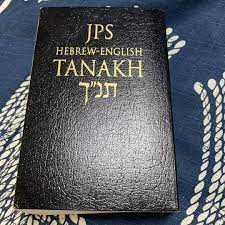
Rabbis took their copies of the Torah and fled along with any Jews left alive. The first to establish a Hebrew printing-press and to cut Hebrew type (according to Ginsburg) was Abraham ben Hayyim dei Tintori, or Dei Pinti, in 1473. He printed the first Hebrew book in 1474 (Tur Yoreh De'ah) or Tanakh. In 1477 there appeared the first printed part of the Bible in an edition of 300 copies. People were finally able to read for themselves about Abraham and our beginnings.
Greek and Roman Gods on Mt. Olympus At this same time, Greece and Rome had a polytheistic religion that they were following and took a long time to forget even with the adopting of Christianity. Forms of it snuck into Christianity.
Abraham, 1st on the list of our prophets; on the trek to Canaan; took 2nd wife, Keturah; Abraham said to die at age 175, bought and buried in the cave of Machpelah which became the family burial place. There are legends about Abraham. According to hellenistic legends, he was king of Damascus. Arab legends claim he laid the foundations for the sanctuary at Mecca.
"The story of Abraham and Isaac is also part of Jewish, Christian, and Muslim religions", Catholic Artist Trina Paulus said who was making a statue of Abraham and Isaac. "The Muslims celebrate Abraham and Isaac 50 days after Ramadan as a feast parallel to the crucifixion", Paulus said.
“It’s the great mystery feast for them,” Paulus said, adding that Muslims have put a lot of emphasis on Isaac’s willingness to be sacrificed.
It’s a disturbing story to many people of all faiths. Some theologians such as Martin Luther praised Abraham’s unquestioning loyalty to God, while others like ethics philosopher Immanuel Kant felt that Abraham should have realized God would never make such an immoral command.
Recent biblical research is inclined to maintain his historical integrity. It is generally believed that he lived at the beginning of the 2nd millennium. BCE.
Resource:
https://www.bl.uk/history-of-writing/articles/where-did-writing-begin#:~:text=Full%20writing%2Dsystems%20appear%20to,Egypt%20at%20around%203200%20BC.
https://en.wikipedia.org/wiki/18th_century_BC
https://answersresearchjournal.org/abraham-chronology-ancient-mesopotamia/
https://biblearchaeologyreport.com/2021/07/16/top-ten-discoveries-related-to-abraham/
https://jerseycatholic.org/the-uncomfortable-story-of-abraham-and-isaac-interpreted-by-local-catholic-artist-1#:~:text=For%20years%2C%20Catholic%20artist%20Trina,willing%20to%20sacrifice%20for%20us.