Showing posts with label city of Ur. Show all posts

Wednesday, December 4, 2024

Jewish Traders and Their Affects In The World

 Nadene Goldfoot                                           

            During the Stone Age, people traded goods through a barter system, exchanging one item for anotherTrade was a significant change that occurred when people began to settle in towns and villages and develop a surplus of food and other resources. Eretz Yisrael was created from Canaan, and Abraham headed there with niece/wife Sarah and family.  This would be today's Syria from 15th to 13th century BCE along the coast of  Eretz Yisrael, called Palestine after 135 CE.  People lived in  small city-states then.                                     

 Abram and Sarai, as they were first called, came from Ur of the Chaldees,  on the Euphrates River, an ancient Babylonian city full of interesting man-made items.  Abram's journey took him first to Haran, a trading town of NW  Mesopotamia, also the center of a moon cult.  There was a Habiru (Hebrew?) settlement there as well.   You can be sure that they must be on a trading quest, meeting people and trading with them till they arrive at  their destination, Hebron (Kiriath-Arba) , which became part of Judah.  It used to be a city under control by the Hittites.  Abraham bought a plot of land here, the Cave of Machpelah in Hebron in which to bury Sarah, and himself when the time came.                                            

Trading would have gone on between the people neighboring Eretz Yisrael.  Trading would have started when they saw what Judeans used and made and needed. Trading practices must have started early in stone age periods.   The history of trade is the evolution of commerce over time, from local exchanges to global interactionsTrade has been a part of human existence for over 100,000 years, and has played an important role in the development of civilizations                                        

                                        Turkey (Anatolia) Greece and Israel 

The Philistines were a Mediterranean people most likely originating from Asia Minor.  Asia Minor is now part of TurkeyAsia Minor, also known as Anatolia, is a peninsula in West Asia that makes up most of Turkey's land area.  They also came from   Greek locations that were fairly close by via the sea.  They came in different time periods. 

     Gerar, a  Nahal (River) and Negev Desert.  

One group arrived in the pare-patriarchal period and settled South of Beersheba in Gerar where they came into conflict with Abraham and his son, Isaac.  Gerar is a city and region in the Hebrew Bible that appears in the Book of Genesis and the Second Book of Chronicles:  Gerar, in Hebrew meaning "lodging-place, was a Philistine town and district in whatis today south central Israel, mentioned in the bible.  Gerar was also a Philistine town in the Negev,  south of Gaza and near the Mediterranean coast.  It was a reference   point for the southern end of the Canaanites territory.    Abraham and Isaac lived here.(Gen.chs.20,26) Abraham traveled here during a famine and presents Sarah as hissister to avoid being killed by the locals.   (The Negev or Negeb is a desert and semidesert region of southern Israel. The region's largest city and administrative capital is Beersheba)


Another group came from Crete, an island off of the shores of Greece after being driven out of Egypt by Rameses III in 1194 BCE.  They then seized the southerncoastal area of Eretz Yisrael where they founded 5 principalities:  Gaza, Ascalon, Ashdod, Ekron, and Gath.    Gaza stands to this day but with Palestinian Arabs.  It's 2 miles from the sea. 

Commercially, it was noted for its black pottery and in Nabatean times was an entrepot of trade passing from the Red Sea to the Mediterranean. Entrepot trade, also known as transhipment, is a type of international trade where goods are imported into a country and then re-exported without being distributed within the importing country.

                                        In the 12th century  BCE,  Gaza was captured by the Philistines and taken over and  was used for the       Temple of Dagon, god of the soil and plant-growth and widely worshipped in the Middle Eastern countries.    

By nature, they were a fighting people, not traders.  They dominated parts of Judah in the period of the Judges when they would have interaction with the people, around 1220 to 1950.    

From the time of Herodotus, Greeks called Eretz Yisrael after the Philistines; the Syrian Palaestina.  Under Hadrian,  the Romans gave the name officially to the former land of Judah.                      

Shalmaneser , king of Assyria, (860-825 BCE) held a siege of Samaria, part of Israel;  and Sargon, his successor, captured it  in 721 BCE.  He then annexed the country and deported  27,290 Israelitesto Assyria, which had been an aggressive kingdom by the 20th century BCE expanding rapidly in the 13th -10th centuries, no doubt through trading peopleand goods.                                   

Jews were leaving Eretz Yisrael for trading before the Greek and Roman invasions.They went to Rome first, and Spain for trade, possibly decided by the rabbi they werefollowing  into safety.  

According to historical evidence, Jews likely traveled to Greece for trade before the time of Alexander the Great, with some records indicating a Jewish presence in Greece dating back to the Babylonian exile, even though these communities were likely small and scattered before Alexander's conquests established a more significant Jewish presence in the region.   Jews were in Spain (Sepharad) from the period of the destruction of the 1st Temple of Solomon in 597 BCE by Nebuchadnezzar of Babylonia.  The history of the Jews in Greece can be traced back to at least the fourth century BCE. The oldest and the most characteristic Jewish group that has inhabited Greece are the Romaniotes, also known as "Greek Jews."                                            

            Part of Arch of Titus, proof of Romans invading and stealing goods from the Temple in 70 CE before they burnt down Temple and Jerusalem.  It shows how Jews, taken as slaves, were forced to carry their holy articles from the Temple for the greedy Romans.              

Jews were in Rome in 139 BCE as Judeans.  The first century B.C. in Rome corresponds with the last decades of the Roman Republic and the start of the rule of Rome by emperors.  It was an exciting era dominated by strong men, like Julius CaesarSullaMariusPompey the Great, and Augustus Caesar, and civil wars.                                                            

      Whoops!    Silk Roads!  many ways to get there.  One leaves from Gaza.  

The Silk Road trade brought Jews to Kaifeng, China in the early 12th century (1100 CE). For 800 years this community maintained both economic and religious contact with the rest of world Jewry, which in turn allowed them to maintain their own Jewish practices.  The Silk Road was a transportation hub that connected China and the Mediterranean region, and it played a significant role in the history of Jewish people:                                                           Jewish merchants

  • Jewish merchants traveled the Silk Road as early as the 9th century, and may have been involved in forming the basis for some Jewish communities. Jewish traders from Persia and Western Europe began to settle in China in the 8th century, and a Persian-speaking Jewish community settled in Kaifeng in the 12th century. This community maintained economic and religious ties with the rest of the Jewish world for 800 years. Jews may have arrived in India as early as the 1st century CE, and a large Jewish community developed in the port city of Cochin. After the Sasanian ruler Cyrus freed the Jewish population in 559 B.C.E., many Jews chose to stay in Iran and created Jewish settlements along the Silk Road. There was a large Jewish population in Afghanistan, especially in the north near the trade routes. 
                                                                 
     Genetic connection
  • Genetic analysis suggests that there is a direct genetic connection between Jews and Chinese, with some Eastern Eurasian haplogroups shared between the two groups. The Silk Road is experiencing a renaissance, with the World Tourism Organization promoting international tourism ventures along the road.  Many male Jews have the Y haplotype of J1, or J2.  Many women have the Mt haplotype of K.  

  • Jews were in China from Persia in about 1000 CE.  They had a community at KAI FENG FU  and became completely assimilated to Chinese customs and mores.  They disappeared at the end of the 18th century.  In the 19th century, Jews from Baghdad lived in Hong Kong and Shanghai.  Even during WWII, a few Jews managed to escape to a Chinese city for refuge.  They weren't persecuted over religion and being forced to convert or harmed for being Jewish.  

  • As Germany ended their use of the Jewish people and forced them to leave, they sought out other hopeful places for homes in eastern Europe.  

  • Lithuania  had Jews living there from 1321.  1492's Spanish Inquisition caused Jews to flee for their lives.  10,000 Jews  entered Lithuania in Vilna, Grodno and Kovno by 1495.  They soon monopolized foreign trade.  They would not convert, so the Jewish badge was forced upon them to wear from 1566 to 1572. 

  •  Jews lived in Poland since the 9th century (800s).  Their 1st Jewish settler came from either West Germany, Bohemia, or the south of the kingdom of Kiev and the Byzantine Empires, and were reinforced by KHAZAR elements.  They would have been traders, who in the Dark Ages helped to open up the area to civilizing influences.  According to legend, the 1st  charter was granted in 905.  Polish coins of the 12th-13th centuries struck by Jewish mint-masters bear Hebrew inscriptions, thus showing the significance of the Jews in economic life.  
Many countries invited Jews to come and live in order to have someone deal with the needed trading businesses. Jews have had a significant presence in European cities and countries since the fall of the Roman Empire, including ItalySpainPortugalFrancethe NetherlandsGermanyPoland, and Russia, mainly to help out the kings by loaning money or doing foreign trade.
 Jews were literate and had experience.  After they brought success to the emperor or king,  they were often discarded;  no longer needed.  

Resource:

https://jewishbubba.blogspot.com/2014/02/how-jews-became-merchants.html

The New Standard Jewish Encyclopedia

https://www.southwesternrugsdepot.com/history-native-american-baskets/

https://en.wikipedia.org/wiki/History_of_the_Jews_in_Greece#:~:text=The%20history%20of%20the

%20Jews,least%20the%20fourth%20century%20BCE.


Monday, July 31, 2023

Differentiating the Chaldeans From Others of Babylon-Part 3

 Nadene Goldfoot                                                 

       Chaldeans, Semites (speakers of Hebrew/Arabic)  on the move migrating westward towards Ur, an ancient Babylonian city, probably of the 3rd millennium since Abram, born much later in about 1948 BCE of the 2nd millennium, was on the scene. 

The First Dynasty of Ur was a 26th-25th century BCE dynasty of rulers of the city of Ur in ancient Sumer. It is part of the Early Dynastic period III of the history of Mesopotamia. It was preceded by the earlier First Dynasty of Kish and the First Dynasty of UrukHistory can go WAY BACK.  

 Abram will even later migrate with his family to Haran, a trading town of NW Mesopotamia and center of a moon cult. Instead of continuing to Canaan, they stopped and settled in Haran where Terah died at the age of 205. Abraham’s departure from Haran is recorded on the Biblical Timeline Chart around 2004 BC. which was his age of 75.  People of Ur were not Semites.  They would not understand each other, so the Chaldeans will become a  bi-lingual people.    

Assyrian inscriptions from this time mention a Habiru (Hebrew) settlement in the vicinity which some scholars link with Abraham's father, Terah's home there.  They the 12th century CE, a small Jewish community still was in existence-found by Benjamin of Tudela, historian.                                    

      Abram on the move to Haran or away towards Canaan  

Sir Woolsey mentions that "the Chaldaeans and Aramaeans emerged as major political forces.  The city of Ur retained some vestiges of independence within the territory of the Chaldaean tribe of Bir-Jakin. Actually, I found that there had been 5 tribes of Chaldaeans.   This was the period when it might most appropriately have been known as "Ur of the Chaldees."  The question now is, which tribe did Abram and Terah belong?  We can see that Abram was an individualistic thinker among his own Chaldean people, his own tribe, even;  unique, like an Einstein.  

We should be very familiar with the title of Abraham's city of birth being Ur of the Chaldees, and the question came up as to why not just Ur and what was the Chaldees suffix?  We've learned that there was a small nation of Chaldea lying more in the land of Persia further eastward that had migrated into the lands of the Euphrates River to the city of Ur and through the centuries, those immigrants and their descendants had become the mightier force of the city.  They were Semitic people, and that means they were Hebrew or Arabic speakers of some blend or other, while the native population were not. 

It could even be that Ur had its Chaldean neighborhoods, just like minorities have their neighborhoods today in large cities.  Since they had become a more powerful influence on the city, it could even be that the Royalty were Chaldeans.  The history handed down to Moses who wrote all this in Genesis was that Abraham (name now changed to signify his changes) was from Ur of the Chaldees...the Chaldees area of Ur and its people, not the general original native population.                                 

    The yellow area is the Land of Shinar (Chaldees) Abram's 5 tribes had come from the Persian area (Iran) originally.  Babylon was the Cradle of Humanity according to the Bible.  It was also the scene of Man's 1st revolt against G0d with the story, the Tower of Babel.  Many early biblical stories find parallels in Babylonian literature like the Flood.                               
   Peter Brueghel the Elder's painting of  Tower of Babel 
   
    Ruins of Ur showing Ziggaret of building...steps upwards
                                             

Come, let us make a city and a tower": Pieter Bruegel the Elder's Tower of Babel and the Creation of a Harmonious Community in Antwerp - Journal of....

The people of Babylon, known to us  in the Bible as the Land of Shinar or of the Kasdim (Chaldees) after they became powerful to become the leading people.  

Nanna, Possible depiction of the god Nanna, seated on a temple-like throne, on a fragment of the Stele of Ur-Namma at the University of Pennsylvania Museum of Archaeology and Anthropology (object number B16676.14) (ca. 2100 BCE). The stele was excavated at Ur. © Penn Museum.  The moon god's wife is the goddess Ningal (Akk. Nikkal) and their children are Inana and Utu (Edzard 1965:

From the earliest periods, Nanna/Su'en was the patron deity of the city of Ur. The name of his main sanctuary in Ur was é-kiÅ¡-nu-gál, the name also used for the moon god's sanctuaries in Babylon and Nippur (George 1993: 114). From the Akkadian period until the middle of the Old Babylonian period, the daughter of the reigning king was appointed to be the high-priestess of the moon god at Ur (Krebernik 1993-98b: 367-9). ... Other Mesopotamian cult places for the moon god include Ga'eÅ¡, a place in the neighbourhood of Ur,... Beyond the alluvial plains of Mesopotamia, a cult centre of Nanna/Su'en is attested at Harran, south-east of modern Urfa, from the Old Babylonian period onwards, where the temple name was é-húl-húl "House of Rejoicing" (Krebernik 1993-98b: 368). At Harran a long inscription was found on a stele, which commemorates Adda-guppi, the mother of Nabonidus, and which celebrates her reverence of the moon god. Another stele inscription from Harran describes Nabonidus' accession to the throne,...

Abraham's message to the world, coming to him from G-d, was that there was but ONE G-d, not a multitude of gods, ONE power that created the world.  He had lived with the people in Haran who had worshipped the moon god, Nanna and his wife, etc, yet came to this conclusion anyway.  

After Abraham's day lived Hammurabi, the king in Babylon (1728-1686 BCE) who was the great lawgiver.  His famous legal code was recently discovered concerning social life and its penalties that were so severe, all rooted in Mesopotamian culture. 

Moses, according to Jewish time, was born later in Egypt (1391-1271 BCE who gave us his original Ten Commandments and then more, adding up to 613.  He was a Prince of Egypt and was educated there, capable of reading and writing.     

Much later in Babylon, their king Nebuchadnezzar II (604-561 BCE) inherited the Assyrian empire when he conquered  our last of the 10 tribes, Judah in 597 and again in 586 BCE when he exiled these to Babylon.  Cyrus, the next king of power had permitted the Judeans (Jew) to return to Jerusalem in 539 BCE, but not all took him up on this offer.  It was a hard trek; they were born in Babylon and had only heard about Jerusalem from grandparents.  So the population became intermingled with Jews, especially in the towns of Nehardea, Nisibis, Mahoza with all Jewish populations.  

During the Roman occupation in Judaea of about (98-117 CE )the Babylonian Jews rose against emperor Trajan in a revolt due to his oriental policy that led to a major clash.  The Roman commander, Lucius Quietus (116 CE) suppressed it. Trajan had ordered  a massacre of the Jews in Mesopotamia.  Judea itself was kept under firm control by Lucius.   The suppression of the various risings ended the prosperity of the Jewish settlements in Egypt, Cyrenaica and Cyprus.  

Jews of Babylon enjoyed an extensive measure of internal autonomy under both Persian and Parthian rule that followed.  They had an exilarch of Davidic descent who was the king's representative, while the community was governed by a council of elders.  At this time the produced the Babylonian Talmud.  They were learned in Jewish studies and had produced works of literary merit like Ezekiel, Daniel, and Tobit.                               

Rabbi Akiva, (ben Joseph) 50  to 135, humble, uneducated until age 40 with wife Rachel, devoted himself to learning.  Became regarded as greatest scholar of his time, with thousands of students studying under him.  Roman government forbade the study of The Law of Moses which he ignored.  He was arrested, finally executed at Caesarea.  No rabbi of the talmudic period made a more profound impression on Jewish history and on the imagination of the Jewish people than he.  

Babylon had earned a good name by the beginning of the new 3rd century and became the main center of rabbinic studies, academics being founded by Samuel at Nehardea and by Rav at Sura, while in the later 3rd century, the academy of Pumbedita was founded to replace that at Nehardea that was destroyed in 261. By 425 Babylon had become the spiritual center for all Jewry.  

Then persecutions happened in the 5th century which led to the Jewish revolt under Mar Zutra II who held out for 7 years but was finally captured and killed in 520.  He had been a Babylonian exilarch and at the age of 15 had succeeded his father, Huna, who had been killed in the religious persecutions instigated by Firuz of Persia.  Revolting in 513 against king Kohad, Zutra established an independent Jewish state in the district of Mahoza, which lasted for 7 years.  After his defeat, he and his grandfather, R Hananiah, were crucified.  His son, Mar Zutra III, born on the day of his death, was taken to Palestine, where an unsuccessful attempt was made to revive the Patriarchate for him.  

Do you notice that everywhere, people fight for their independence?  They don't like to be told what to do by others, what they can or cannot be allowed to do.  

  The Talmud was finished at about this period.  the position of the Jews continued to be difficult until the Arab conquest of the 7th century.    Just think of that.  Arab made life much better for Jews !  What a history we have had!  

These outstanding Jews could have all been descendants of Abraham, Moses, and King David, and Hillel.  All would have been from a little Semitic tribe of Chaldea East of Ur.    

 Resource:

Book:  UR "of the Chaldees" by Moorey-about Woolley and Ur

The New Standard Jewish Encyclopedia

https://amazingbibletimeline.com/blog/abraham-75-years-old-departed-with-lot-from-haran/

Tanakh (Bible)  Genesis 11:31-32;  Genesis 12

http://oracc.museum.upenn.edu/amgg/listofdeities/nannasuen/

https://en.wikipedia.org/wiki/Mar-Zutra_II

https://www.jewishencyclopedia.com/articles/15307-zutra-mar-ii

https://www.jpost.com/opinion/a-jewish-kingdom-in-ancient-babylon-452113

Sunday, May 28, 2023

Where Is It Written About Abraham?

 Nadene Goldfoot                                           

How did people learn about Abraham?  Wasn't that fact of Jewish history introduced through the writing by Moses in his Five Books of Moses, the first part of the Torah, their reference?  What other sources were there before Moses who died in 1271 BCE?  (1800-1701 BCE).

According to Jewish history, Abraham was born in the 2nd millennium BCE or about 1948 BCE.  

According to conventional chronology which interprets the biblical data (1 Kings 6:1; Ex. 12:40-41; Gen. 47:9; Gen. 25:26; Gen. 21:5) in a straightforward way, Abraham (then known as Abram) was born ca. 2166 BC. If this is correct, Abraham was born in the Intermediate Bronze Age, but lived most of his life in the Middle Bronze Age, which began ca. 2100 BC. Other Bible scholars interpret the numerical date in an honorific way, rather than as literal base-10 numbers, and believe Abraham lived later in the Middle Bronze II period (ca. 1900-1550).??

Moses was a Prince of Egypt, schooled with the Pharaoh's sons.  What he learned about history of Mesopotamia was what the Egyptians had researched and taught.  Otherwise, as we learn, it was knowledge from G-d that he heard in his head.  To me, this is how he wrote Genesis, which was ancient history.  Moses was separated from his family almost at birth and was found and adopted by the Egyptian princess.  He found his birth brother, Aaron, when in his late teens or early 20s. It is said that his birth mother was his wet nurse, brought to the princess by his birth sister, Mirium.   He left no heirs as his own 2 sons died when teens over disobeying the rules about the ark which killed them. Aaron left many descendants who were designated by Moses to be the Cohens (high priests) in their future Judaism.   With DNA today, this Y haplogroup is J1. Moses leaves us his writing: The 5 books of Moses.  Moses was from the tribe of Levi, one of 12 tribes of Jacob.     

What was going on then?  1750 BC: Hyksos occupation of Northern Egypt, according to some researchers. Abram could have been part of the Hyksos but is said to have lived from about 1948 BCE as a birthdate.   Sovereign states were Assyria (2025-611 BCE) and  Babylonia (1894-532 BCE).That fits right in the time frame.

This cuneiform text dates back to the 6th year of prince Lugalanda 

who ruled about 2370 B.C. in southern Mesopotamia. It is an 

administrative document concerning deliveries of three sorts of beer 

to different recipients (to the palace and to a temple for offerings) 

and gives the exact quantities of barley and other ingredients used in 

brewing. (Image credit: Max Planck Society)

First, we consider writing and when this started.  The invention of the alphabet in Canaan was around the 18th century BCE.  Our story took place with Abram living in Ur of the Chaldees, a spot on the Euphrates River in Mesopotamia, and he and his family moved to Canaan.                               

Scholars generally agree that the earliest form of writing appeared almost 5,500 years ago in Mesopotamia (present-day Iraq). Early pictorial signs were gradually substituted by a complex system of characters representing the sounds of Sumerian (the language of Sumer in Southern Mesopotamia) and other languages.  So in other words, Abram lived in the source of writing.  

                       Egyptian alphabet:In the hieroglyphic system, instead of each letter (or character) representing part of a word, each hieroglyph represents a whole word. For example, instead of four symbols spelling B-I-R-D for the word bird, there would just be one; and it was probably just a picture of a bird!

Full writing-systems appear to have been invented independently at least four times in human history: first in Mesopotamia (present-day Iraq) where cuneiform was used between 3400 and 3300 BC, and shortly afterwards in Egypt at around 3200 BC.  

Stela of the Gatekeeper, Maati;  Maati is shown seated in front of an offering table with a jar for a sacred oil in his left hand.

New discoveries have pushed back the date for writing in Egypt close to that of Mesopotamia. Discoveries of large-scale incised ceremonial scenes at the rock art site of El-Khawy in Egypt date to around 3250 BC. They show features similar to early hieroglyphic forms. Some of these rock-carved signs are nearly half a metre in height. Found was an Egyptian stela with hymn to Osiris.  This was a  limestone stela showing classical hieroglyphs from 3,600 years ago.                                              

     The Stele-Rosetta Stone of Egypt

Many of us have heard of the Rosetta Stone, a computer program that helps us to learn new languages.  It was taken from a stele with many languages written on it.  The Rosetta Stone is a stele composed of granodiorite inscribed with three versions of a decree issued in Memphis, Egypt, in 196 BC during the Ptolemaic dynasty on behalf of King Ptolemy V Epiphanes. The top and middle texts are in Ancient Egyptian using hieroglyphic and Demotic scripts respectively, while the bottom is in Ancient Greek. The decree has only minor differences between the three versions, making the Rosetta Stone key to deciphering the Egyptian scripts.

From 2900 BC, these began to be impressed in wet clay with a reed stylus, making wedge-shaped marks which are now known as cuneiform. Writing in ink using reed brushes and pens is first found in Egypt. This ink writing came to be known in Greek as hieratic (‘priestly’ script), whilst the carved and painted letters we see on monuments are called hieroglyphs (‘sacred carvings’).

 40 years of walking:  The Journey--The Exodus  out of Egypt

According to Jewish history, Moses was born in 1391 BCE and died 120 years later in 1271 BCE.  He was the author of the Exodus.  He used his time on the Exodus to write about it and the earlier history the people of the Exodus told him about that they were taught by their parents.  That way, the stories about Abram of Ur were recorded.  It's figured that Abram lived in the 2nd millennium BCE in about 1948 BCE.  

Abram and Sarai by their tent with baby Isaac.  

We first hear about Abram in In the Book of Genesis,(12:1-9) the story of Abraham is a story of the conversation between God and the people of Israel. That long conversation begins with Abraham, a great man of faith. When God first called Abraham, he was known as Abram. 

                   Abraham, father of Monotheism

Therefore, it seems to be the only original reference available to Muslims who developed as followers of Mohammad (570-632).  Anything written about Abram-Abraham would have been after Moses.  The fact special about Abram was how he broke away from polytheism and became the Father of Monotheism. 

Modern secular laws treat human sacrifices as tantamount to murder. Most major religions in the modern day condemn the practice. For example, the Hebrew Bible prohibits murder and human sacrifice to Moloch, a god of one of the polytheistic people. It was one of the aspects of Baal, the Sidonian god of hell.  The Canaanites and peoples under their influence sacrificed human beings, especially 1st- born children.  Evidently people in Ur were doing it, too, which is one reason why Abram left Ur, only to find it practiced in Canaan.  

                Ur in the distance with the ziggurat.  

 In the ancient Near East and Egypt, human sacrifice was associated with elite tombs and funerary practices. One of the world’s most famous ancient sites is Ur, located in southern Iraq on the Euphrates River. A royal line of Sumerian kings and queens ruled there in the third millennium BCE, commissioned monumental buildings and temples, and towards the end of the millennium, created perhaps the most iconic type of Mesopotamian structure – the ziggurat.

But hundreds of years before this, around 2500 BCE, the Sumerians mourned and remembered their dead by building large mudbrick tombs. Sixteen such ‘Royal Tombs’ were found during excavations in the 1920s directed by Sir Leonard Woolley, among hundreds of more modest graves. These royal funeral proceedings were flamboyant and extravagant. The largest assemblages contained thousands of objects: gold, silver and bronze vessels, jewelry, seals, weapons, tools, gaming boards, musical instruments elaborately decorated, and a wealth of other exotic and prestige items, some of whose functions we still do not understand. Animals and humans were sacrificed to complete the assemblage.

Because of Judaism, other people have learned of their ancestry, also found in the Bible that Abram was the son of Terah and the father of Isaac by Sarah and Ishmael by his concubine, Hagar.  The story of how he left Ur and lived among the Canaanite and Philistine inhabitants of Canaan (Eretz Yisrael), how he visited Egypt and returned to live in Hebron. He fought to save Lot, his nephew,  from  Chedorlaomer, king of Elam, Amraphel, king of Shinar and their allies.  They can learn how G-d appeared to him in a vision and promised that his descendants would inherit the land "from the river of Egypt to the Euphrates," made a covenant with him, and tested his loyalty by ordering the sacrifice of Isaac which is the topic causing disagreements between Jews and Muslims, for Muslims have changed the story to have Ishmael be the sacrifice, not Isaac.  

     Moses as a baby brought to Princess of Egypt.  Mirium, older sister of Moses suggested a wet nurse who was her mother, Jochabed, real mother of the baby.  

Judaism, the religion of the followers of Moses' teachings,   certainly was an ancient religion by then,  ancient already by the time Christianity came into being as followers of Jesus who died by Jewish history in 29 CE.  By the way, the name, Jesus, is the Greek form of Joshua.  

By 70 CE, the Romans had occupied Jerusalem, then burned it down with the Temple.  

Rabbis took their copies of the Torah and fled along with any Jews left alive.       

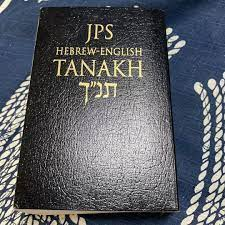
The first to establish a Hebrew printing-press and to cut Hebrew type (according to Ginsburg) was Abraham ben Hayyim dei Tintori, or Dei Pinti, in 1473. He printed the first Hebrew book in 1474 (Tur Yoreh De'ah) or Tanakh. In 1477 there appeared the first printed part of the Bible in an edition of 300 copies. People were finally able to read for themselves about Abraham and our beginnings.                      

     Greek and Roman Gods on Mt. Olympus

 At this same time, Greece and Rome had a polytheistic religion that they were following and took a long time to forget even with the adopting of Christianity.  Forms of it snuck into Christianity. 

Abraham, 1st on the list of our prophets;  on the trek to Canaan; took 2nd wife, Keturah; Abraham said to die at age 175, bought and  buried in the cave of Machpelah which became the family burial place.  

There are legends about Abraham.  According to hellenistic legends, he was king of Damascus.  Arab legends claim he laid the foundations for the sanctuary at Mecca.  

"The story of Abraham and Isaac is also part of Jewish, Christian, and Muslim religions", Catholic Artist Trina Paulus said who was making a statue of Abraham and Isaac. "The Muslims celebrate Abraham and Isaac 50 days after Ramadan as a feast parallel to the crucifixion", Paulus said.  

“It’s the great mystery feast for them,” Paulus said, adding that Muslims have put a lot of emphasis on Isaac’s willingness to be sacrificed. 

It’s a disturbing story to many people of all faiths. Some theologians such as Martin Luther praised Abraham’s unquestioning loyalty to God, while others like ethics philosopher Immanuel Kant felt that Abraham should have realized God would never make such an immoral command.  

Recent biblical research is inclined to maintain his historical integrity.  It is generally believed that he lived at the beginning of the 2nd millennium.   BCE. 


Resource:

https://www.bl.uk/history-of-writing/articles/where-did-writing-begin#:~:text=Full%20writing%2Dsystems%20appear%20to,Egypt%20at%20around%203200%20BC.

https://en.wikipedia.org/wiki/18th_century_BC

https://answersresearchjournal.org/abraham-chronology-ancient-mesopotamia/

https://biblearchaeologyreport.com/2021/07/16/top-ten-discoveries-related-to-abraham/

https://jerseycatholic.org/the-uncomfortable-story-of-abraham-and-isaac-interpreted-by-local-catholic-artist-1#:~:text=For%20years%2C%20Catholic%20artist%20Trina,willing%20to%20sacrifice%20for%20us.