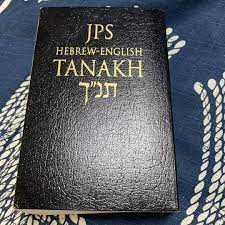
Showing posts with label Tanakh. Show all posts

Saturday, June 14, 2025

In "Daniel" of Old Testament, The Bear From the North Will Surprise You

 Nadene Goldfoot                                            

We've gone through the 4 great empires, with Rome destroying Jerusalem in 70 CE.  That was 1,955 years ago.  In 1955, Persia/Iran was a nation undergoing significant political and economic shifts under the rule of Shah Mohammad Reza Pahlavi, the ruler kicked out by the Ayatolah, who was a friend of Israel.  

Many people believe that we are now living in the End of Times prophesied in the Old Testament.  

The imagery of the "Bear of the North" in end-times lore primarily originates from interpretations of biblical prophecy, particularly from the Book of Daniel. 
Daniel's Vision:
  • In Daniel Chapter 7, Daniel describes a vision of four great beasts arising from the sea, representing successive kingdoms or empires.
  • The second beast in this vision is described as being like a bear, raised up on one side with three ribs in its mouth.
  • Many scholars interpret this bear as representing the Medo-Persian Empire, known for its strength and ferocity.
  • The detail of the bear being raised on one side and having three ribs is seen as symbolizing the dominance of Persia within the empire and its conquests of three key nations (Lydia (Turkey today) , Babylon (Iraq today), and Egypt). 
    Roughly 50 miles south of Baghdad was Babylon. The city originally dates to around 2,000 BCE, and over several millennia it has encompassed a blend of artistic, architectural, and cultural achievements under different empires.                                    The Bear, however,  The second beast, which appears like a bear, represents the Medo-Persians (Iranians) . In the ancient middle east, bears were primarily associated with great strength, and that empire's military was powerful. They were not thought of as graceful, as were lions or eagles: the animals associated with the preceding Babylonian Empire.
Daniel the Hebrew prophet in Babylon, at the time Persia takes over as the superpower, speaks of Greece being a goat and Persia being a ram. This was a good call. As late as 1524 the Persians were happy to identify themselves with sheep. The goat won when Alexander the great stamped on the ram of the Persian empire. But Daniel also writes of Persia being like a bear.  And behold another beast, a second, like to a bear, and it raised up itself on one side, and it had three ribs in the mouth of it between the teeth of it: and they said this to it, Arise, devour much flesh. (Daniel 7:5)

Several archaeological discoveries provide evidence of bears in ancient Israel. Excavations at Tel Dan, a site dating back to the Iron Age, have uncovered bear bones, suggesting that bears lived in the area during that period. Additionally, ancient texts and artwork from the region also depict bears. 

Then there's Gog  and Magog. Gog and Magog are first introduced in the Book of Ezekiel, specifically in chapters 38 and 39. These chapters describe a future attack by a figure named Gog, from the land of Magog, against the people of Israel. The subsequent verses in Ezekiel 38 and 39 detail the attack, its aftermath, and God's intervention. While the exact geographical location of Magog is not explicitly defined in the Bible, it is described as being "from the farthest north". 

 Some post-Cold War millennialists still identify Gog with Russia, but they now tend to stress its allies among Islamic nations, especially Iran. For the most fervent, the countdown to Armageddon began with the return of the Jews to Israel, followed quickly by further signs pointing to the nearness of the final battle – nuclear weapons, European integration, the Israeli annexation of East Jerusalem in the Six-Day War in 1967, and America's wars in Afghanistan and the Persian Gulf.

Some people would remark that these prophecies are "Spot On!"  Many religions have beliefs about the end times, often referred to as eschatology. These beliefs vary, but generally involve a final period of destruction or transformation followed by a new era or state of being. 
  • Judaism, Christianity, and Islam:
    All three Abrahamic religions have historical eschatologies, with concepts of the end times rooted in their scriptures. These beliefs often involve divine judgment, the destruction of the wicked, and the redemption of the righteous. 
While some Oriental religions, like Hinduism and some forms of Buddhism, believe in cyclical time with periods of destruction and rebirth, they don't typically have a concept of a single, definitive "end of the world" like some Western religions. Instead, they often envision a continuous cycle of creation, preservation, and destruction on a cosmic scale. 

My son asked me if the rabbis say we're in the end of Times, 
and I don't know, but I think we are.  Just think how far back
Daniel lived and what he saw in his mind;  utter devastation, 
and then look at our screen and see-and hear in English, not
Hebrew, what is happening to Tel Aviv right now.  To him, it
would have been the end of Times.  

Resource:


Sunday, August 20, 2023

Jacob's Family of 70 Listed Who Moved To Egypt Showing A Few Different Lines of DNA

 Nadene Goldfoot                                      

                             Jacob and Rachel finally marrying:  Tricked by his father-in-law into marrying his true love's sister, Jacob waited 14 years before he could be with Rachel. The annual wage for a shepherd in the Bronze Age was about 10 shekels; hence, seven years of labor was a stiff demand. But Jacob, a fugitive from Esau, was in no position to bargain.  The boss was even his uncle Laban !  He had to work 7 years for him before marrying-and then he thought the bride was Rachel but got Leah instead.  Laban was Rebecca's brother and Leah and Rachel's father.  Laban is mentioned as Laban the Aramean, a slur insinuating that Arameans were deceivers and it happens that Abraham's family had Arameans as relatives being the 2 female patriarchs were Arameans!  It's figured that their handmaidens were Egyptian women.    

Family portrait with Jacob and Rachel in the middle holding Joseph.  Rachel's 2nd son was Benjamin and she then died in childbirth or shortly right after.  Jacob is found on the Bible Timeline from 1836 BC to 1689 BC. He was the second of the twin sons born to Rebekah and Isaac. (Abraham was born in 2nd millennium BCE, about 1948 BCE.) 

Then Jacob left Beersheba, and Israel's sons took their father Jacob and their children and their wives in the carts that Pharaoh had sent to transport him.

In the second year of a great famine, when Israel (Jacob) was about 130 years old, he told his 10 sons of Leah, Bilhah and Zilpah, to go to Egypt and buy grain. Israel's youngest son Benjamin, born from Rachel, stayed behind by his father's order to keep him safe.

They also took with them their livestock and the possessions they had acquired in Canaan, and Jacob and all his offspring went to Egypt.

He took with him to Egypt his sons and grandsons and his daughters and granddaughters--all his offspring.
Now Jacob sent Judah ahead of him to Joseph to get directions to Goshen, Egypt. When they arrived in the region of Goshen,

Joseph had his chariot made ready and went to Goshen to meet his father Jacob-now called Israel. As soon as Joseph appeared before him, he threw his arms around his father  and wept for a long time.

Jacob's wife, Leah had 6 sons and 1 daughter. Dinah, who is included in this story since she had affected the lives of all the others greatly.   

1. REUBEN and his sons; 2. Hanoch, 3. Pallu, 4. Hezron, 5. Carmi.

6. SIMEON and his sons;7. Jemuel, 8. Jamin, 9. Ohad, 10. Jachin, 11. Zohar, 12. Shaul.

13. LEVI and his sons; 14. Gershon, 15. Kohath, 16. Merari: 

          and his daughter, 70. Jochabed-She was born at the entrance to Egypt as the 70th descendant , married Amram, mother of Moses, Aaron and Miriam. 

17. JUDAH-the only one whose history has continued to the present day-to tell about his family:  (wife Shua not listed-), and his sons;  . Er-Judah got a wife for Er his first-born; her name was (Tamar who is not listed) . But Er, Judah’s first-born, was displeasing to the Lord, and the Lord took his life. Onan was his 2nd son.

, , Onan-And Judah said to Onan, "Go in to your brother's wife and marry her, and raise up an heir to your brother." But Onan knew that the heir would not be his; and it came to pass, when he went in to his brother's wife, that he emitted on the ground, lest he should give an heir to his brother. And the thing which he did displeased the LORD; therefore He killed him also., 18.Shelah, 19. Perez. 20. Zerah  

       Perez had 2 sons;  21. Hezron-A grandson of Judah (son of Jacob) and the grandfather of Amminadab and great-grandfather to Nahshon. Nahshon was Elisheba's brother and brother-in-law of Aaron. , 22 Hamul-Spared, one of the sons of Pharez, son of Judah (1 Chronicles 2:5). His descendants are called Hamulites (Numbers 26:21)..  

23. ISSACHAR and his sons;  24. Tola, 25. Puvah, 26. Iov, 27 Shimron

28. ZEBULUN and his sons;  29. Sered, 30. Elon, 31. Jahleel

32. DINAH, the only girl

Zilpah, Leah's handmaiden had 2 sons

33. GAD and his sons; 34. Ziphion, 35. Haggi, 36. Shuni, 37. Ezbon, 38. Eri, 39. Arodi, 40. Areli. 

41. ASHER and his sons;  42. Imnah, 43. Ishvah, 44. Ishvi, 45. Beriah, 46. Serah, 

      Beriah had 2 sons;  47. Heber, 48. Malchiel

Rachel,  2nd wife had 2 sons, dying in childbirth with 2nd.  

49. JOSEPH and his sons; 50. Manasseh, 51. Ephraim =In Egypt, Manasseh and Ephraim were born to Joseph by Asenath daughter of Potiphera, priest of On.  

I find that Joseph and his 2 sons are included on the count of the 70 who descended to Egypt in my Tanakh, but they must have already been there waiting for them.  Asenath, his wife, would also be waiting with their sons.  His 2 sons are included and used their land inheritance that had been Joseph's share for each of their own tribes.  

52. BENJAMIN and his sons;  53, Bela, 54. Becher, 55. Ashbel, 56. Gera, 57. Naaman, 58. Ehi, 59, Rosh, 60. Muppim, 61. Huppim, 62. Ard.

Bilhah, Rachel's Handmaiden had 2 sons 

63. DAN and his son;  64. Hushim

65. NAPHTALI  and his sons; 66. Jahzeel, 67. Guni, 68. Yezer, 69. Shillem

The Torah only lists these 69 persons, mostly all males except for Dinah.  Rashi and the Midrash include Jochabed as the 70th.  Others include Jacob.                           

      The Sphinx is much older than the pyramids.  

There wasn't any road, highway or freeway with signs in either days, just land and growth. Moses moved his people in about 1500 BCE, and we realize that Jacob-Israel and his family lived much earlier, I'll guess at 1700 BCE.  Traditionally, this information was given to Moses at Sinai together with a detailed oral exposition of the Torah and its commandments.  

In thinking about Moses leading over 600,000, one thinks of the Roman legion  and how they moved along, the largest military unit of the Roman army, comprised 5,200 infantry and 300 equites (cavalry) in the period of the Roman Republic (509 BC–27 BC) and 5,600 infantry and 200 auxilia in the period of the Roman Empire (27 BC – AD 476). The Roman army was divided into legions, each comprising about 4,800 infantry and 120 cavalry. A legion was subdivided into 10 cohorts, comprising 480 men apiece, and each cohort was subdivided into six centuries comprising 80 men apiece—not 100 as the name suggests.  Our Jacob-Israel traveled with 70 men, let's say which is about like a Roman century.                           

We can't forget this way that it was Jacob who struggled with a heavenly emissary while returning home with his property (I take it his herds)  accumulated during his absence of 20 years and overcame him, thus having his name changed to Israel.  So Jacob had left but Israel had returned-a new man;  a changed man. Yet most of the writing refers to him as Jacob, still.  All this is listed in the 5 books of Moses that make up the first part of the Bible.   

         Dinah who was raped by Shechem, avenged by her brothers,     Simeon the oldest and  Levi thought to be the beginning of the conquest of Canaan by Israelite tribes; hence her importance in history.    

My comment is that there had to have been many daughters who were born to all these men that were also migrating with them but are not mentioned.   Adding them could make the group about 150.  Each of them listed with children had to have a wife with them as well.  It's also possible that some of these names are feminine names.  Otherwise, Dinah and Jochabed, important females, are the only ones mentioned and counted.  Is moving females any different than moving along males?  I would think so.  There must have been pregnancies they had to stop for. 

What this is showing us today scientifically  is how the Y haplogroup of J1 (Cohen) has been carried out through Mesopotamia and beyond from the single source of Jacob-Israel. It evidently muted at different times. It's awesome that a man also carried within his cells the Mt. haplogroup of his mother but in a different part of the cell, so that her DNA that he also has inherited, is not lost knowledge.  Scientists can tell him about both his parents' DNA.  So each man on this trip was there with his mother's DNA as well, carrying it along with him.

                    Another Chief Joseph of Nez Perce Tribe; Interesting fact is that a small group of Jewish men carry the Y haplogroup of a Q line that connected to Native Americans of North and South America 17,200 to 31,700  years ago in Central Asia and Siberia. My father is one of them.  LDS belief about these people is quite close to the DNA facts. "The early Saints believed that all American Indians were the descendants of Book of Mormon peoples, and that they shared a covenant heritage connecting them to ancient Israel".   

In those days, each man was the head of his own tribe, and his name would be used for that tribe.  Tribes eventually melded with others into clans and etc.  growing into towns. An example is Haran, brother of Abraham though Haran is said to have lived and died in Ur of the Chaldees, his son, Lot traveled with Terah, the father and Abram and it was Terah who named the town after his son. I have a feeling that Haran was too ill to travel;  otherwise he would have gone with them.    

Why is all this important to us?  According to this genealogy, all the men should be bearing the same Y haplogroup (male line) as Abraham (Abraham-Isaac-Jacob family tree).  This would allow a little mutation here and there throughout the past 4,000 years, yet I see quite a few of our males carrying E, R, Q haplogroups instead along with many J1s which are now considered as the Cohen gene, and J2s.  The Cohens and the Levites are all part of the tribe of Levi with Cohens being direct descendants of Aaron, the first high priest or Cohen selected by Moses, his brother.  Moses' 2 sons died in their teens so only Aaron was able to leave descendants.  

Haplogroups consist of people who descend from a common ancestor, although a basic haplogroup prediction from a Y-STR test is broad, consisting of men who descend from a common ancestor many thousands of years in the past. One’s basic haplogroup prediction provides deep origins information, and the continent of origin for distant ancestors. 

The different Y haplogroups among men cause one to think that the reason was the female taking a different partner from a different Y haplogroup-infidelity.  Sometimes it's because the line ran out of males and have to take a different line.  One doesn't always produce sons.  Usually that causes the end of the line.  Netflicks "Barbarians" about Germanic tribes" had an example.  A gal married a man but unknown to him-maybe even to her as well, was that she was already pregnant with someone else's child.  That was interesting.  I see that happening today and there's even a TV series about presenting the situation and getting a DNA test for proof of who the father is. Luckily for many, this DNA testing is very new.   

We who have taken the DNA testing want to know who our ancestors were and what happened to them.  The more we learn, the more we dig to find out more.  After all, we're carrying genes from our ancestors and inherit more than just intelligence and talent and coloring.  Genes may even reflect our moods, our thinking, as they do our illnesses, diseases and length of life possibilities.  Though environment is the artist with all these pots to select from and can totally cause one to lose the qualities they have inherited, genes can also override environmental affects;  like my father who overcame so much being dirt-poor to climb the ladder from being a butcher to owning his own wholesale meat produce company without anyone's help but his own initiative, and I have half my genes from his large pot of genes that the process gave to me. 

Interestingly, my brother received his half from our father, too, and some are the very same as mine and some are different ones.  That's how you can tell we're similar somehow, and different-a lot but closer genetically from any other people except our own children.  I've seen some families where all the members look so much alike, but not my sibling and myself.  Being different sexes also keeps us looking quite different from each other, and in some cases, affects the genes we inherit.  Our parents are very different from different locals, so that explains the diversity.      


Resource:

Painting of Jacob and Rachel by William Dyce

Tanakh, Stone Edition

The New Standard Jewish Encyclopedia

https://en.wikipedia.org/wiki/Hezron

https://hermeneutics.stackexchange.com/questions/1243/what-made-er-evil-in-the-sight-of-the-lord

https://en.wikipedia.org/wiki/Jochebed#:~:text=According%20to%20the%20Bible%2C%20Jochebed,as%20well%20as%20his%20aunt.

https://www.cgg.org/index.cfm/library/bqa/id/64/why-did-god-slay-onan-genesis-383-10.htmhttp://web.mit.edu/jywang/www/cef/Bible/NIV/NIV_Bible/GEN+46.html#:~:text=With%20the%20two%20sons%20who,Egypt%2C%20were%20seventy%20in%20all.

https://www.goarmy.com/content/dam/goarmy/downloaded_assets/pdfs/advocates-army-rank.pdf

https://armstronginstitute.org/835-the-hyksos-evidence-of-jacobs-family-in-ancient-egypt

https://www.churchofjesuschrist.org/study/history/topics/american-indians?lang=eng


Sunday, May 28, 2023

Where Is It Written About Abraham?

 Nadene Goldfoot                                           

How did people learn about Abraham?  Wasn't that fact of Jewish history introduced through the writing by Moses in his Five Books of Moses, the first part of the Torah, their reference?  What other sources were there before Moses who died in 1271 BCE?  (1800-1701 BCE).

According to Jewish history, Abraham was born in the 2nd millennium BCE or about 1948 BCE.  

According to conventional chronology which interprets the biblical data (1 Kings 6:1; Ex. 12:40-41; Gen. 47:9; Gen. 25:26; Gen. 21:5) in a straightforward way, Abraham (then known as Abram) was born ca. 2166 BC. If this is correct, Abraham was born in the Intermediate Bronze Age, but lived most of his life in the Middle Bronze Age, which began ca. 2100 BC. Other Bible scholars interpret the numerical date in an honorific way, rather than as literal base-10 numbers, and believe Abraham lived later in the Middle Bronze II period (ca. 1900-1550).??

Moses was a Prince of Egypt, schooled with the Pharaoh's sons.  What he learned about history of Mesopotamia was what the Egyptians had researched and taught.  Otherwise, as we learn, it was knowledge from G-d that he heard in his head.  To me, this is how he wrote Genesis, which was ancient history.  Moses was separated from his family almost at birth and was found and adopted by the Egyptian princess.  He found his birth brother, Aaron, when in his late teens or early 20s. It is said that his birth mother was his wet nurse, brought to the princess by his birth sister, Mirium.   He left no heirs as his own 2 sons died when teens over disobeying the rules about the ark which killed them. Aaron left many descendants who were designated by Moses to be the Cohens (high priests) in their future Judaism.   With DNA today, this Y haplogroup is J1. Moses leaves us his writing: The 5 books of Moses.  Moses was from the tribe of Levi, one of 12 tribes of Jacob.     

What was going on then?  1750 BC: Hyksos occupation of Northern Egypt, according to some researchers. Abram could have been part of the Hyksos but is said to have lived from about 1948 BCE as a birthdate.   Sovereign states were Assyria (2025-611 BCE) and  Babylonia (1894-532 BCE).That fits right in the time frame.

This cuneiform text dates back to the 6th year of prince Lugalanda 

who ruled about 2370 B.C. in southern Mesopotamia. It is an 

administrative document concerning deliveries of three sorts of beer 

to different recipients (to the palace and to a temple for offerings) 

and gives the exact quantities of barley and other ingredients used in 

brewing. (Image credit: Max Planck Society)

First, we consider writing and when this started.  The invention of the alphabet in Canaan was around the 18th century BCE.  Our story took place with Abram living in Ur of the Chaldees, a spot on the Euphrates River in Mesopotamia, and he and his family moved to Canaan.                               

Scholars generally agree that the earliest form of writing appeared almost 5,500 years ago in Mesopotamia (present-day Iraq). Early pictorial signs were gradually substituted by a complex system of characters representing the sounds of Sumerian (the language of Sumer in Southern Mesopotamia) and other languages.  So in other words, Abram lived in the source of writing.  

                       Egyptian alphabet:In the hieroglyphic system, instead of each letter (or character) representing part of a word, each hieroglyph represents a whole word. For example, instead of four symbols spelling B-I-R-D for the word bird, there would just be one; and it was probably just a picture of a bird!

Full writing-systems appear to have been invented independently at least four times in human history: first in Mesopotamia (present-day Iraq) where cuneiform was used between 3400 and 3300 BC, and shortly afterwards in Egypt at around 3200 BC.  

Stela of the Gatekeeper, Maati;  Maati is shown seated in front of an offering table with a jar for a sacred oil in his left hand.

New discoveries have pushed back the date for writing in Egypt close to that of Mesopotamia. Discoveries of large-scale incised ceremonial scenes at the rock art site of El-Khawy in Egypt date to around 3250 BC. They show features similar to early hieroglyphic forms. Some of these rock-carved signs are nearly half a metre in height. Found was an Egyptian stela with hymn to Osiris.  This was a  limestone stela showing classical hieroglyphs from 3,600 years ago.                                              

     The Stele-Rosetta Stone of Egypt

Many of us have heard of the Rosetta Stone, a computer program that helps us to learn new languages.  It was taken from a stele with many languages written on it.  The Rosetta Stone is a stele composed of granodiorite inscribed with three versions of a decree issued in Memphis, Egypt, in 196 BC during the Ptolemaic dynasty on behalf of King Ptolemy V Epiphanes. The top and middle texts are in Ancient Egyptian using hieroglyphic and Demotic scripts respectively, while the bottom is in Ancient Greek. The decree has only minor differences between the three versions, making the Rosetta Stone key to deciphering the Egyptian scripts.

From 2900 BC, these began to be impressed in wet clay with a reed stylus, making wedge-shaped marks which are now known as cuneiform. Writing in ink using reed brushes and pens is first found in Egypt. This ink writing came to be known in Greek as hieratic (‘priestly’ script), whilst the carved and painted letters we see on monuments are called hieroglyphs (‘sacred carvings’).

 40 years of walking:  The Journey--The Exodus  out of Egypt

According to Jewish history, Moses was born in 1391 BCE and died 120 years later in 1271 BCE.  He was the author of the Exodus.  He used his time on the Exodus to write about it and the earlier history the people of the Exodus told him about that they were taught by their parents.  That way, the stories about Abram of Ur were recorded.  It's figured that Abram lived in the 2nd millennium BCE in about 1948 BCE.  

Abram and Sarai by their tent with baby Isaac.  

We first hear about Abram in In the Book of Genesis,(12:1-9) the story of Abraham is a story of the conversation between God and the people of Israel. That long conversation begins with Abraham, a great man of faith. When God first called Abraham, he was known as Abram. 

                   Abraham, father of Monotheism

Therefore, it seems to be the only original reference available to Muslims who developed as followers of Mohammad (570-632).  Anything written about Abram-Abraham would have been after Moses.  The fact special about Abram was how he broke away from polytheism and became the Father of Monotheism. 

Modern secular laws treat human sacrifices as tantamount to murder. Most major religions in the modern day condemn the practice. For example, the Hebrew Bible prohibits murder and human sacrifice to Moloch, a god of one of the polytheistic people. It was one of the aspects of Baal, the Sidonian god of hell.  The Canaanites and peoples under their influence sacrificed human beings, especially 1st- born children.  Evidently people in Ur were doing it, too, which is one reason why Abram left Ur, only to find it practiced in Canaan.  

                Ur in the distance with the ziggurat.  

 In the ancient Near East and Egypt, human sacrifice was associated with elite tombs and funerary practices. One of the world’s most famous ancient sites is Ur, located in southern Iraq on the Euphrates River. A royal line of Sumerian kings and queens ruled there in the third millennium BCE, commissioned monumental buildings and temples, and towards the end of the millennium, created perhaps the most iconic type of Mesopotamian structure – the ziggurat.

But hundreds of years before this, around 2500 BCE, the Sumerians mourned and remembered their dead by building large mudbrick tombs. Sixteen such ‘Royal Tombs’ were found during excavations in the 1920s directed by Sir Leonard Woolley, among hundreds of more modest graves. These royal funeral proceedings were flamboyant and extravagant. The largest assemblages contained thousands of objects: gold, silver and bronze vessels, jewelry, seals, weapons, tools, gaming boards, musical instruments elaborately decorated, and a wealth of other exotic and prestige items, some of whose functions we still do not understand. Animals and humans were sacrificed to complete the assemblage.

Because of Judaism, other people have learned of their ancestry, also found in the Bible that Abram was the son of Terah and the father of Isaac by Sarah and Ishmael by his concubine, Hagar.  The story of how he left Ur and lived among the Canaanite and Philistine inhabitants of Canaan (Eretz Yisrael), how he visited Egypt and returned to live in Hebron. He fought to save Lot, his nephew,  from  Chedorlaomer, king of Elam, Amraphel, king of Shinar and their allies.  They can learn how G-d appeared to him in a vision and promised that his descendants would inherit the land "from the river of Egypt to the Euphrates," made a covenant with him, and tested his loyalty by ordering the sacrifice of Isaac which is the topic causing disagreements between Jews and Muslims, for Muslims have changed the story to have Ishmael be the sacrifice, not Isaac.  

     Moses as a baby brought to Princess of Egypt.  Mirium, older sister of Moses suggested a wet nurse who was her mother, Jochabed, real mother of the baby.  

Judaism, the religion of the followers of Moses' teachings,   certainly was an ancient religion by then,  ancient already by the time Christianity came into being as followers of Jesus who died by Jewish history in 29 CE.  By the way, the name, Jesus, is the Greek form of Joshua.  

By 70 CE, the Romans had occupied Jerusalem, then burned it down with the Temple.  

Rabbis took their copies of the Torah and fled along with any Jews left alive.       

The first to establish a Hebrew printing-press and to cut Hebrew type (according to Ginsburg) was Abraham ben Hayyim dei Tintori, or Dei Pinti, in 1473. He printed the first Hebrew book in 1474 (Tur Yoreh De'ah) or Tanakh. In 1477 there appeared the first printed part of the Bible in an edition of 300 copies. People were finally able to read for themselves about Abraham and our beginnings.                      

     Greek and Roman Gods on Mt. Olympus

 At this same time, Greece and Rome had a polytheistic religion that they were following and took a long time to forget even with the adopting of Christianity.  Forms of it snuck into Christianity. 

Abraham, 1st on the list of our prophets;  on the trek to Canaan; took 2nd wife, Keturah; Abraham said to die at age 175, bought and  buried in the cave of Machpelah which became the family burial place.  

There are legends about Abraham.  According to hellenistic legends, he was king of Damascus.  Arab legends claim he laid the foundations for the sanctuary at Mecca.  

"The story of Abraham and Isaac is also part of Jewish, Christian, and Muslim religions", Catholic Artist Trina Paulus said who was making a statue of Abraham and Isaac. "The Muslims celebrate Abraham and Isaac 50 days after Ramadan as a feast parallel to the crucifixion", Paulus said.  

“It’s the great mystery feast for them,” Paulus said, adding that Muslims have put a lot of emphasis on Isaac’s willingness to be sacrificed. 

It’s a disturbing story to many people of all faiths. Some theologians such as Martin Luther praised Abraham’s unquestioning loyalty to God, while others like ethics philosopher Immanuel Kant felt that Abraham should have realized God would never make such an immoral command.  

Recent biblical research is inclined to maintain his historical integrity.  It is generally believed that he lived at the beginning of the 2nd millennium.   BCE. 


Resource:

https://www.bl.uk/history-of-writing/articles/where-did-writing-begin#:~:text=Full%20writing%2Dsystems%20appear%20to,Egypt%20at%20around%203200%20BC.

https://en.wikipedia.org/wiki/18th_century_BC

https://answersresearchjournal.org/abraham-chronology-ancient-mesopotamia/

https://biblearchaeologyreport.com/2021/07/16/top-ten-discoveries-related-to-abraham/

https://jerseycatholic.org/the-uncomfortable-story-of-abraham-and-isaac-interpreted-by-local-catholic-artist-1#:~:text=For%20years%2C%20Catholic%20artist%20Trina,willing%20to%20sacrifice%20for%20us.