Showing posts with label Rosetta Stone. Show all posts

Sunday, May 28, 2023

Where Is It Written About Abraham?

 Nadene Goldfoot                                           

How did people learn about Abraham?  Wasn't that fact of Jewish history introduced through the writing by Moses in his Five Books of Moses, the first part of the Torah, their reference?  What other sources were there before Moses who died in 1271 BCE?  (1800-1701 BCE).

According to Jewish history, Abraham was born in the 2nd millennium BCE or about 1948 BCE.  

According to conventional chronology which interprets the biblical data (1 Kings 6:1; Ex. 12:40-41; Gen. 47:9; Gen. 25:26; Gen. 21:5) in a straightforward way, Abraham (then known as Abram) was born ca. 2166 BC. If this is correct, Abraham was born in the Intermediate Bronze Age, but lived most of his life in the Middle Bronze Age, which began ca. 2100 BC. Other Bible scholars interpret the numerical date in an honorific way, rather than as literal base-10 numbers, and believe Abraham lived later in the Middle Bronze II period (ca. 1900-1550).??

Moses was a Prince of Egypt, schooled with the Pharaoh's sons.  What he learned about history of Mesopotamia was what the Egyptians had researched and taught.  Otherwise, as we learn, it was knowledge from G-d that he heard in his head.  To me, this is how he wrote Genesis, which was ancient history.  Moses was separated from his family almost at birth and was found and adopted by the Egyptian princess.  He found his birth brother, Aaron, when in his late teens or early 20s. It is said that his birth mother was his wet nurse, brought to the princess by his birth sister, Mirium.   He left no heirs as his own 2 sons died when teens over disobeying the rules about the ark which killed them. Aaron left many descendants who were designated by Moses to be the Cohens (high priests) in their future Judaism.   With DNA today, this Y haplogroup is J1. Moses leaves us his writing: The 5 books of Moses.  Moses was from the tribe of Levi, one of 12 tribes of Jacob.     

What was going on then?  1750 BC: Hyksos occupation of Northern Egypt, according to some researchers. Abram could have been part of the Hyksos but is said to have lived from about 1948 BCE as a birthdate.   Sovereign states were Assyria (2025-611 BCE) and  Babylonia (1894-532 BCE).That fits right in the time frame.

This cuneiform text dates back to the 6th year of prince Lugalanda 

who ruled about 2370 B.C. in southern Mesopotamia. It is an 

administrative document concerning deliveries of three sorts of beer 

to different recipients (to the palace and to a temple for offerings) 

and gives the exact quantities of barley and other ingredients used in 

brewing. (Image credit: Max Planck Society)

First, we consider writing and when this started.  The invention of the alphabet in Canaan was around the 18th century BCE.  Our story took place with Abram living in Ur of the Chaldees, a spot on the Euphrates River in Mesopotamia, and he and his family moved to Canaan.                               

Scholars generally agree that the earliest form of writing appeared almost 5,500 years ago in Mesopotamia (present-day Iraq). Early pictorial signs were gradually substituted by a complex system of characters representing the sounds of Sumerian (the language of Sumer in Southern Mesopotamia) and other languages.  So in other words, Abram lived in the source of writing.  

                       Egyptian alphabet:In the hieroglyphic system, instead of each letter (or character) representing part of a word, each hieroglyph represents a whole word. For example, instead of four symbols spelling B-I-R-D for the word bird, there would just be one; and it was probably just a picture of a bird!

Full writing-systems appear to have been invented independently at least four times in human history: first in Mesopotamia (present-day Iraq) where cuneiform was used between 3400 and 3300 BC, and shortly afterwards in Egypt at around 3200 BC.  

Stela of the Gatekeeper, Maati;  Maati is shown seated in front of an offering table with a jar for a sacred oil in his left hand.

New discoveries have pushed back the date for writing in Egypt close to that of Mesopotamia. Discoveries of large-scale incised ceremonial scenes at the rock art site of El-Khawy in Egypt date to around 3250 BC. They show features similar to early hieroglyphic forms. Some of these rock-carved signs are nearly half a metre in height. Found was an Egyptian stela with hymn to Osiris.  This was a  limestone stela showing classical hieroglyphs from 3,600 years ago.                                              

     The Stele-Rosetta Stone of Egypt

Many of us have heard of the Rosetta Stone, a computer program that helps us to learn new languages.  It was taken from a stele with many languages written on it.  The Rosetta Stone is a stele composed of granodiorite inscribed with three versions of a decree issued in Memphis, Egypt, in 196 BC during the Ptolemaic dynasty on behalf of King Ptolemy V Epiphanes. The top and middle texts are in Ancient Egyptian using hieroglyphic and Demotic scripts respectively, while the bottom is in Ancient Greek. The decree has only minor differences between the three versions, making the Rosetta Stone key to deciphering the Egyptian scripts.

From 2900 BC, these began to be impressed in wet clay with a reed stylus, making wedge-shaped marks which are now known as cuneiform. Writing in ink using reed brushes and pens is first found in Egypt. This ink writing came to be known in Greek as hieratic (‘priestly’ script), whilst the carved and painted letters we see on monuments are called hieroglyphs (‘sacred carvings’).

 40 years of walking:  The Journey--The Exodus  out of Egypt

According to Jewish history, Moses was born in 1391 BCE and died 120 years later in 1271 BCE.  He was the author of the Exodus.  He used his time on the Exodus to write about it and the earlier history the people of the Exodus told him about that they were taught by their parents.  That way, the stories about Abram of Ur were recorded.  It's figured that Abram lived in the 2nd millennium BCE in about 1948 BCE.  

Abram and Sarai by their tent with baby Isaac.  

We first hear about Abram in In the Book of Genesis,(12:1-9) the story of Abraham is a story of the conversation between God and the people of Israel. That long conversation begins with Abraham, a great man of faith. When God first called Abraham, he was known as Abram. 

                   Abraham, father of Monotheism

Therefore, it seems to be the only original reference available to Muslims who developed as followers of Mohammad (570-632).  Anything written about Abram-Abraham would have been after Moses.  The fact special about Abram was how he broke away from polytheism and became the Father of Monotheism. 

Modern secular laws treat human sacrifices as tantamount to murder. Most major religions in the modern day condemn the practice. For example, the Hebrew Bible prohibits murder and human sacrifice to Moloch, a god of one of the polytheistic people. It was one of the aspects of Baal, the Sidonian god of hell.  The Canaanites and peoples under their influence sacrificed human beings, especially 1st- born children.  Evidently people in Ur were doing it, too, which is one reason why Abram left Ur, only to find it practiced in Canaan.  

                Ur in the distance with the ziggurat.  

 In the ancient Near East and Egypt, human sacrifice was associated with elite tombs and funerary practices. One of the world’s most famous ancient sites is Ur, located in southern Iraq on the Euphrates River. A royal line of Sumerian kings and queens ruled there in the third millennium BCE, commissioned monumental buildings and temples, and towards the end of the millennium, created perhaps the most iconic type of Mesopotamian structure – the ziggurat.

But hundreds of years before this, around 2500 BCE, the Sumerians mourned and remembered their dead by building large mudbrick tombs. Sixteen such ‘Royal Tombs’ were found during excavations in the 1920s directed by Sir Leonard Woolley, among hundreds of more modest graves. These royal funeral proceedings were flamboyant and extravagant. The largest assemblages contained thousands of objects: gold, silver and bronze vessels, jewelry, seals, weapons, tools, gaming boards, musical instruments elaborately decorated, and a wealth of other exotic and prestige items, some of whose functions we still do not understand. Animals and humans were sacrificed to complete the assemblage.

Because of Judaism, other people have learned of their ancestry, also found in the Bible that Abram was the son of Terah and the father of Isaac by Sarah and Ishmael by his concubine, Hagar.  The story of how he left Ur and lived among the Canaanite and Philistine inhabitants of Canaan (Eretz Yisrael), how he visited Egypt and returned to live in Hebron. He fought to save Lot, his nephew,  from  Chedorlaomer, king of Elam, Amraphel, king of Shinar and their allies.  They can learn how G-d appeared to him in a vision and promised that his descendants would inherit the land "from the river of Egypt to the Euphrates," made a covenant with him, and tested his loyalty by ordering the sacrifice of Isaac which is the topic causing disagreements between Jews and Muslims, for Muslims have changed the story to have Ishmael be the sacrifice, not Isaac.  

     Moses as a baby brought to Princess of Egypt.  Mirium, older sister of Moses suggested a wet nurse who was her mother, Jochabed, real mother of the baby.  

Judaism, the religion of the followers of Moses' teachings,   certainly was an ancient religion by then,  ancient already by the time Christianity came into being as followers of Jesus who died by Jewish history in 29 CE.  By the way, the name, Jesus, is the Greek form of Joshua.  

By 70 CE, the Romans had occupied Jerusalem, then burned it down with the Temple.  

Rabbis took their copies of the Torah and fled along with any Jews left alive.       

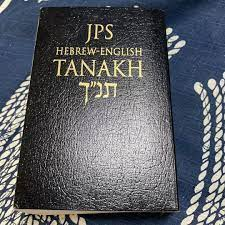
The first to establish a Hebrew printing-press and to cut Hebrew type (according to Ginsburg) was Abraham ben Hayyim dei Tintori, or Dei Pinti, in 1473. He printed the first Hebrew book in 1474 (Tur Yoreh De'ah) or Tanakh. In 1477 there appeared the first printed part of the Bible in an edition of 300 copies. People were finally able to read for themselves about Abraham and our beginnings.                      

     Greek and Roman Gods on Mt. Olympus

 At this same time, Greece and Rome had a polytheistic religion that they were following and took a long time to forget even with the adopting of Christianity.  Forms of it snuck into Christianity. 

Abraham, 1st on the list of our prophets;  on the trek to Canaan; took 2nd wife, Keturah; Abraham said to die at age 175, bought and  buried in the cave of Machpelah which became the family burial place.  

There are legends about Abraham.  According to hellenistic legends, he was king of Damascus.  Arab legends claim he laid the foundations for the sanctuary at Mecca.  

"The story of Abraham and Isaac is also part of Jewish, Christian, and Muslim religions", Catholic Artist Trina Paulus said who was making a statue of Abraham and Isaac. "The Muslims celebrate Abraham and Isaac 50 days after Ramadan as a feast parallel to the crucifixion", Paulus said.  

“It’s the great mystery feast for them,” Paulus said, adding that Muslims have put a lot of emphasis on Isaac’s willingness to be sacrificed. 

It’s a disturbing story to many people of all faiths. Some theologians such as Martin Luther praised Abraham’s unquestioning loyalty to God, while others like ethics philosopher Immanuel Kant felt that Abraham should have realized God would never make such an immoral command.  

Recent biblical research is inclined to maintain his historical integrity.  It is generally believed that he lived at the beginning of the 2nd millennium.   BCE. 


Resource:

https://www.bl.uk/history-of-writing/articles/where-did-writing-begin#:~:text=Full%20writing%2Dsystems%20appear%20to,Egypt%20at%20around%203200%20BC.

https://en.wikipedia.org/wiki/18th_century_BC

https://answersresearchjournal.org/abraham-chronology-ancient-mesopotamia/

https://biblearchaeologyreport.com/2021/07/16/top-ten-discoveries-related-to-abraham/

https://jerseycatholic.org/the-uncomfortable-story-of-abraham-and-isaac-interpreted-by-local-catholic-artist-1#:~:text=For%20years%2C%20Catholic%20artist%20Trina,willing%20to%20sacrifice%20for%20us.

Wednesday, March 29, 2023

Anti Semitism Spreads By "Those Researchers Of the Exodus

 Nadene Goldfoot                                          

Moses, played by Charlton Heston in The Ten Commandments, based on Prince of Egypt by Dorothy Clarke Wilson Pillar of Fire by J. H. Ingraham On Eagle's Wings by A. E. Southon Book of Exodus, produced and directed by Cecil B. DeMille.  At least they thought enough of the Exodus and 10 Commandments that came out of it to select it as a movie, knowing people would be clamoring to see it. 

As a Jew, I was shocked to read the comments telling of the "Researchers", whoever they may have been, slamming the recounting by Moses in the Torah in his Five Books of Moses.  I suppose its just too hard for them to believe that someone, Moses, had the where-with-all to recount for posterity this amazing journey from Egypt to Canaan almost 4,000 years ago, but I believe it.  Though the writing on the wall, literally, seems impossible to read, there are people today and yesterday who can hieroglyphics.  Therefore, the people in Moses's day, the higher leveled ones, were literate.  They could read and write. All the Middle East histories were recounted this way, in Akkadian or Egyptian or some such form of writing.  The Middle East people had the reputation for telling an event so as to make them the star, not the loser.  So you have to remember that fact when reading.  Opinions always show up in one's writing.                                    

 How about the Rosetta Stone with 3 languages on it allowing the translation of many languages?  "The Rosetta Stone is a stele composed of granodiorite inscribed with three versions of a decree issued in Memphis, Egypt, in 196 BC during the Ptolemaic dynasty on behalf of King Ptolemy V Epiphanes. The top and middle texts are in Ancient Egyptian using hieroglyphic and Demotic scripts respectively, while the bottom is in Ancient Greek. The decree has only minor differences between the three versions, making the Rosetta Stone key to deciphering the Egyptian scripts."

Here's what researchers thought of Jews of yesterday and today:  

"The Exodus is the founding myth of the Israelites. The scholarly consensus is that the Exodus, as described in the Torah, is not historical, even though there may be a historical core behind the Biblical narrative.

Modern archaeologists believe that the Israelites were indigenous to Canaan and were never in ancient Egypt, and if there is any historical basis to the Exodus it can apply only to a small segment of the population of Israelites at large. Nevertheless, there is also a general understanding that something must lie behind the traditions, even if Moses and the Exodus narrative belong to the collective cultural memory rather than history. "         

Egyptologist Jan Assmann, mentioned,  suggests that the Exodus narrative combines, among other things, the expulsion of the Hyksos, the religious revolution of Akhenaten, the experiences of the Habiru (gangs of antisocial elements found throughout the ancient Near East), and the large-scale migrations of the Sea Peoples into "a coherent story that is fictional as to its composition but historical as to some of its components."

In looking at the given Egyptologist, Johann Christoph "JanAssmann (born 7 July 1938) is a German Egyptologist. 1938 was a year that Nazis were attacking Jews in Germany by taking away their citizenship rights by many cruel ways. By 1939 the Germans will invade Poland.  

 In the 1990s, Assmann and his wife Aleida Assmann developed a theory of cultural and communicative memory that has received much international attention. He is also known beyond Egyptology circles for his interpretation of the origins of monotheism, which he considers as a break from earlier cosmotheism, first with Atenism and later with the Exodus from Egypt of the Israelites. Cosmotheism is 1. the doctrine that God is the transcendent reality of which humankind, nature, and the material universe are manifestations. 2. any doctrine that regards God as identical with the material universe or the forces of nature. Atenism, also known as the Aten religion, the Amarna religion, and the Amarna heresy, was a religion in ancient Egypt. It was founded by Akhenaten,pharaoh who ruled the New Kingdom under the Eighteenth Dynasty. The religion is typically described as monotheistic or monolatristic, although some Egyptologists argue that it was actually henotheistic. Atenism was centred on the cult of Aten, a god depicted as the disc of the Sun. Aten was originally an aspect of Ra, Egypt's traditional solar deity, though he was later asserted by Akhenaten as being the superior of all deities.

Akhenaten  was an ancient Egyptian pharaoh reigning c. 1353–1336 or 1351–1334 BC, the tenth ruler of the Eighteenth Dynasty. Before the fifth year of his reign, he was known as Amenhotep IV .As a pharaoh, Akhenaten is noted for abandoning Egypt's traditional polytheism and introducing Atenism, or worship centered around Aten. The views of Egyptologists differ as to whether the religious policy was absolutely monotheistic, or whether it was monolatry, syncretistic, or henotheistic. This culture shift away from traditional religion was reversed after his death.

 Assmann suggests that the ancient Egyptian religion had a more significant influence on Judaism than is generally acknowledged. He used the term "normative inversion" to suggest that some aspects of Judaism were formulated in direct reaction to Egyptian practices and theology. He ascribed the principle of normative inversion to a principle established by Manetho which was used by Maimonides in his references to the Sabians. His book The Price of Monotheism received some criticism for his notion of The Mosaic Distinction. He too no longer holds this theory, at least not in its original form (specifically, the mosaic aspect). His word seems to be THE word on the Exodus, even receiving  in 2005 a PhD. (honoris causa) from the Hebrew University of Jerusalem...what had he written to garner that?  He has been awarded all sorts of prizes, many which include his wife.  

No doubt Moses knew about the idea of one G-d overall, and so did the rest of Egypt.  This helped introduce the idea that Moses had developed through G-d, making the teaching of his concept from G-d,  much easier. Learning and change  comes in baby steps; not suddenly like an unprepared storm.   

Avraham Faust is an Israeli archaeologist and professor at Bar-Ilan University of Ramat Gan, Israel. He directs excavations at Tel 'Eton, widely regarded as the probable site of biblical Eglon. According to the Book of Judges, Eglon was a king of Moab who oppressed Israel. No archaeological evidence has been discovered to prove his existence, though some possible candidates for his palace exist.

According to Avraham Faust "most scholars agree that the Exodus narrative has a historical core, and that some of the highland settlers came, one way or another, from Egypt."                      

I say that Assmann is using his personal feelings towards Jews to color his conclusions.  His personal feelings are formed from his German heritage; parents and country where he was from.  He was zealous in proving the Exodus as a false history;  couldn't  have had an open mind. 

"A British scientist is making two claims about Jewish history this Passover season that could surely spark discussion over the Seder meal. Colin J. Humphreys of Cambridge University has concluded that science backs traditional beliefs that the Israelites' exodus from Egypt was led by Moses pretty much the way the Bible and the Haggadah ritual tell it.

He details his ideas in a readable new book, "The Miracles of Exodus: A Scientist's Discovery of the Extraordinary Natural Causes of the Biblical Stories" (HarperSanFrancisco).The 61-year-old academic brings a solid intellectual reputation in his own fields of physics and materials science to the table, though admittedly amateur status in archaeology and Bible scholarship.Humphreys doesn't feel his lack of expertise is a problem: He believes it gives him an open mind. "I am not preconditioned to accept standard interpretations," he says.Other scholars have proposed that Sinai was in Arabia.But Humphreys' claim is distinct because he reckons the holy mount must have been an active volcano, since it shook and emitted fire and smoke (Exodus 19:18). And he has carefully examined records ancient and modern to fix the site."  I guess he didn't know about the volcano on the Greek Island of Thera.  Everyone colors the facts without having been there. 


As a Jew, I and many others believe our heritage as told in the Torah;  I and researcher, Simcha Jacobovici believe it's true, and he has developed some marvelous truths in video about his findings. 

In writing, Moses (1391-1271 BCE) was a part of the Exodus, writing about it as he lived it.  It was first-hand reporting. Maybe he knew it was proof of the 40 years trek after 400 years of confinement as slaves where he was given time to condition the slaves to a different way of living.  The Exodus could be vetted this way in future days.     


Resource:

https://www.mrt.com/news/article/Scientist-defends-account-of-Exodus-7888955.php

https://en.wikipedia.org/wiki/Rosetta_Stone

https://en.wikipedia.org/wiki/Sources_and_parallels_of_the_Exodus#:~:text=The%20Hyksos%20were%20a%20Semitic,of%20the%20Israelites%20in%20Egypt.

https://en.wikipedia.org/wiki/Jan_Assmann

https://en.wikipedia.org/wiki/Avraham_Faust

Wednesday, July 13, 2022

Verified 3,000 Years Ago In Clay and Stone

 Nadene Goldfoot                                           


Writing has been going on for over 4,000 years, making Moses's recording over his 40 year period believable.  He was raised as a prince, educated with the royal family children, so was literate.                             

Egypt had developed hieroglyphics for their writing and wrote on the walls of the pyramids.  "Ancient Egyptian writing is known as hieroglyphics ('sacred carvings') and developed at some point prior to the Early Dynastic Period (c. 3150 -2613 BCE). According to some scholars, the concept of the written word was first developed in Mesopotamia and came to Egypt through trade." This was a good 1,850 years before Moses, so their historical writing had been going on for a long time already.    

 Hieroglyphs were written on papyrus, carved in stone on tomb and temple walls, and used to decorate many objects of cultic and daily life use. Altogether there are over 700 different hieroglyphs, some of which represent sounds or syllables; others that serve as determinatives to clarify the meaning of a word. The hieroglyphic script originated shortly before 3100 B.C.E, at the very onset of pharaonic civilization. The last hieroglyphic inscription in Egypt was written in the 5th century CE., some 3500 years later. For almost 1500 years after that, the language was unable to be read. 

The Rosetta Stone:  An irregularly shaped stone of black granite 3 feet 9 inches (114 cm) long and 2 feet 4.5 inches (72 cm) wide, and broken in antiquity, it was found near the town of Rosetta (Rashīd), about 35 miles (56 km) northeast of Alexandria. It was discovered by a Frenchman named Bouchard or Boussard in August 1799. After the French surrender of Egypt in 1801, it passed into British hands and is now in the British Museum in London.

In 1799, the Rosetta Stone was discovered in Egypt by Napoleon's troops. The Rosetta Stone is a trilingual decree (written in hieroglyphs, Greek, and Demotic) dating to the time of Ptolemy V (205-180 B.C.E.). Its discovery proved to be a crucial link in unlocking the mysteries of Egyptian hieroglyphs and in 1822, enabling Jean-François Champollion to re-decipher the hieroglyphic signs, thereby allowing the modern study of Egyptian language to begin.                               

We're used to seeing them in modern-day Hebrew, but-perhaps they were in ancient Hebrew.  
  Paleo-Hebrew alphabet:  The Paleo-Hebrew script (Hebrewהכתב העברי הקדום), also Palaeo-HebrewProto-Hebrew or Old Hebrew, is the writing system found in Canaanite inscriptions from the region of biblical Israel and Judah.

In about 1,300 BCE, which was 3,322 years ago, Moses wrote the 10 Commandments on 2 stone tablets while on top of a mountain.  Etched in stone, they have lasted down to this very day, transferred to other materials.  "According to the Book of Exodus in the Torah, the Ten Commandments were revealed to Moses at Mount Sinai and inscribed by the finger of God on two tablets of stone kept in the Ark of the Covenant."

LACHISH, Israel (BP) — A written inscription spelling the biblical name “Jerubbaal” or “Yeruba’al,” has been found during an archaeological dig in a Southern District of Israel, according to media reports.

The five-letter inscription, written on a jug and dated around the 12th or 11th century B.C.E, was found by researchers at “Khirbat er-Ra‘I”, an archaeological site in Israel that has been excavated since 2015, according to The Jerusalem Post. Researchers cited by The Times Israel claim the inscription most likely reads as the biblical name “Jerubbaal” or “Yeruba’al.”


Dead Sea ScrollsThe Dead Sea Scrolls are ancient Jewish and Hebrew religious manuscripts discovered in 1946/47 at the Qumran Caves in what was then Mandatory Palestine, near Ein Feshkha in Judea Samaria, on the northern shore of the Dead Sea which is now in Jordan.  


They are approximately two thousand years old, dating from the third century BCE to the first century CE. Most of the scrolls were written in Hebrew, with a smaller number in Aramaic or Greek. Most of them were written on parchment, with the exception of a few written on papyrus.


Akkadian Cuniform:  

                                                    
Early Writing Tablet recording the allocation of beer, 3100-3000 B.C.E,  Late Prehistoric period, clay, probably from southern Iraq.
© Trustees of the British Museum. The symbol for beer, an upright jar with pointed base, appears three times on the tablet. Beer was the most popular drink in Mesopotamia and was issued as rations to workers. Alongside the pictographs are five different shaped impressions, representing numerical symbols. Over time these signs became more abstract and wedge-like, or “cuneiform.” The signs are grouped into boxes and, at this early date, are usually read from right to left and top to bottom. One sign, in the bottom row on the left, shows a bowl tipped towards a schematic human head. This is the sign for “to eat.”

Hammurabi, King of Babylon reunited Mesopotamia and instituted the Code of Hammurabi, a comprehensive set of laws addressing nearly all aspects of both civil and criminal offenses. Hammurabi is portrayed receiving the laws directly from Shamash the sun god. (a parallel to Moses can be made here).  


The Code of Hammurabi is a Babylonian legal text composed c. 1755–1750 BCE. It is the longest, best-organized, and best-preserved legal text from the ancient Near East. It is written in the Old Babylonian dialect of Akkadian, purportedly by Hammurabi, sixth king of the First Dynasty of Babylon.  This happened about 455 years before the 10 Commandments from Moses.  

Cuneiform as a robust writing tradition endured 3,000 years. The script—not itself a language—was used by scribes of multiple cultures over that time to write a number of languages other than Sumerian, most notably Akkadian, a Semitic language that was the lingua franca of the Assyrian and Babylonian Empires.


The Ebla tablets are a collection of as many as 1,800 complete clay tablets, 4,700 fragments, and many thousands of minor chips found in the palace archives of the ancient city of EblaSyria. The tablets were discovered by Italian archaeologist Paolo Matthiae and his team in 1974–75 during their excavations at the ancient city at Tell Mardikh. The tablets, which were found in situ on collapsed shelves, retained many of their contemporary clay tags to help reference them.  Now Ebla's tablets, says Dr. Pettinato, reveal that a city named Ur existed in Syria in the area of Haran (and Ebla). If true, this may show that the two cities mentioned in Genesis are actually one, and finally clear up the contradiction.

                  Abram and his father, Terah

As for the general relevance of Ebla for understanding Abraham, it will ultimately depend on when you think he lived.  Some scholars date him as early as the 3rd millennium BCE; others as late as the late 2nd millennium BCE. Some doubt his historical existence altogether, but most scholars gravitate to a date around 1800 BCE. Our Jewish historians have 1391 BCE for his birth and 1271 BCE for his death at age 120 years.  


They all date to the period between c. 2500 BCE and the destruction of the city c. 2250 BCE. Today, the tablets are held in museums in the Syrian cities of AleppoDamascus, and Idlib. Above is part of the excavation.  

Life in the Middle East was recorded for posterity.  There is no reason to think that it wasn't.  Like today, the heads of state had their history recorded and what they wanted remembered was usually all the good things about themselves.  Egyptian history is noted for this.  Little was said about their slaves, the Israelites.  It was up to Moses to record those things.

 A difference in Hebrew ancient literature is that it tells the bad along with the good.  David's mistakes are recorded.  The same goes for others, like his son, Solomon taxing people past their limit, Samson falling for Delilah who was of the enemy of Israel.  

The invention of the alphabet took place in Canaan around the 18th century BCE.  The story in (Judg. 8:14) shows that boys were taught about the Gezer Calendar in about 1,000 BCE.  which may have been a school exercise.  Personal seals usually had picture identification on them.  Most Hebrew seals contained the owner's name.  It's figured that the ordinary man should be able to read.  Reading was important to carry out business.  

Resource:

https://en.wikipedia.org/wiki/Paleo-Hebrew_alphabet

https://www.baptistpress.com/resource-library/news/3000-year-old-inscription-could-be-oldest-discovered-evidence-of-hebrew-language/

https://www.archaeology.org/issues/213-1605/features/4326-cuneiform-the-world-s-oldest-writing#:~:text=Cuneiform%20as%20a%20robust%20writing,the%20Assyrian%20and%20Babylonian%20Empires.

https://en.wikipedia.org/wiki/Code_of_Hammurabi#:~:text=The%20Code%20of%20Hammurabi%20is,the%20First%20Dynasty%20of%20Babylon.

https://en.wikipedia.org/wiki/Ebla_tablets

https://www.afhu.org/2017/01/09/bringing-life-to-the-dead-sea-scrolls/?

https://www.imj.org.il/en/wings/shrine-book/dead-sea-scrolls#:~:text=They%20are%20approximately%20two%20thousand,a%20few%20written%20on%20papyrus.

gclid=CjwKCAjw2rmWBhB4EiwAiJ0mtYGTs54e6fnQQHRK5lxKO4n7w-jDLCYNg4r69FgjziEAOlfW-aSg0BoCa5QQAvD_BwE