Showing posts with label plague. Show all posts

Friday, May 16, 2025

Awesomeness of Math With Lag Ba Omer

 Nadene Goldfoot                                                 


On this day long, long ago of the 33rd day of counting Omer that had fallen in the Hebrew month of Iyyar 18, a plague outbreak had occurred among the pupils of Rabbi Akiva in the 2nd century and on this very day had ended.  It is considered the "scholars' feast." 

The Antonine Plague, a major pandemic in the Roman Empire, occurred in the 2nd century AD, though it's less clear how directly it impacted Israel specifically. It is widely believed to have been caused by the Roman army bringing the disease back from the Parthian Empire. The plague, which may have been a strain of the smallpox virus, was devastating, with mortality rates estimated to be around 7-10% of the population. While the Antonine Plague impacted the Roman Empire extensively, including areas bordering Israel, the exact extent of its impact within Israel itself is not as definitively documented as in other parts of the empire, except in our Lag ba Omer story that gives us the hint.   

“In Kabbalah (mystical religious stream in Judaism) adopted by 12th century;  everything is numbers and mathematics. The number is holy and infinite. In the universe everything is measurement and weight. For the Gnostics, God is a Geometrist. Mathematics is sacred. No one was admitted into the school of Pythagoras (Greek school)  if they were not knowledgeable about mathematics, music, etc. Numbers are sacred.

This had happened during the Omer period when there were regulations for certain acts.  This was then regulated for half;  mourning (prohibitions of marriage, cutting the hair, etc.) being suspended. 

   Now, the Omer was the 1st sheaf cut during the barley harvest, which was offered in the Temple as a sacrifice on the 2nd day of Passover (Lev.23:15).  Before the offering of this sacrifice, it was forbidden to eat the new grain.  The 7-weeks beginning from this day and culminating in the Pentecost holiday is known as the period of the Counting of the Omer.                                             


49 days are counted from the day on which the Omer was 1st offered in the Temple (according to the rabbis, Nisan 16; the 2nd day of Passover) the 50th day being the Feast of Weeks.  SHAVUOT=this year, from evening of Sunday, June 1, 2025 to Tuesday, June 3, 2025.  

upload.wikimedia.org/wikipedia/commons/0/00/Moritz...

 This period of counting is known as the Sephirah period, during a certain part of which special mourning customs prevail and marriages are not solemnized.  The number 49 (7x7)inspired the Kabbalists to read mystical meanings into the ritual of the counting, regarding it as marking the period of waiting between the deliverance of the Israelites from Egypt and their betrothal to the Torah at Sinai.  The number, 7, had so much meaning as it was;  7=a week with the 7th being Shabbat, 7 benedictions or blessings recited under the canopy in the wedding ceremony, and traditionally during the 7 days of feasting if new guests are present.  

This was 2,000 years ago when 7x7=49, an awesome number, and still is.  Today, we find Albert Einstein almost passe with his theory of relativity; In Einstein's theory of relativity, the equation E = mc² describes the relationship between energy (E) and mass (m). It states that energy and mass are equivalent and can be converted into each other, with the speed of light (c) being the conversion factor. 

Genesis 49:1–50:26

Jacob Blesses His Sons

49 wThen Jacob called his sons and said, “Gather yourselves together, that I may tell you what shall happen to you xin days to come.

Then there is the Drake equasion:  The Drake equation is:

The equation was formulated in 1961 by Frank Drake, not for purposes of quantifying the number of civilizations, but as a way to stimulate scientific dialogue at the first scientific meeting on the search for extraterrestrial intelligence (SETI).


Upon reading about what we thought possible through prayer, and what mathematicians can prove today makes me believe that our prophets were onto something-yes, unexplained then, but look at what we are to believe today !!!

Then there are the 18 benedictions of the Amidah on the Sabbath and festivals as well.  They refer to the principal prayer, done standing.  This text reflects the political and economic situation at the dates of composition, decreed by the men of the Great Assembly, and some definitely originate from 2nd Temple times.  For instance, #7 is for redemption. the action of saving or being saved from sin, error, or evil.                                                                            

School children were given a holiday and formerly used to conduct a mock battle with bow and arrow.  

Rabbi Simeon ben Yohai of 2nd century CE and the story of the cave

Rabbi Simeon was a student of Rabbi Akiva who was put in jail by the Romans.  Simeon was forced to hide in a cave with son Eleazar for 13 years; became known as a miracle-worker.  He thought leaving Eretz Yisrael was a grievous sin. (Thus, we didn't all leave)!!!               


A famous pupil of his was Rabbi Judah ha-Nasi.  Kabbalists have made his tomb at Meron a center of pilgrimage on Lag ba Omer, the traditional date of his death.  

Ultra-Orthodox Jewish men and children dance around a bonfire in the Mea Shearim neighborhood of Jerusalem during the 2017 celebration of Lag B’Omer. Image by Getty

In Israel, the day is marked by the lighting of bonfires  and a mass pilgrimage to the tomb at Meron of Rabbi Simeon ben Yohai who is said to have died, transmitting his mystical lore, on this day.  

In 1911, an estimated 10,000 people gathered to sing and dance before the traditional Lag Ba’Omer bonfires on the mountain, not far from the city of Tsfat.The event was chronicled by the Tsfat-born author Yehoshua Bar-Yosef in his 1949 book “Magic City,” according to the Jewish Press.  “Tzfat has never seen such a crowd before … happy enthusiasm gripped the residents, he wrote.  Just when the celebration reached its crescendo, the roof of the complex around the grave of Rabbi Shimon Bar Yochai collapsed. Dozens came hurtling down. “ About 100 people who were standing on the roof at the time fell from a height of 8 meters toward the courtyard of the building.  Forty were injured. Seven were killed immediately,” Bar Yosef wrote.  Among those present that day was famed Israeli author and Nobel laureate S. Y. Agnon, who had walked for five days to celebrate on the mountain and who understood his survival as a miracle.  “The miracle that was done for me at the revelry of Rabbi Shimon Bar Yochai in Meron, was that a balcony fell and twenty-seven Israelites were killed, and I, who had stood a little while before with all those saints remained alive,” he wrote, though Bar Yosef and other historians cite 11 total dead.  Bar Yochai, who lived during the 2nd century, is credited with composing the Zohar, a key kabbalistic text.

Einstein was not alone.  There was Immanuel ben Jacob Bonfils (c. 1300 – 1377) was a French-Jewish mathematician and astronomer in medieval times who flourished from 1340 to 1377, a rabbi who was a pioneer of exponential calculus and is credited with inventing the system of decimal fractions. He taught astronomy and mathematics in Orange and later lived in Tarascon, both towns in the Holy Roman Empire that are now part of modern-day France. Bonfils studied the works of Gersonides (Levi ben Gershom), the father of modern trigonometry, and Al-Battani and even taught at the academy founded by Gersonides in Orange.  

Resource:

https://forward.com/fast-forward/468773/stampede-1911-mt-meron-lag-baomer/

https://en.wikipedia.org/wiki/Drake_equation#:~:text=The%20Drake%20equation%20is%20a,in%20the%20Milky%20Way%20Galaxy.&text=The%20equation%20was%20formulated%20in,used%20to%20draw%20firm%20conclusions.

https://www.britannica.com/science/E-mc2-equation

https://en.wikipedia.org/wiki/Immanuel_Bonfils

Monday, January 6, 2025

A Plague Almost 3,000 Years Ago Turned Back Jerusalem's Enemy

 Nadene Goldfoot                                             

Jerusalem was under siege in 701 BCE by the Assyrians, yet they suddenly turned back.  Why?  

 Yes, a plague likely struck the Assyrian army during the siege of Jerusalem in 701 BCE: In the Bible, the angel of the Lord killed 185,000 Assyrian soldiers in the night, forcing Sennacherib to break camp. The Babylonian historian Berossus wrote that a plague devastated the Assyrian army.                             

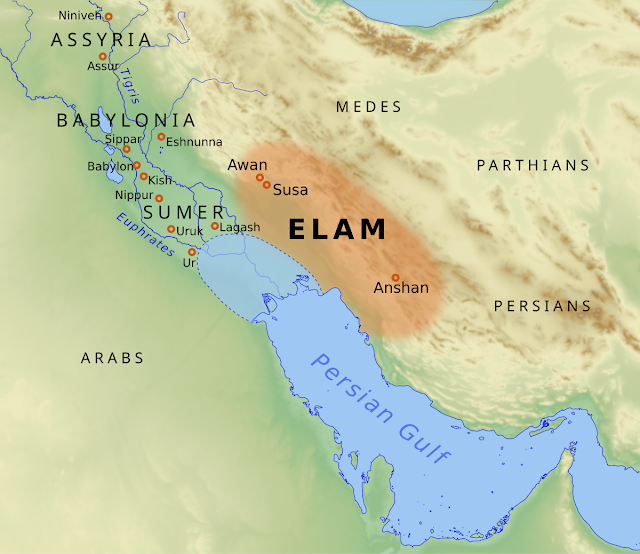
Sennacherib, until 689 BCE, was busy fighting with Elam and Babylon.  The kings of Phoenecia and Israel, led by Hezekiah (720-692 BCE) , rose in revolt, Sennacherib,  the Assyrian, invaded  Judah in 701 BCE.  he captured 46 cities but not Jerusalem.  He took many prisoners.  A plague broke out in his camp, causing him to retreat.   
In 720 BC, the Assyrian army captured Samaria, the capital of the northern Kingdom of Israel, and carried away many Israelites into captivity. The virtual destruction of Israel left the southern kingdom, Judah, to fend for itself among warring Near-Eastern kingdoms. After the fall of the northern kingdom, the kings of Judah tried to extend their influence and protection to those inhabitants who had not been exiled. As they were about to lose a battle with Sennacherib, the Assyrians were hit with a terrible plague that ended their war.  
Although Judah was a vassal of Assyria during this time and paid an annual tribute to the powerful empire, it was the most important state between Assyria and Egypt.  Hezekiah didn't pay  during the plague, though. 

It is more difficult to know the role of disease in biblical times. One area where it may have had an impact is the Assyrian war led by Sennacharib against ancient Judah in 701 B.C.E. Though the Assyrian armies were mighty, and conquered most of the kingdom, they departed after a siege of Jerusalem, without invading and destroying the city. In the biblical account (2 Kings 18), an angel killed many of the soldiers, and so they departed. 

Could it have been some form of flu-virus, like COVID?  It's mutating now, and people are still catching it.  Being angels were thought to be the cause, that means they had no way of seeing the cause, I would think.  Suddenly soldiers were getting ill and dying.  It sounds like WWI's plague.                                       

The 1918 influenza pandemic, also known as the Spanish flu, was a plague that affected the U.S. Army and other armies during World War I: The virus originated in Kansas and was likely carried to Camp Funston by young men leaving the area for military service. The virus spread through the Western Front in France, Germany, Austria, and the Slavic nations. Soldiers constantly moved between camps across the country, which helped the virus spread. The pandemic killed an estimated 50,000 U.S. soldiers, and may have killed up to 100,000 soldiers overall. It also rendered millions of soldiers ineffective.  The pandemic shortened World War I, and it's unclear if it had an impact on the course of the war. However, the cessation of fighting in the fall of 1918 may have prevented battle casualties from exceeding the deaths from influenza. The pandemic also had a significant impact on the U.S. population, infecting over a quarter of the population and killing about 675,000 people.

Herodotus wrote  the army was overrun by mice, a possible reference to mouse-borne diseases.   Some Biblical scholars take this to an allusion that the Assyrian army suffered the effects of a mouse- or rat-borne disease such as bubonic plague. More recently, historian William H. McNeill speculated that cholera, due to lack of access to fresh water, weakened the soldiers. He felt this may have saved Judaism from annihilation, and thus also saved the still-fledgling concept of monotheism.

The Antonine Plague, also known as the Plague of Galen, was a severe epidemic that struck the Roman Empire between 165 and 189 CE. It's believed that soldiers returning from fighting in the Near East brought the disease to Rome. The plague is thought to have been smallpox, based on the skin eruptions that appeared on the body. 
The Antonine Plague had a devastating impact on the Roman Empire, affecting the economy, military, and population. It's estimated that the plague killed between 5 and 10 million people, which was about 10% of the empire's population. The plague is thought to have contributed to the decline of the Roman Empire, and some historians believe it may have even hastened the empire's collapse.  
Resource:

Friday, July 2, 2021

The Assyrians, Foiled at the Gate of Jerusalem, Turned Back By Plague or Black Egypto Kushite Army?

 Nadene Goldfoot                                              

                             King Sennacherib of Assyria    Attacking Jerusalem                                                       

II Kings:19:35-37) By 701 B.C.E. the Assyrians under King Sennacherib had destroyed the northern kingdom of Israel and much of Judah in the south. Only Jerusalem under King Hezekiah 720-692 BCE) remained to be conquered, and it was surrounded by enemy soldiers. Without explanation, however, the Assyrians suddenly folded their tents and returned home.

"The later Assyrian rulers Sargon II and his son and successor, Sennacherib, were responsible for finishing the twenty-year demise of Israel's northern ten-tribe kingdom, although they did not overtake the Kingdom of Judah. Jerusalem was besieged, but not taken. The tribes forcibly resettled by Assyria later became known as the Ten Lost Tribes."  They were the northern part of the Kingdom of Israel, 10 of the 12 tribes of Jacob.  


Finding the reason for the survival of Jerusalem has confounded scholars for centuries. What is clear, however, is that if Jerusalem had not survived, Western civilization would have been utterly different. Proposals for the reasons have included disease among the Assyrian troops, which was a plague, perhaps the same of the 12 plagues that hit the Pharoah; troubles elsewhere in the Assyrian empire, the approach of the Egypto-Kushite forces and some combination of the above. or cushites/Kushites.  The account in II Kings is that angels came down and killed 185,000 soldiers in the Assyrian camp.                                                             

      Moses had married  a Midianite, Zipporah, mentioned by name in Exodus,  and they had 2 sons who were killed on the Exodus while young men.  Midianites were a Bedouin tribe related to Abraham.  They traveled with caravans of incense from Gilead to Egypt, closely connected with the Israelites. 


Moses' wife is referred to as a Cushite in Numbers 12. Interpretations differ on whether this Cushite wife was one and the same as Zipporah, or another woman.  The Cushite is not mentioned by name.  Kush was a part of Nubia, which stretched from the Upper Nile to the Red Sea.

The information in our Jewish history is that Sennacherib was forced by a plague in his army to return home.  That plague could have been anything that we have experienced in our time of plague history.  I doubt if it had been the virus, COVID 19 or Delta, the follow-up mutated virus.  it could have been the flu, as it came with the army.  

The Naked Archaeologist questioned the theory that the army of Cushites could have come to Jerusalem's rescue.   https://www.youtube.com/watch?v=mNhypxWvRmY                           

                             Columnist for the Gazette, Quebec, Montreal, Canada

Another also thought of the Kushites, a journalist, Henry Aubin.  "  At the turn of the eighth century B.C., a mighty Assyrian army entered Judah and fought its way to the very gates of Jerusalem, poised, the prophet Isaiah warned, to "smash the city as easily as someone hurling a clay pot against the wall." But the assault never came; instead, the Assyrian army turned and fled, an event that has been called the Deliverance of Jerusalem. 

Whereas biblical accounts attribute the Assyrian retreat to divine intervention of a plague, journalist Henry Aubin offers an explanation that is miraculous in its own light: the siege was broken by the arrival of an army from Kushite Egypt--an army, that is, made up of black Africans. These Kushites figured in historical texts, Aubin continues, until the late 19th century, when racist scholars expunged them from the record--a process that, Aubin observes, coincided with the European conquest and colonization of Africa. The Kushite intervention assured the survival of the Hebrew people, Aubin asserts, and it deserves to be acknowledged anew. Well-written and carefully developed, Aubin's argument will doubtless excite discussion."  This is probably where Simcha Jacobovici, the Naked Archaeologist, got the idea to question Aubin's theory.  Aubin wrote a book about it, called The Rescue of Jerusalem.  

There are clues to resolving this conundrum in biblical and extra-biblical evidence, including Sennacherib’s annals and the writings of Herodotus. Professor Bellis will lead us to a likely solution to this enduring mystery.                                                          

                                    Zipporah, the Midianite, wife of Moses

I'll throw in my revelation now after finding this information. First, Moses had had 2 wives, Zipporah the Midianite and later, a Cushite wife. Perhaps Zipporah had died.   Because of that union, when the Assyrians were at the gates of Jerusalem, ready to attack and take the city, not only were they hit by a plague, but at the same time, the Cushites attacked them because of that older union with Moses.  How about that?  The Assyrians left for home, never to return again, thinking that the Israelites had since put a curse on them if they ever advanced again.  Then again, that seems like a very long distance for Cushites to travel north to Jerusalem.  

A further check on this history:          

Who was the Ethiopian (Cushite) wife that Moses took (Numbers 12:1)? Is she the same wife as Jethro’s daughter Zipporah whom Moses earlier married (Exodus 2:21), and later came back to him in the desert (Exodus 18)? Also, why were Miriam and Aaron upset at Moses for taking a Cushite wife? Did they not like her simply because she was black?                                        

        The failed attack of the Assyrians on Jerusalem

"The Aish Rabbi Replies:                  

The story of Moses’s Cushite wife is actually quite cryptic. As you observed, we hear earlier of Moses marrying the daughter of Jethro the Midianite. Yet in the Book of Numbers Moses’s sister Miriam is upset about his having taken a “Cushite” wife. Cush is generally translated as Ethiopia (probably the entire region south of Egypt – see Shemot Rabbah 10:2), a place inhabited by blacks. (See e.g. Jeremiah 13:23: “Can a Cushite change his skin, or a leopard its spots?”) Is this a different wife? And where did she come from?"

Herodotus wrote that the Assyrian army was overrun by mice when attacking Egypt. Some Biblical scholars take this to an allusion that the Assyrian army suffered the effects of a mouse- or rat-borne disease such as bubonic plague. Even without relying on that explanation, John Bright suggested it was an epidemic of some kind that saved Jerusalem.     

In What If?, a collection of essays on counterfactual history, historian Willian H. McNeill speculates that the accounts of mass death among the Assyrian army in the Tanakh might be explained by an outbreak of cholera (or other water-borne diseases) due to the springs beyond the city walls having been blocked, thus depriving the besieging force of a safe water supply.

"An important introductory point is that the Midrash states that when Moses fled Pharaoh (Exodus 2:15), before arriving in Midian, Moses escaped south to the land of Cush. (Note that Moses was presumably a young man when he fled Egypt, in Midian he married and had two small children, and he was 80 on his return to Egypt at the start of the story of the Exodus. Thus, apparently, many of his early adult years are unrecorded in the Torah.) Moses first served the king of Cush and then upon his death became king himself, ruling for 40 years. He was given the former king’s widow as a wife but he refused to live with her or worship the Cushite god (Yalkut Shimoni Shemot 168). "                     

                        Assyrian high priest and Sennacherib,
    
Since there was no mention of a Cushite army coming to the rescue of Jerusalem, I can believe that a plague had hit the soldiers as written.  When the flu hits, it can hit hard.  I don't believe any Cushite army was there, so it was not a deleted fact.  We are taught that Moses wrote the Torah (the 5 books of Moses) and that it has remained the exact same writing ever since.  Our scribes cannot make one letter incorrect, for if they do, the whole thing is thrown away and they start over again.  It was not an era of prejudice against Blacks, as what has since happened.  It was an era of trusting in G-d, and this story was an example of that.  Jerusalem was saved by the miracle of the plague.  


Resource:

https://www.benderjccgw.org/event/did-a-kushite-pharaoh-rescue-jerusalem-from-the-assyrians/

https://www.amazon.com/Rescue-Jerusalem-Alliance-Hebrews-Africans/dp/1569472750

https://en.wikipedia.org/wiki/Zipporah#:~:text=Wife%20of%20Moses,-Moses%20and%20his&text=Moses'%20wife%20is%20referred%20to,him%20a%20polygamist)%20or%20s

uccessively.

https://en.wikipedia.org/wiki/Assyrian_siege_of_Jerusalem