Nadene Goldfoot
Hot weather then, too. Notice the fan.
Sargon, king of Assyria (721-712 BCE) What we know is that the population of the 10 northern Tribes originally at arriving in Canaan after 40 years in about 1445 BCE was:
Reuben: 43,730; Simeon 22,200; Judah 76,500; Issachar 64,300; Zebulun 60,500; Dan 64,400; Naphtali 45,400; Gad 40,500; Asher 53,400; Ephraim 32,500; Manasseh 52,700 and Benjamin 45,600.
Judah was given the most southern piece of land and when attacked 135 years later in 586 BCE by the Babylonians also included some Benjamin and Simeon in their population so all of the were not at home in 721 BCE. Originally, the population of the north after Joshua dispensed it to the tribes was 601,730 minus Judah's 76,500= 525,230. They had been living in the North for at least the past 724 years. Between births and deaths, the population of 525,230 could have multiplied to several million.
In 721 BCE, the Assyrian army with Sargon as leader, captured Samaria , the capital of the northern Kingdom of Israel, and carried away 27,290 Israelites, the best and strongest into captivity. (A Roman Legion was made up of 5,000 to 6,000 men, so this was like taking 5 legions of people.) How many Assyrians came for this attack? Assyrian army; masters of war
Why were they so strong? The Assyrians used a wide variety of weapons including swords, spears, bows and arrows, slings, and daggers. The Assyrians were the first to use iron to make their weapons. Iron was stronger than the bronze used by their enemies and gave them a distinct advantage. Lion hunting in Assyria 750 BCE
Sargon was an opportunist. King Shalmaneser III died during the siege of Samaria, so Sargon seized the throne immediately upon pronouncement of his death. He exiled the Israelites and defeated a military alliance which had included the remnants of the Israelites of Samaria. He had nothing but victories in his warfare. Then, in the end, he was assassinated by Sennacherib, son of Sargon II (705-681 BCE)
Sennacherib, until 689 BCE, was busy fighting with Elam and Babylon. The kings of Phoenecia and Israel, led by Hezekiah (720-692 BCE) , rose in revolt, Sennacherib invaded Judah in 701 BCE. he captured 46 cities but not Jerusalem. He took many prisoners. A plague broke out in his camp, causing him to retreat. Assyrians attacking Jerusalem when under King Hezekiah
The virtual destruction of Israel left the southern kingdom, Judah, to fend for itself among warring Near-Eastern kingdoms. After the fall of the northern kingdom, the kings of Judah tried to extend their influence and protection to those inhabitants who had not been exiled. They also sought to extend their authority northward into areas previously controlled by the Kingdom of Israel. The latter part of the reigns of King Ahaz of Judah (735-720 BCE) and King Hezekiah (720-692 BCE of Judah) were periods of stability during which Judah was able to consolidate both politically and economically. Although Judah was a vassal of Assyria during this time and paid an annual tribute to the powerful empire, it was the most important state between Assyria and Egypt. Hezekiah didn't pay during the plague, though. Hezekiah's seal discovered in 2015 When Hezekiah became king of Judah, he initiated widespread religious changes, including the breaking of religious idols. He re-captured Philistine-occupied lands in the Negev desert, formed alliances with Ashkelon and Egypt, and made a stand against Assyria by refusing to pay tribute. In response, Sennacherib attacked Judah, laying siege to Jerusalem.
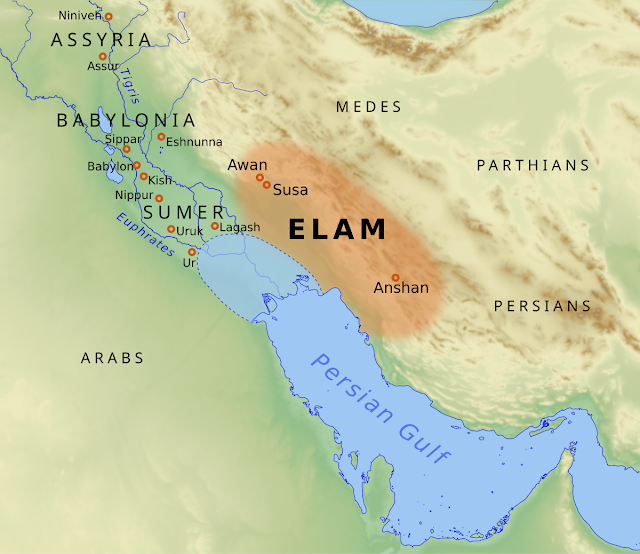
What was Assyria? Assyria, named for the god Ashur (highest in the pantheon of Assyrian gods), was located in the Mesopotamian plain. It was bordered on the west by the Syrian desert, on the south by Babylonia, and on the north and east by the Persian and Urarthian hills (see J. D. Douglas, ed., The Illustrated Bible Dictionary, s.v. “Assyria,” 1:137). This area today is primarily the nation of Iraq.
Tiglath-Pileser III (745-726 BCE) was the man who introduced the policy of exiling hostile inhabitants of conquered countries, so we know that the 10 tribes had fought hard; whose reforms after kings Ashurnasirpal II (883 BCE; then succeeded by Shalmaneser III. Although he campaigned for 31 years of his 35-year reign, he failed to achieve or equal the conquests of his predecessor, and his death led to another period of weakness in Assyrian rule.- once again made Assyria the most powerful force in the Near East, and transformed it into a fully fledged empire – the first of its kind. Later, under Shalmaneser V, Sargon II and Sennacherib, further Assyrian offensives occurred, although these were designed not only for conquest, but also to destroy their enemies' ability to undermine Assyrian power. As such, costly battles raged taking tolls on Assyrian manpower.

What happened to the exiled Israelites? The tribes of Asher and Reuben were never mentioned as participating in anything after the conquest, living in either Phoenician (Asher) or Moabite (Reuben) controlled territory. By the middle 9th century BCE the territory of Gad was also (re)taken by the Moabites (see Mesha Stele), so the Assyrians could at most have removed the other six tribes. Thus, the "10 tribes" appears to be a misnomer, meaning all of the Jews that were living outside the Kingdom of Judah.
The 27,290 northern Israelites carried away were not told to us as to which tribes they all came from; maybe more from the point of entry of the Assyrians than all the others. Did the Assyrians come down from Syria? Damascus? That would mean that Asher, Dan and Naphtali were in harm's way more than the others. Syria is giving Israel a bad time in today's news as it is.
An answer: About 100 miles south of Damascus was Samaria, the capital of the northern kingdom of Israel. Tiglath-Pilesar III's mighty army headed there, crushing every town and village in the way and sending many into exile with their soldiers. He even assigned new governors for the provinces passed through. The Galilee was said to be first to go to the Assyrians. The entire countryside was stripped of her people. Hoshea was made a puppet governor (vassal) in Samaria.. King Pekah (735-730 BCE) was assassinated.
Pekah was an interesting character. Possibly of Gilead (region
of Transjordan, settled by tribes of Reuben, Gad, half of
Manasseh) ; was captain of his predecessor Pekahiah whom he killed after a conspiracy, seizing his throne. He allied himself with Rezin ofAram-Dammesek, then attacked Judah but King Ahaz appealed
for help from Tiglath-Pileser III of Assyria, of all people, who then invaded the kingdom and abolished Aram-Dammesek as astate,stripped Israel of Galilee and Gilead. Pekah was murdered byHoshea.
Jewish general-already Hellenistic, friends with Roman hierarchy, saved own life by writing History of Jews for Roman audience who would read it. Made sure to put Romans in a good light, but did not spare the gore of 70 CE-maybe something the Romans would like. The Jewish historian Josephus (37–100 CE) wrote that "there are but two tribes in Asia and Europe subject to the Romans, while the ten tribes are beyond Euphrates till now, and are an immense multitude, and not to be estimated by numbers".
After the fall of the Neo-Babylonian Empire to the Achaemenid Empire and its founding king Cyrus the Great at the Battle of Opis in 539 BCE, exiled Judeans were permitted by the Persians to return to Judah.
Rebuilding Temple a 2nd Time
They had been taken away in 597 and again in 586 BCE. According to the biblical Book of Ezra, construction of the Second Temple in Jerusalem began c. 537 BCE in the new Persian province of Yehud Medinata. They had been away for about 60 years. All of these events are considered significant to the developed history and culture of the Jewish people, and ultimately had a far-reaching impact on the development of Judaism.
Archaeological studies have revealed that, although the city of Jerusalem was utterly destroyed , including the Temple and other parts of Judah continued to be inhabited during the period of the exile. Most of the exiled did not return to their homeland, instead travelling westward and northward. Many settled in what is now northern Israel, Lebanon, and Syria. The Iraqi Jewish, Persian Jewish, Georgian Jewish, and Bukharan Jewish communities are believed to derive their ancestry in large part from these exiles; these communities have now largely immigrated to Israel.
Resource:
The New Standard Jewish Encyclopedia
https://en.wikipedia.org/wiki/Assyrian_siege_of_Jerusalem
https://www.learnreligions.com/hezekiah-successful-king-of-judah-4089408
https://en.wikipedia.org/wiki/Military_history_of_the_Neo-Assyrian_Empire
https://www.churchofjesuschrist.org/study/manual/old-testament-student-manual-kings-malachi/enrichment-d?lang=eng