Showing posts with label Sennacherib. Show all posts

Monday, January 6, 2025

A Plague Almost 3,000 Years Ago Turned Back Jerusalem's Enemy

 Nadene Goldfoot                                             

Jerusalem was under siege in 701 BCE by the Assyrians, yet they suddenly turned back.  Why?  

 Yes, a plague likely struck the Assyrian army during the siege of Jerusalem in 701 BCE: In the Bible, the angel of the Lord killed 185,000 Assyrian soldiers in the night, forcing Sennacherib to break camp. The Babylonian historian Berossus wrote that a plague devastated the Assyrian army.                             

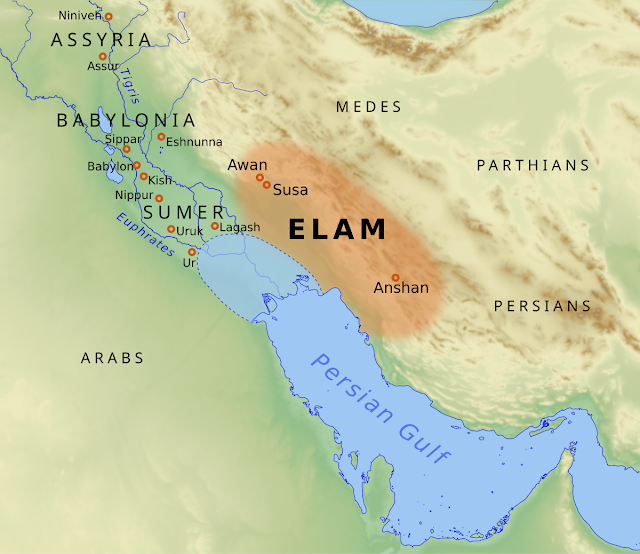
Sennacherib, until 689 BCE, was busy fighting with Elam and Babylon.  The kings of Phoenecia and Israel, led by Hezekiah (720-692 BCE) , rose in revolt, Sennacherib,  the Assyrian, invaded  Judah in 701 BCE.  he captured 46 cities but not Jerusalem.  He took many prisoners.  A plague broke out in his camp, causing him to retreat.   
In 720 BC, the Assyrian army captured Samaria, the capital of the northern Kingdom of Israel, and carried away many Israelites into captivity. The virtual destruction of Israel left the southern kingdom, Judah, to fend for itself among warring Near-Eastern kingdoms. After the fall of the northern kingdom, the kings of Judah tried to extend their influence and protection to those inhabitants who had not been exiled. As they were about to lose a battle with Sennacherib, the Assyrians were hit with a terrible plague that ended their war.  
Although Judah was a vassal of Assyria during this time and paid an annual tribute to the powerful empire, it was the most important state between Assyria and Egypt.  Hezekiah didn't pay  during the plague, though. 

It is more difficult to know the role of disease in biblical times. One area where it may have had an impact is the Assyrian war led by Sennacharib against ancient Judah in 701 B.C.E. Though the Assyrian armies were mighty, and conquered most of the kingdom, they departed after a siege of Jerusalem, without invading and destroying the city. In the biblical account (2 Kings 18), an angel killed many of the soldiers, and so they departed. 

Could it have been some form of flu-virus, like COVID?  It's mutating now, and people are still catching it.  Being angels were thought to be the cause, that means they had no way of seeing the cause, I would think.  Suddenly soldiers were getting ill and dying.  It sounds like WWI's plague.                                       

The 1918 influenza pandemic, also known as the Spanish flu, was a plague that affected the U.S. Army and other armies during World War I: The virus originated in Kansas and was likely carried to Camp Funston by young men leaving the area for military service. The virus spread through the Western Front in France, Germany, Austria, and the Slavic nations. Soldiers constantly moved between camps across the country, which helped the virus spread. The pandemic killed an estimated 50,000 U.S. soldiers, and may have killed up to 100,000 soldiers overall. It also rendered millions of soldiers ineffective.  The pandemic shortened World War I, and it's unclear if it had an impact on the course of the war. However, the cessation of fighting in the fall of 1918 may have prevented battle casualties from exceeding the deaths from influenza. The pandemic also had a significant impact on the U.S. population, infecting over a quarter of the population and killing about 675,000 people.

Herodotus wrote  the army was overrun by mice, a possible reference to mouse-borne diseases.   Some Biblical scholars take this to an allusion that the Assyrian army suffered the effects of a mouse- or rat-borne disease such as bubonic plague. More recently, historian William H. McNeill speculated that cholera, due to lack of access to fresh water, weakened the soldiers. He felt this may have saved Judaism from annihilation, and thus also saved the still-fledgling concept of monotheism.

The Antonine Plague, also known as the Plague of Galen, was a severe epidemic that struck the Roman Empire between 165 and 189 CE. It's believed that soldiers returning from fighting in the Near East brought the disease to Rome. The plague is thought to have been smallpox, based on the skin eruptions that appeared on the body. 
The Antonine Plague had a devastating impact on the Roman Empire, affecting the economy, military, and population. It's estimated that the plague killed between 5 and 10 million people, which was about 10% of the empire's population. The plague is thought to have contributed to the decline of the Roman Empire, and some historians believe it may have even hastened the empire's collapse.  
Resource:

Saturday, July 29, 2023

How Assyria in 721 BCE Took Over 10 Israelite Tribes

 Nadene Goldfoot                                                 

      Hot weather then, too.  Notice the fan.   
                     Sargon, king of Assyria (721-712 BCE)
 

What we know is that the population of the 10 northern Tribes originally  at arriving in Canaan after 40 years in about 1445 BCE was: 

Reuben: 43,730;  Simeon  22,200;  Judah 76,500;   Issachar 64,300;  Zebulun 60,500;  Dan 64,400;  Naphtali 45,400;  Gad 40,500;  Asher 53,400;  Ephraim 32,500;  Manasseh 52,700 and Benjamin 45,600.  


Judah was given the most southern piece of land and when  attacked 135 years later in 586 BCE by the Babylonians also included some Benjamin and Simeon  in their population so all of the were not at home in 721 BCE.  Originally, the population of the north after Joshua dispensed it to the tribes was 601,730 minus Judah's 76,500= 525,230.  They had been living in the North for at least the past 724 years.  Between births and deaths, the population of 525,230 could have multiplied to several million.                           

In 721 BCE, the Assyrian army with Sargon as leader, captured Samaria , the capital of the northern Kingdom of Israel, and carried away 27,290 Israelites, the best and strongest  into captivity.  (A Roman Legion was made up of 5,000 to 6,000 men, so this was like taking 5 legions of people.)  How many Assyrians came for this attack? 
Assyrian army; masters of war
 
Why were they so strong?  The Assyrians used a wide variety of weapons including swords, spears, bows and arrows, slings, and daggers. The Assyrians were the first to use iron to make their weapons. Iron was stronger than the bronze used by their enemies and gave them a distinct advantage.
                                  Lion hunting in Assyria 750 BCE

Sargon was an opportunist.  King Shalmaneser III died during the siege of Samaria, so Sargon seized the throne immediately upon pronouncement of his death.  He exiled the Israelites and  defeated a military alliance  which had included the remnants of  the Israelites of Samaria.  He had nothing but victories in his warfare.  Then, in the end, he was assassinated by Sennacherib, son of Sargon II (705-681 BCE) 

Sennacherib, until 689 BCE, was busy fighting with Elam and Babylon.  The kings of Phoenecia and Israel, led by Hezekiah (720-692 BCE) , rose in revolt, Sennacherib invaded  Judah in 701 BCE.  he captured 46 cities but not Jerusalem.  He took many prisoners.  A plague broke out in his camp, causing him to retreat.                           
Assyrians attacking Jerusalem when under  King Hezekiah

The virtual destruction of Israel left the southern kingdom, Judah, to fend for itself among warring Near-Eastern kingdoms. After the fall of the northern kingdom, the kings of Judah tried to extend their influence and protection to those inhabitants who had not been exiled. They also sought to extend their authority northward into areas previously controlled by the Kingdom of Israel. The latter part of the reigns of King Ahaz of Judah (735-720 BCE)  and King Hezekiah (720-692 BCE of Judah)  were periods of stability during which Judah was able to consolidate both politically and economically. Although Judah was a vassal of Assyria during this time and paid an annual tribute to the powerful empire, it was the most important state between Assyria and Egypt.  Hezekiah didn't pay  during the plague, though. 
Hezekiah's seal discovered in 2015 

When Hezekiah became king of Judah, he initiated widespread religious changes, including the breaking of religious idols. He re-captured Philistine-occupied lands in the Negev desert, formed alliances with Ashkelon and Egypt, and made a stand against Assyria by refusing to pay tribute. In response, Sennacherib attacked Judah, laying siege to Jerusalem.                        


What was Assyria?  Assyria, named for the god Ashur (highest in the pantheon of Assyrian gods), was located in the Mesopotamian plain. It was bordered on the west by the Syrian desert, on the south by Babylonia, and on the north and east by the Persian and Urarthian hills (see J. D. Douglas, ed., The Illustrated Bible Dictionary, s.v. “Assyria,” 1:137). This area today is primarily the nation of Iraq.

Tiglath-Pileser III (745-726 BCE) was the man who introduced the policy of exiling hostile inhabitants of conquered countries, so we know that the 10 tribes had fought hard;  whose reforms after kings Ashurnasirpal II (883 BCE; then succeeded by Shalmaneser III. Although he campaigned for 31 years of his 35-year reign, he failed to achieve or equal the conquests of his predecessor, and his death led to another period of weakness in Assyrian rule.- once again made Assyria the most powerful force in the Near East, and transformed it into a fully fledged empire – the first of its kind. Later, under Shalmaneser V, Sargon II and Sennacherib, further Assyrian offensives occurred, although these were designed not only for conquest, but also to destroy their enemies' ability to undermine Assyrian power. As such, costly battles raged taking tolls on Assyrian manpower.


What happened to the exiled Israelites?   The tribes of Asher and Reuben were never mentioned as participating in anything after the conquest, living in either Phoenician (Asher) or Moabite (Reuben) controlled territory. By the middle 9th century BCE the territory of Gad was also (re)taken by the Moabites (see Mesha Stele), so the Assyrians could at most have removed the other six tribes. Thus, the "10 tribes" appears to be a misnomer, meaning all of the Jews that were living outside the Kingdom of Judah. 

The 27,290 northern Israelites carried away were not told to us as to which tribes they all came from;  maybe more from the point of entry of the Assyrians than all the others.  Did the Assyrians come down from Syria?  Damascus?  That would mean that Asher, Dan and Naphtali were in harm's way more than the others.  Syria is giving Israel a bad time in today's news as it is.  

An answer:   About 100 miles south of Damascus was Samaria, the capital of the northern kingdom of Israel.  Tiglath-Pilesar III's mighty army headed there, crushing every town and village in the way and sending many into exile with their soldiers.  He even assigned new governors for the provinces passed through. The Galilee was said to be first to go to the Assyrians.  The entire countryside was stripped of her people.  Hoshea was made a puppet governor (vassal)  in Samaria..  King Pekah (735-730 BCE) was assassinated. 


Pekah was an interesting character.  Possibly of Gilead (region

of Transjordan, settled by tribes of Reuben, Gad, half of 

Manasseh) ;  was  captain of his predecessor Pekahiah whom he killed after a conspiracy, seizing his throne.    He allied himself with Rezin ofAram-Dammesek, then attacked Judah but King Ahaz appealed

for help from Tiglath-Pileser III of Assyria, of all people, who then invaded the kingdom and abolished Aram-Dammesek as astate,stripped Israel of Galilee and Gilead.  Pekah was murdered byHoshea.                                 

                            Jewish general-already Hellenistic, friends with Roman hierarchy, saved own life by writing History of Jews for Roman audience who would read it. Made sure to put Romans in a good light, but did not spare the gore of 70 CE-maybe something the Romans would like.    

The Jewish historian Josephus (37–100 CE) wrote that "there are but two tribes in Asia and Europe subject to the Romans, while the ten tribes are beyond Euphrates till now, and are an immense multitude, and not to be estimated by numbers".

After the fall of the Neo-Babylonian Empire to the Achaemenid Empire and its founding king Cyrus the Great at the Battle of Opis in 539 BCE, exiled Judeans were permitted by the Persians to return to  Judah.    

      Rebuilding Temple a 2nd Time  

They had been taken away in 597 and again in 586 BCE.   According to the biblical Book of Ezra, construction of the Second Temple in Jerusalem began c. 537 BCE in the new Persian province of Yehud Medinata. They had been away for about 60 years.  All of these events are considered significant to the developed history and culture of the Jewish people, and ultimately had a far-reaching impact on the development of Judaism.

Archaeological studies have revealed that, although the city of Jerusalem was utterly destroyed , including the Temple and other parts of Judah continued to be inhabited during the period of the exile. Most of the exiled did not return to their homeland, instead travelling westward and northward. Many settled in what is now northern Israel, Lebanon, and Syria. The Iraqi Jewish, Persian Jewish, Georgian Jewish, and Bukharan Jewish communities are believed to derive their ancestry in large part from these exiles; these communities have now largely immigrated to Israel.

Resource:

The New Standard Jewish Encyclopedia

https://en.wikipedia.org/wiki/Assyrian_siege_of_Jerusalem

https://www.learnreligions.com/hezekiah-successful-king-of-judah-4089408

https://en.wikipedia.org/wiki/Military_history_of_the_Neo-Assyrian_Empire

https://www.churchofjesuschrist.org/study/manual/old-testament-student-manual-kings-malachi/enrichment-d?lang=eng


Friday, July 2, 2021

The Assyrians, Foiled at the Gate of Jerusalem, Turned Back By Plague or Black Egypto Kushite Army?

 Nadene Goldfoot                                              

                             King Sennacherib of Assyria    Attacking Jerusalem                                                       

II Kings:19:35-37) By 701 B.C.E. the Assyrians under King Sennacherib had destroyed the northern kingdom of Israel and much of Judah in the south. Only Jerusalem under King Hezekiah 720-692 BCE) remained to be conquered, and it was surrounded by enemy soldiers. Without explanation, however, the Assyrians suddenly folded their tents and returned home.

"The later Assyrian rulers Sargon II and his son and successor, Sennacherib, were responsible for finishing the twenty-year demise of Israel's northern ten-tribe kingdom, although they did not overtake the Kingdom of Judah. Jerusalem was besieged, but not taken. The tribes forcibly resettled by Assyria later became known as the Ten Lost Tribes."  They were the northern part of the Kingdom of Israel, 10 of the 12 tribes of Jacob.  


Finding the reason for the survival of Jerusalem has confounded scholars for centuries. What is clear, however, is that if Jerusalem had not survived, Western civilization would have been utterly different. Proposals for the reasons have included disease among the Assyrian troops, which was a plague, perhaps the same of the 12 plagues that hit the Pharoah; troubles elsewhere in the Assyrian empire, the approach of the Egypto-Kushite forces and some combination of the above. or cushites/Kushites.  The account in II Kings is that angels came down and killed 185,000 soldiers in the Assyrian camp.                                                             

      Moses had married  a Midianite, Zipporah, mentioned by name in Exodus,  and they had 2 sons who were killed on the Exodus while young men.  Midianites were a Bedouin tribe related to Abraham.  They traveled with caravans of incense from Gilead to Egypt, closely connected with the Israelites. 


Moses' wife is referred to as a Cushite in Numbers 12. Interpretations differ on whether this Cushite wife was one and the same as Zipporah, or another woman.  The Cushite is not mentioned by name.  Kush was a part of Nubia, which stretched from the Upper Nile to the Red Sea.

The information in our Jewish history is that Sennacherib was forced by a plague in his army to return home.  That plague could have been anything that we have experienced in our time of plague history.  I doubt if it had been the virus, COVID 19 or Delta, the follow-up mutated virus.  it could have been the flu, as it came with the army.  

The Naked Archaeologist questioned the theory that the army of Cushites could have come to Jerusalem's rescue.   https://www.youtube.com/watch?v=mNhypxWvRmY                           

                             Columnist for the Gazette, Quebec, Montreal, Canada

Another also thought of the Kushites, a journalist, Henry Aubin.  "  At the turn of the eighth century B.C., a mighty Assyrian army entered Judah and fought its way to the very gates of Jerusalem, poised, the prophet Isaiah warned, to "smash the city as easily as someone hurling a clay pot against the wall." But the assault never came; instead, the Assyrian army turned and fled, an event that has been called the Deliverance of Jerusalem. 

Whereas biblical accounts attribute the Assyrian retreat to divine intervention of a plague, journalist Henry Aubin offers an explanation that is miraculous in its own light: the siege was broken by the arrival of an army from Kushite Egypt--an army, that is, made up of black Africans. These Kushites figured in historical texts, Aubin continues, until the late 19th century, when racist scholars expunged them from the record--a process that, Aubin observes, coincided with the European conquest and colonization of Africa. The Kushite intervention assured the survival of the Hebrew people, Aubin asserts, and it deserves to be acknowledged anew. Well-written and carefully developed, Aubin's argument will doubtless excite discussion."  This is probably where Simcha Jacobovici, the Naked Archaeologist, got the idea to question Aubin's theory.  Aubin wrote a book about it, called The Rescue of Jerusalem.  

There are clues to resolving this conundrum in biblical and extra-biblical evidence, including Sennacherib’s annals and the writings of Herodotus. Professor Bellis will lead us to a likely solution to this enduring mystery.                                                          

                                    Zipporah, the Midianite, wife of Moses

I'll throw in my revelation now after finding this information. First, Moses had had 2 wives, Zipporah the Midianite and later, a Cushite wife. Perhaps Zipporah had died.   Because of that union, when the Assyrians were at the gates of Jerusalem, ready to attack and take the city, not only were they hit by a plague, but at the same time, the Cushites attacked them because of that older union with Moses.  How about that?  The Assyrians left for home, never to return again, thinking that the Israelites had since put a curse on them if they ever advanced again.  Then again, that seems like a very long distance for Cushites to travel north to Jerusalem.  

A further check on this history:          

Who was the Ethiopian (Cushite) wife that Moses took (Numbers 12:1)? Is she the same wife as Jethro’s daughter Zipporah whom Moses earlier married (Exodus 2:21), and later came back to him in the desert (Exodus 18)? Also, why were Miriam and Aaron upset at Moses for taking a Cushite wife? Did they not like her simply because she was black?                                        

        The failed attack of the Assyrians on Jerusalem

"The Aish Rabbi Replies:                  

The story of Moses’s Cushite wife is actually quite cryptic. As you observed, we hear earlier of Moses marrying the daughter of Jethro the Midianite. Yet in the Book of Numbers Moses’s sister Miriam is upset about his having taken a “Cushite” wife. Cush is generally translated as Ethiopia (probably the entire region south of Egypt – see Shemot Rabbah 10:2), a place inhabited by blacks. (See e.g. Jeremiah 13:23: “Can a Cushite change his skin, or a leopard its spots?”) Is this a different wife? And where did she come from?"

Herodotus wrote that the Assyrian army was overrun by mice when attacking Egypt. Some Biblical scholars take this to an allusion that the Assyrian army suffered the effects of a mouse- or rat-borne disease such as bubonic plague. Even without relying on that explanation, John Bright suggested it was an epidemic of some kind that saved Jerusalem.     

In What If?, a collection of essays on counterfactual history, historian Willian H. McNeill speculates that the accounts of mass death among the Assyrian army in the Tanakh might be explained by an outbreak of cholera (or other water-borne diseases) due to the springs beyond the city walls having been blocked, thus depriving the besieging force of a safe water supply.

"An important introductory point is that the Midrash states that when Moses fled Pharaoh (Exodus 2:15), before arriving in Midian, Moses escaped south to the land of Cush. (Note that Moses was presumably a young man when he fled Egypt, in Midian he married and had two small children, and he was 80 on his return to Egypt at the start of the story of the Exodus. Thus, apparently, many of his early adult years are unrecorded in the Torah.) Moses first served the king of Cush and then upon his death became king himself, ruling for 40 years. He was given the former king’s widow as a wife but he refused to live with her or worship the Cushite god (Yalkut Shimoni Shemot 168). "                     

                        Assyrian high priest and Sennacherib,
    
Since there was no mention of a Cushite army coming to the rescue of Jerusalem, I can believe that a plague had hit the soldiers as written.  When the flu hits, it can hit hard.  I don't believe any Cushite army was there, so it was not a deleted fact.  We are taught that Moses wrote the Torah (the 5 books of Moses) and that it has remained the exact same writing ever since.  Our scribes cannot make one letter incorrect, for if they do, the whole thing is thrown away and they start over again.  It was not an era of prejudice against Blacks, as what has since happened.  It was an era of trusting in G-d, and this story was an example of that.  Jerusalem was saved by the miracle of the plague.  


Resource:

https://www.benderjccgw.org/event/did-a-kushite-pharaoh-rescue-jerusalem-from-the-assyrians/

https://www.amazon.com/Rescue-Jerusalem-Alliance-Hebrews-Africans/dp/1569472750

https://en.wikipedia.org/wiki/Zipporah#:~:text=Wife%20of%20Moses,-Moses%20and%20his&text=Moses'%20wife%20is%20referred%20to,him%20a%20polygamist)%20or%20s

uccessively.

https://en.wikipedia.org/wiki/Assyrian_siege_of_Jerusalem