Showing posts with label Akhenaten. Show all posts

Friday, March 31, 2023

DNA of Ancient Nile Area, Goshen Of Egypt

 Nadene Goldfoot                                        

What is of interest is northern Egypt from the Nile Delta area called  Goshen.  That's where Jacob and his family of 70 settled, and later where the Hyksos also lived. They had come from Canaan. 
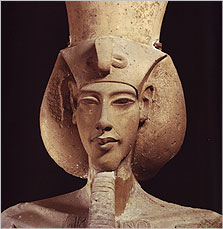

Amarna, the city, in an isolated desert bay some 10 kilometers from the Nile, was the seat of power of Egypt’s “monotheistic” Pharaoh Akhenaten.  It's south of Goshen, however.  The Amarna Period took place at the end of the 18th Dynasty in Egypt between 1353-1322 BCE and refers to the reigns of pharaoh's Amenophis IV (Akhenaten), Nefernefruaten, Smenkhkare, and Tutankhamun,                          

What and where is Amarna? Amarna (Tell el-Amarna) can be found on the east bank of the river Nile about half way between Egypt's capital city of Cairo in the north and Luxor in the south.

Called a “heretic” by his own people, Akhenaten ruled a mere 17 years until his death in 1332 BC. The discovery of workmen’s burial plots of child slaves of biblical Egypt— built and deserted within 15 years — provide a window into his brief reign and the mores of the time.  Archaeologist Mary Shepperson, who previously dug with the Amarna Project, reported in The Guardian this week on the discovery of “the simple desert graves of the ordinary Egyptians who lived and worked in Akhenaten’s city and never got to leave.”  A further suggestion is that the North Tombs Cemetery may represent a captured or deported population brought to Amarna for labor. This is perfectly possible and would account for the lack of family contact and the apparent disregard shown for young life,” she wrote. “We hope that future DNA analysis of the bones might clarify the geographical origins of the North Tombs Cemetery skeletons.”  Since Akhenaton’s worship of Aton as ‘sole god’ is earlier than the date commonly ascribed to Moses (ca. 1280 BC), historians have puzzled over possible relationships between the monotheism of Akhenaton and the Biblical concept of one God. Sigmund Freud in his ‘Moses and Monotheism’ sought to trace the Hebrew-Christian faith to the Amarna revolt of Akhenaton,” wrote Central Michigan University’s Prof. Charles F. Pfeiffer, in his 1963 “Tell El-Amarna and the Bible.”

Aton worship (the sun) was not fully monotheistic (because the pharaoh himself was considered a god), nor was it a direct precursor of monotheistic religions such as Judaism.

Much of the extant correspondence between Egypt and its Canaanite vassals was found in the form of cuneiform tablets at Amarna. Beginning in 1887, Egyptian tomb raiders began digging up and selling the tablets, which were written primarily in the era’s diplomatic language, Akkadian.  Mentioned on the tablets is a people labeled the “‘Apiru” or “Habiru.” According to Pfeiffer and other scholars, the term, although similar sounding to the word “Hebrew,” was more of a social class descriptor for groups of lawless, landless people who live outside of cities and attempt to raid them.  Throwing a bucket of cold water on any possible Habiru-Hebrew connection, the late Tel Aviv University professor of Semitic linguistics Anson Rainey once said, “The plethora of attempts to relate apiru (Habiru) to the gentilic ibri are all nothing but wishful thinking.”  However, perhaps throwing this reporter a bone, he concluded, “The mention of DNA analysis is a hopeful pointer to what might be possible one day, when suitable facilities can be accessed in Cairo.”

Through DNA, are half brothers with mother's mt haplogroup M1a1, different fathers in Manchester Museum, their oldest mummies.  The study, which is being published in the Journal of Archaeological Science, is the first to successfully use the typing of both mitochondrial and Y chromosomal DNA in Egyptian mummies. This was in 2015 by Dr Konstantina Drosou, of the School of Earth and Environmental Sciences at the University of Manchester who conducted the DNA sequencing.  

The DNA company that is the best for genealogy is ancestry.com, but they also do DNA studies.  Evidently many people are showing an ancestry to Egypt.  Are there sub-regions for the Egypt DNA region?

While there are not currently sub-regions under the main Egypt DNA region, there are some sub-regions and DNA Communities under the Levant DNA region that correspond to parts of Egypt. For example, if you have a strong genetic connection to the Nile Delta area, including Cairo and parts north, you may have the Levant DNA region with the Nile Delta sub-region.  Immigration directly from Egypt to the United States and Canada began in earnest in the 1970s. There were many factors that encouraged emigration from Egypt, but there was also a change to the Egyptian constitution in 1971 that relaxed rules for those who wanted to permanently leave the country.  This would not show ancient connections, however.  Work on ancient found bones and mummies are used for that.       

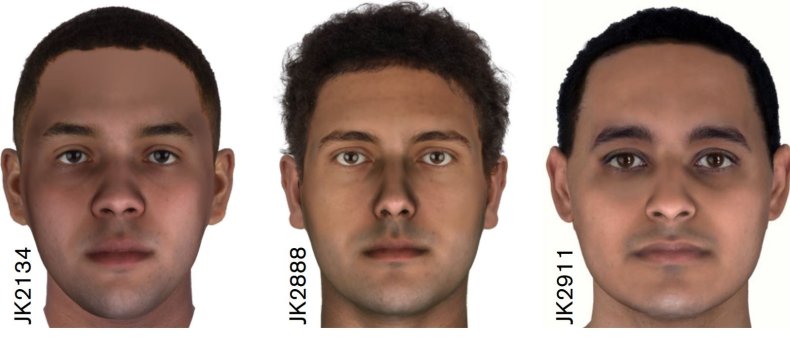
Family Tree DNA (FTDNA) has a Levant group of J2a-under L26. Some members are Jewish.    Ancient Egyptian mummies brought to life.   "The mummies came from an ancient Nile community, known as the Abusir el-Meleq. The team noted that their ancestry more closely matched modern Mediterranean and Middle Eastern individuals, rather than Egyptians.  Their complexions were thought to be light brown, with dark hair and eyes and no freckles. A press release from Parabon went into detail, saying: "These results are highly consistent with Schuenemann et al's conclusions that 'ancient Egyptians shared more ancestry with Near Easterners than present-day Egyptians, who received additional sub-Saharan admixture in more recent times' and that they had an allele for lighter skin.'"  This is thought to be the first time modern techniques have been used on human DNA of this age, with the trio of samples estimated to be between 2,023 and 2,797 years old. " That's not as old as our history, but it helps.  
CNN — 

Ancient Egyptians and their modern counterparts share less in common than you might think. That is, at least genetically, a team of scientists have found.

They discovered that King Tut had a DNA profile that belongs to a group called haplogroup R1b1a2. This group can be found in over 50 percent of European men and shows the researchers that there is a common ancestor.  This is my son's haplogroup, also called R-M269, I believe, who's father's line was from England.  Recent DNA analyses from the mummies of Tut and his kin revealed that the boy king's parents were siblings. Those results, published in the Journal of the American Medical Association (JAMA) in February 2010, pointed to the "heretic" king Akhenaten and one of his sisters as the mom and dad of Tut. But researcher Marc Gabolde said in a talk at Harvard University last week that he believes King Tut's mom was Akhenaten's cousin Nefertiti, who was Akhenaten's chief wife and the mother of six of his daughters.

There is a group of Levites with R-M269. This was unusual as mostly Levites would be from the tribe of Levi, and be J1.    

Three ancient Egyptian individuals were analysed for Y-DNA, two were assigned to West Asian haplogroup J and one to haplogroup E1b1b1 both are carried by modern Egyptians, and also common among Afroasiatic speakers in Northern Africa and the Middle East. The researchers cautioned that the examined ancient Egyptian specimens may not be representative of those of all ancient Egyptians since they were from a single archaeological site from the northern part of Egypt.  The Nile Delta is as north as you can get.  (J1 and J2 are the Y haplogroups of the Cohens of Judaism and also of many Arabs.  E1 is also common among Jewish males.)

Researchers from the University of Tuebingen and the Max Planck Institute for the Science of Human History in Jena, both in Germany, have decoded the genome of ancient Egyptians for the first time, with unexpected results.

Publishing its findings in Nature Communications, the study concluded that preserved remains found in Abusir-el Meleq, Middle Egypt, were closest genetic relatives of Neolithic and Bronze Age populations from the Near East (Middle East), Anatolia and Eastern Mediterranean Europeans.

Only in the last five or six years has it become possible to actually study DNA from ancient humans, because we can now show whether DNA is ancient or not by (its) chemical properties.”

Heat and high humidity in tombs, paired with some of the chemicals involved in mummification, all contribute to DNA degradation, the paper adds, but it describes its findings as “the first reliable data set obtained from ancient Egyptians.”

Analyzing samples spanning over a millennium, researchers looked for genetic differences compared with Egyptians today. They found that the sample set showed a strong connection with a cluster of ancient non-African populations based east of the Mediterranean Sea.  

Archaeologist Judith Marquet-Krause, ca. 1933. Source: Wikimedia Commons.  Her most notable accomplishment came in 1933 when she was appointed to lead the excavation at the ancient city of Ai and determine whether the Book of Joshua’s description of the city—as a royal Canaanite city conquered by the Israelites during the conquests of Joshua—was accurate. An early death cut short her promising career as an archeologist of Biblical cities.

Krause hypothesizes that ancient Northern Egypt would be much the same, if not more, linked to the Near East. Marquet-Krause was a pioneer among archaeologists who were born in Erez Israel and sought to learn the secrets of its past. She was the first archaeologist to manage so large an excavation team and to prepare the first reports in Hebrew.


In 2012, the 20th dynasty mummies of 
Ramesses III and another mummy "Unknown Man E" believed to be Ramesses III's son Pentawer were analyzed by Albert Zink, Yehia Z Gad and a team of researchers    under Zahi Hawass, then Secretary General of the Supreme Council of Antiquities, Egypt. Genetic kinship analyses revealed identical haplotypes in both mummies using the Whit Athey's haplogroup predictor, the Y chromosomal haplogroup E1b1a (E-M2) was predicted.


Two haplogroups, E1b1b and J, that are carried by both ancient and modern Egyptians. The subclade E-M78 of E1b1b is suggested to have originated in Northeast Africa in the area of Egypt and Libya, and is more predominant in Egypt.

The famous Hyksos were one such group that actually controlled lower Egypt from their capital at Avaris (Tell el-Dab‘a) in the eastern Nile Delta for a century during either the later Patriarchal period using conventional Egyptian chronology (ca. 1650–1550 BC) or the post-Exodus period in a revised Egyptian chronology (ca.1490–1340 BC). Non-Egyptian burials, architecture, and Canaanite style pottery from the site of Tell el-Yahudiya farther to the south (Tell el-Yahudiya Site with remains dating from the Second Intermediate to the Roman Period. A palace at the site dates most likely under Ramesses III. There is also a Hellenistic Jewish temple (temple of Onias) described by ancient authors and identified and excavated by Petrie.) also attest to the presence of so-called “Asiatics” (the Egyptian term used for Canaanites and other West Semitic peoples) in Egypt. Therefore, these mummies only confirm influxes of people into Egypt from the Levant and farther north early in its history. The Nile delta region of Egypt was probably a rich mixture of Egyptians and various immigrant groups at least as early as the time of Abraham (e.g., Bietak 1987; Wengrow 2006: 135–50; Bard 2008: 195–99).

(Genesis 45:1-26) Joseph spoke to his brothers in Egypt and told them that this was the 2nd year of the hunger years and there were 5 year in which there would be neither plowing nor harvest so they were to return to Canaan and bring back their father, Jacob.  "You will reside in the land of Goshen. and you will be near to me." Pharaoh said, I will give you the best of the land of Egypt and you will eat the fat of the land.  They had wagons for the small children and wives.  ..the best of all the land of Egypt--it is yours."  The Hyksos were never mentioned in  the Torah, so they must have come after Joseph's time.  

Resource:

 https://www.familytreedna.com/public/jewishr1b/default.aspx?section=yresults  

https://jwa.org/encyclopedia/article/marquet-krause-judith#:~:text=Marquet%2DKrause%20was%20a%20pioneer,the%20first%20reports%20in%20Hebrew.

http://www.amarna3d.com/the-amarna-period/#:~:text=The%20Amarna%20Period%20took%20place,and%20Tutankhamun%2C%20see%20Figure%201.

https://www.timesofisrael.com/in-ancient-mass-graves-archaeologists-find-child-slaves-of-biblical-egypt/

https://en.wikipedia.org/wiki/Amarna

https://www.amarnaproject.com/

https://www.newsweek.com/ancient-egyptian-mummies-faces-dna-2000-years-old-1629706

Tanakh, Stone Edition, Genesis 45:1-26

https://www.cnn.com/2017/06/22/health/ancient-egypt-mummy-dna-genome-heritage/index.html

https://whoareyoumadeof.com/blog/what-is-the-egypt-dna-region-on-ancestry/

https://www.familytreedna.com/groups/j-2a-4-levant-genetic-match/about/background

Tuesday, July 20, 2021

Was Ahmose I Pharaoh of Egypt the One we Seek? Or Was it Akhenaten ? Both 18th Dynasty Pharaohs Or Others?

 Nadene Goldfoot                                           

Ahmose I, king of ancient Egypt (reigned c. 1539–14 bce) and founder of the 18th dynasty who completed the expulsion of the Hyksos (Asiatic rulers of Egypt), invaded Palestine, and re-exerted Egypt's hegemony over northern Nubia, to the south.

Ancient Egypt witnessed a glorious period during the reign of Ahmose. This brave king had high regard for women and gave them positions of power. To implement his political and economic agendas, he established two capitals and used a simple army strategy to increase the wealth of the nation under his rule.

Ahmose I was a pharaoh and founder of the Eighteenth Dynasty of Egypt, classified as the first dynasty of the New Kingdom of Egypt, the era in which ancient Egypt achieved the peak of its power.  That would have taken place in the 1700s BCE,  almost 4,000 years ago with the date of starting in 3,721 BCE.  

This is the pharaoh that might be thought to have been in power when 70 Israelites  of Jacob's family  went into Egypt from Canaan, leaving a drought-hit land for the plush Nile-fed land of Egypt, seeking relief.  They found the land so fertile that they remained there until the Egyptians were afraid of them being they also had multiplied greatly, being shepherds with their sheep and being at peace.  


 Akhenaten  was an ancient Egyptian pharaoh reigning c. 1353–1336 or 1351–1334 BC, the tenth ruler of the Eighteenth Dynasty. Before the fifth year of his reign, he was known as Amenhotep IV  meaning "Amun is satisfied", Hellenized as Amenophis IV).

As a pharaoh, Akhenaten is noted for abandoning Egypt's traditional polytheism and introducing Atenism, or worship centered around Aten. The views of Egyptologists differ as to whether Atenism should be considered as a form of absolute monotheism, or whether it was monolatry, syncretism, or henotheism. This culture shift away from traditional religion was not widely accepted. After his death, Akhenaten's monuments were dismantled and hidden, his statues were destroyed, and his name excluded from lists of rulers compiled by later pharaohs.

In deciding which pharaoh was the one Moses knew and dealt with, it more likely to me, would be Akhenaten,, as Moses, through his experiences, and this ruler, were quite similar-leading to strict monotheism. The pharaoh's name that spoke with Moses was not given, and people have been guessing as to who it might have been. 

 Who could say if it's possible that Moses could have influenced Akhenaten?  Moses was raised as a prince in the royal house and had the same education most likely as this pharaoh.  Notice that both Ahmose I and Akhetaton were of the 18th dynasty era.  Monotheism was not popular with the Egyptian people and poor Akhetaton was hidden from public view, a shame on the empire.  

1372 – 1350 BC: Akhetaton (Amarna) is constructed as the ephemeral capital of the pharaoh Akhenaten and dedicated to the sun god Aten. It is abandoned a few years after Akhenaten's death. ... 1325 BC: Pharaoh Tutankhamun dies and is buried in a richly furnished tomb in the Valley of the Kings.  Amarna is an extensive Egyptian archaeological site that represents the remains of the capital city newly established and built by the Pharaoh Akhenaten of the late Eighteenth Dynasty, and abandoned shortly after his death. 

My favorite TV archaologist, Simcha Jacobovici, The Naked Archaologist,  has gone for 1500 BCE as the beginning of the Exodus, while my records, going with dates found in  The New Standard Jewish Encyclopedia, presents to me the dates of Moses' life (1391-1271 BCE), so that at age 80 the date would have been 1311 BCE. This pharaoh would have been 19 years younger than Moses, still on the throne when Moses asked for the freedom of his people. The unpopular pharaoh, believing in the Sun G-d, Aten only, monotheistic but unwilling to let go his free help.  After all, slavery was the usual way of life if one was unlucky enough.  Moses may have remembered that this pharaoh was in agreement with him about monotheism, but they didn't agree about slavery.  

I'm not saying that G-d hadn't spoken to Moses, but that the conditions going for the Exodus were perfect.  IT WAS TIME.  Like a puzzle, the conditions were all in place for the Exodus.  

I asked my computer who the pharaoh was in the Exodus story and it said Ramses II, to my surprise.  

If this is true, then the oppressive pharaoh noted in Exodus (1:2–2:23) was Seti I (reigned 1318–04), and the pharaoh during the Exodus was Ramses II (c. 1304–c. 1237). In short, Moses was probably born in the late 14th century bce.           
                                Head of the Mummy of Seti I
Menmaatre Seti I (or Sethos I in Greek) was a pharaoh of the New Kingdom Nineteenth Dynasty of Egypt, the son of Ramesses I and Sitre, and the father of Ramesses II. As with all dates in Ancient Egypt, the actual dates of his reign are unclear, and various historians claim different dates, with 1294 BC to 1279 BC and 1290 BC to 1279 BC being the most commonly used by scholars today. This is going back in time.                             
Ramesses II, also known as Ramesses the Great, was the third pharaoh of the Nineteenth Dynasty of Egypt. He is often regarded as the greatest, most celebrated, and most powerful pharaoh of the New Kingdom, itself the most powerful period of Ancient Egypt.
Ramesses II led several military expeditions into the Levant, reasserting Egyptian control over Canaan. He also led expeditions to the south, into Nubia, commemorated in inscriptions at Beit el-Wali and Gerf Hussein. The early part of his reign was focused on building cities, temples, and monuments. He established the city of Pi-Ramesses in the Nile Delta as his new capital and used it as the main base for his campaigns in Syria. At fourteen, he was appointed prince regent by his father, Seti I. He is believed to have taken the throne in his late teens and is known to have ruled Egypt from 1279 to 1213 BC.
According to my records, he was ruler of Egypt, while  Moses was on the 
Exodus, getting closer to Canaan.  
My Exodus history started in 1311 BCE and ended in 1271 BCE.
The recent film, Exodus, Gods and Kings, had Ramesses the Great as the step-brother of Moses and the pharaoh of the Exodus. But there is nothing in the Egyptian records linking Ramesses to the Exodus, and indeed nothing at all in the records about the Israelites and their slavery, nothing about their escape into the Sinai after the plagues, nothing about the miraculous crossing of the Red Sea – nothing. So it is embarrassing for archaeologists to be asked who the pharaoh of the Exodus was. But it is a question that comes up every year before Passover, when we Jews celebrate our escape from Egyptian slavery into freedom.

Resource:

https://www.jpost.com/opinion/who-was-the-pharaoh-of-the-exodus-395885

https://www.thegreatcoursesdaily.com/the-reign-of-ahmose-the-first-king-of-the-xviiith-dynasty/ 

https://en.wikipedia.org/wiki/Ramesses_II

https://www.britannica.com/biography/Ahmose-I


Friday, December 9, 2016

Obstacles In Believing in One G-d: Abraham and Descendants

Nadene Goldfoot                                                     


Terah came from the Tigris and Euphrates Rivers of the eastern part of the Middle East well into the 2nd  millennium BCE, over 4,000 years ago with his family and clan.  They settled in Ur of the Chaldees, today's Iraq.   Terah was an idol-maker.He made many different idols.                                                                                                            
Abram blessing the women
Abraham and Lot, his nephew
1948 BCE-2nd millennium
   
 His son was Abram, father to be of Jews and Arabs. Abram, later to be added the title making him Abraham, married Sarai, later to be called Sarah,  his niece, both name changes to be a revelation for them both.  Abram was confronted with his father's business of making clay idols and coming to the conclusion that they were just clay statutes that people worshipped, and not anything else.  He then realized that there was only one G-d in the world, something people had not realized, ever. G-d had spoken to him.   This fact would make his people stand out, to be accepted or not, the biggest event to hit the world.

                                   
Hadad, clay statue of Syria
Chief god of the ancient Semitic
family of gods. Ba
al was a title of
lordship of the world.
                                                                       
Esau and Jacob
Abraham, spoken to by G-d, was told that he would be the father of many, and wasn't fulfilling this agreement, so his elderly wife, Sarah told him to take her handmaid, Hagar,  and he did, producing Ishmael.  Later, Sarah produced Isaac.  Ishmael would later be leaving the clan to seek a wife among the native people away from his home, and they would be the future Arabs, Isaac's half brother.  Again, Isaac's son, Jacob, had a brother, Esau, who strayed away being very different and he also married into Ishmael's new clan, joining up with the future Arab people and bringing in more DNA from Sarah.  Abraham was directed to make his sons different from others by circumcising them and himself.  This would also keep them apart from non-believers.  However, circumcision was something that Egyptians practiced.  Abraham used it for a different reason.  With Abraham it was done on a child's 8th day of life, showing the covenant with the one G-d. It was a way of distinguishing the Jew from the idolator.
                                                                             
Son, King Solomon
King David
Abraham's family settled in Canaan among the Canaanites and Philistines.  Generations went by and his descendants came to the age when they wanted a king like other people to rule over them, so Saul was elected king in about 1100 BCE, with David being next in 1010 BCE to 970 BCE, creating a beautiful kingdom while he communicated with Abraham's G-d.
                                           
King Solomon's Temple
His son, Solomon, from 961 to 920 BCE created an empire, all built around the fact that there was only one G-d that he communicated with, and with a people who were also believers since Abraham's days.  This made them different from all other people.  Not only were they successful, but their religion was different from all others.
                                                                           
Sargon II of Assyria
             
The Assyrian Empire of the East attacked them in 721 BCE, taking away the best of their men for slavery.  They were established in the 20th century BCE till the 13th and then 10th centuries BCE.  Israel's Prophet, Hosea had defended his people against the Assyrians in 726 BCE which led to King Shalom V's siege of Samaria and its capture in 721 BCE by King Sargon.  He annexed the country and deported 27, 290 Israelites to Assyria and Media.  Syrian and Babylonian prisoners were exchanged.   King Hezekiah of Israel 720 BC-692 BCE was able to pay tribute and ceded some territory.  Judah was ravaged in 700 BCE.
                                                                             
Babylon with 200,000 people 
The Babylonian Empire (Shinar, of the Kasdim -Chaldees), who had taken over the Assyrian Empire, also came and attacked them from 597 BCE to 586 BCE and did the same thing, taking the best of the men and women away, and often replacing them with their own cast-offs.
                                                                     
               
 Their Temple, built by Solomon, was destroyed by Nebuchadnezzar in 586 BCE. It had stood for over 300 years.   All the time, the descendants of Abraham and Sarah kept to their beliefs. in one G-d, keeping them apart from all others socially and religiously.
                                                                                   
All along, the ancient country of Egypt also had many gods until one day one of the pharoahs, Akhenaten (c1336 BCE),  believed in one god.  To him, it was the sun.  It was not a popular belief at all, and when he died, the people were only too happy to go back to their old beliefs, quite a lesson for the Jews to observe.
 Even with his belief, Abraham was ahead of him by over 700 years.
                                                                             
Moses bringing his people the 10 Commandments
from G-d
In the meantime, Moses was born in Egypt in c1391 BCE and lived for 120 years till 1271 BCE, .most likely earlier than Akhenaten.  He reinforced the belief in one G-d with G-d on the Exodus of all the Egyptian slaves-family members or not that lasted for 40 years, taking them all back to Canaan.  He laid down our 613 laws to fullfill the expectations of a creation of people most thoughtful of G-d to be the leaders and teachers of this way of life.


600–400 BCE
The probable life of Laozi, author of the Tao Te Ching, considered the founding work of philosophical Taoism. 

Taoism (/ˈdaʊɪzəm/), also known as Daoism, is a religious or philosophical tradition of Chinese origin which emphasizes living in harmony with the Tao (道, literally "Way", also romanized as Dao). ... The roots of Taoism go back at least to the 4th century BCE.
551 BCE
Confucius, founder of Confucianism, was born.[Confucianism is often characterized as a system of social and ethical philosophy rather than a religion. In fact, Confucianism built on an ancient religious foundation to establish the social values, institutions, and transcendent ideals of traditional Chinese society.
440 BCE
Zoroastrianism from Persia entered recorded history.  is one of the world's oldest religions, "combining a cosmogonic dualism and eschatological monotheism in a manner unique [...] among the major religions of the world." Ascribed to the teachings of the Iranian prophet Zoroaster (or Zarathustra),  he exalted their deity of wisdom,Ahura Mazda (Wise Lord), as its Supreme Being. Leading characteristics, such as messianism, heaven and hell, and free will are said to have influenced other religious systems, including Second Temple Judaism, Gnosticism, Christianity, and Islam." However, it was in competition with Judaism.

The Greeks of the Mediterranean believed in Mt Olympus. home of multiple gods.  Hellenization was going on affecting Israel under Ptolemaic rule from 312 to 198 BCE, and then again under the Seleucids in trying to establish a Greek city.  After a 2 year struggle Judah the Maccabee occupied the hill and rewtored the Temple service-of which we have our holiday of Hanukkah from 164 BCE's date. Greeks played games, and Jewish men were involved.  The players played without clothing.  Jews were harassed because of their circumcision.
                                                                         
The Romans attacked the Greeks and borrowed their religion, putting different Roman names in place instead of Greek ones.

Rome  attacked Israel-Judah in about 200 BCE when they occupied Jerusalem.  There were Jewish slaves in Rome by 139 BCE.   In 63 BCE the Roman general Pompey made war between the Hasmoneans, Hyrcanus and Aristobulus to occupy Jerusalem.  The Parthians captured Jerusalem in 40 BCE. and it fell to Herod in 37 BCE who ruled as a Roman vassal.  He rebuilt the Temple and created the Wailing Wall.  From 6CE, Jerusalem was ruled by Roman Procurators.  Pontiuis Pilate crucified Jesus in 29 CE.  The people revolted in 66 CE.  They had 3 years of independence and then the Romans under titus took it once more.  Bar Kochba revolted from 132 to 135 and liberated Jerusalem for 3 years.  Rome's Emperor Hadrian rebuilt it as a Roman colony with Jews forbidden to approach it under pain of death.
                                                                     
Romans  became Christian with Emperor Constantine, of Rome, 312-337,  head of their empire with Jerusalem now their holy city.  His mother, Helena, visited the city in 325.

By 570, Mohammad was born in Arabia and taught a new religion to his people until his death in 632.
 By 614 Jerusalem  was again occupied, this time by the Persians.who were assisted by a Jewish force.  By 628 the Christian Byzantine rule was restored by Emperor Heraclius.  Finally, it fell in 628 to Caliph Omar who built a building for prayer on the Temple Esplanade where our 1st and 2nd Temples of Solomon had stood.  It was again rebuilt in 691 as the DOME OF THE ROCK by the Umayyad Caliph Abd-el Malik.
                                                                           
The Arabs, 1/2 brothers of Jews, had returned and they allowed the Jews to return!  However, this ancient site began to decay after the Abbasid rulers went to Baghdad in 750.  The Fatimids of the 11th century built the 2nd main mosque called El-Aksa on the Temple site, favorite place for all.
                                                                             
In 1099 the Christian Crusaders came to Jerusalem through Europe, killing Jews along the way under Godfrey of Bouillon and established the city as their capital of the Latin Kingdom.

In 1187, the Ayyubid Sultan Saladin retook the city for Islam and it remained in Moslem hands.  Finally it was in Ottoman Empire hands when it decayed till in the 18th and 19th centuries with the population below 10,000 and part lay in ruins.  The Jewish community was almost destroyed by the Crusaders and not many were left there by the 13th century in Jerusalem.  Reinforcements came who were pious immigrants from many lands, especially after the expulsion from Spain in 1492.  The government restricted the Jews' population.

In 1625 Jews were brutally attacked and robbed by the local Pasha Muhammad ibn Farukh.  More Jewish immigration came in and the population rose from 11,000 with 3,000 being Jews in 1838 to 68,000 with 50,000 being Jews.
                                                                               
By 1910 new homes outside the Old City wall were built by Sir Moses Montefiore from 1855 on.  The development of Jerusalem was stopped by World War I. in 1914-1917. At the end of the war Jews had met with Great Britain and finally a deal was made to procure the JEWISH NATIONAL HOME from the success of WWI's allies.    By 1929, the losers, mainly fretting over his loss mostly was the Sherif of Jerusalem, the Arab chief Haj Amin al-Husseini, who didn't want to turn over any land to Jews.  He set his followers against the Jews in a riot and against the Jews' friend, Emir Feisal.

Still, today, Jews believe in one G-d only.  No ifs ands or buts, that's the way it stands.  Jews do not draw pictures of this one G-d.  He is unseen.  He's a force.  He does not take a man's shape, yet we were made in his image, something for us to understand.  We have a soul, a mind, and we are to use it.
                                                                             
Moving eastward to India, "Although often viewed as a polytheistic faith, Hinduism is actually henotheistic, the worship of one god without denying the existence of other gods.  King Solomon's empire stretched far enough for Solomon to have relations with this country in trade.  "5500–4500 BCE was when it started. Hinduism is the religion of the majority of people in India and Nepal. It also exists among significant populations outside of the sub continent and has over 900 million adherents worldwide. Unlike most other religions, Hinduism has no single founder, no single scripture, and no commonly agreed set of teachings.Hinduism is the world's third largest religion, with over 1 billion followers or 15% of the global population, known as Hindus. The majority of Hindus reside in India, Nepal, Mauritius, and Bali in Indonesia.


The Proto-Indo-Europeans (PIE) emerged, probably within the Pontic-Caspian steppe.   and  developed a religion focused on sacrificial ideology, which would influence the religions of the descendant Indo-European cultures throughout Europe, Anatolia and the Indian subcontinent. It is said to be the period of Ramayana in India, beginning with the birth in 5114 BCE of Lord Sri Ram, a central figure of Hinduism. The period of the Mahabharata in India and the period in which Hindu Sacred Scripture Bhagavad Gitawas written. 3112 BCE marked the birth of Lord Sri Krishna, an Incarnation of Lord Vishnu of the Hindu Trinity.

It was the hardest fact for a world of gods to accept; that there was only one.  This new concept brought Human Rights to a world where before, life was not important.
  

Research, The New Standard Jewish Encyclopedia
https://en.wikipedia.org/wiki/Akhenaten
https://en.wikipedia.org/wiki/Timeline_of_religion